Sunday, 20 January 2019

The last aurochs hybridized with cattle in the wild

Domestic animals and their wild counterparts are usually able to interbreed freely and produce fertile hybrids. Thus, it is always likely that everywhere they share their habitat, they might interbreed and thus mutually influence their populations. Domestic animals always might escape, and wildtype animals always might leave a track in domestic stock by occasional mating. 
When discussing whether aurochs and cattle interbred in Europe, it mostly concerned the question if local aurochs left a genetic trace in cattle populations. The other way round, domestic cattle influencing local aurochs, was not examined yet. However, I have always considered it very likely that escaped domestic cattle left a trace in European aurochs. It happens everywhere where wildtype and domestic type are neighbouring – you see that in wolves (some colour variants, such as black in wolves, are believed to have been inherited from domestic dogs), in wild boar displaying domestic colour, and it has also been proven for late European wild horses that inherited the emutation from domestic stock (see Pruvost et al. 2011). I see no reason why it should not have happened that escaped domestic cattle interbred with aurochs and left a detectable trace in wild populations. 

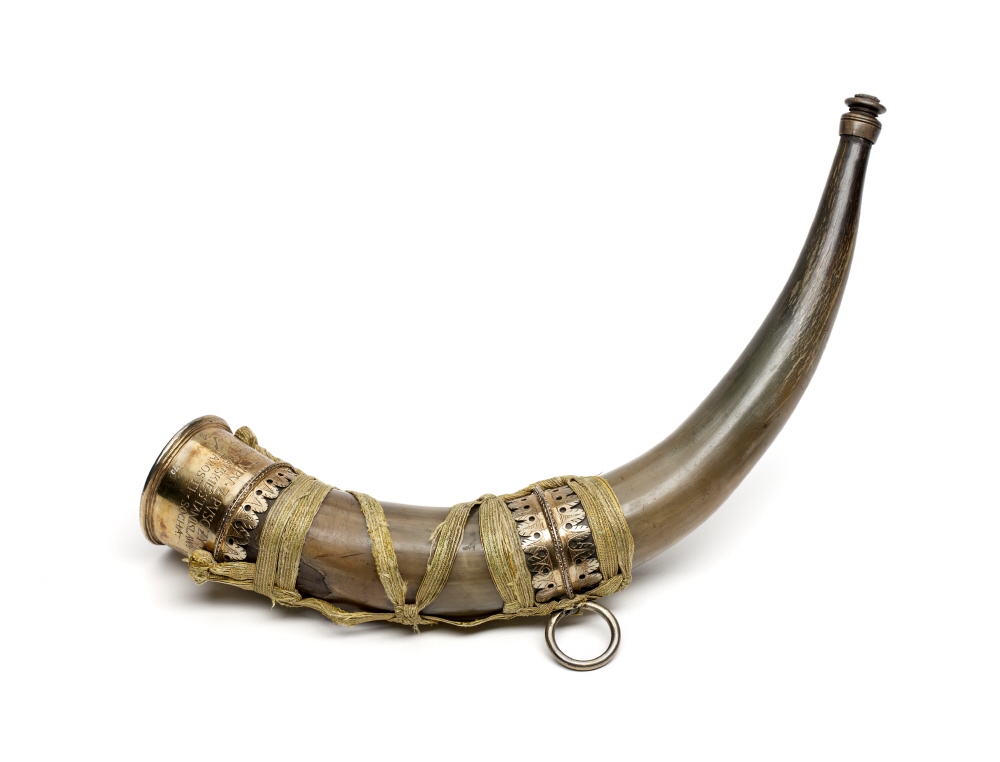
This interesting question has now been examined by Bro-Jorgensen 2018. A number of ornamented drinking horns from medieval times or shortly after that are suspected to stem from aurochs because of their shape and size have been genetically analysed for mitochondrial haplotypes and sex. The sample also includes the horn of the last aurochs bull that died in Jaktorow, Poland, in 1620. 
Medieval aurochs drinking horn - large, thick and evenly curved
Horn of the last aurochs bull - smaller, thin and not that curved
All of the horns tested turned out to be from males – considering their shape I would be surprised if turned out otherwise – and most of them have the aurochs haplotypes P. The horn of the last bull and two other drinking horns, however, surprisingly carry the haplotype T, which is widespread among taurine cattle. While the origin of the two drinking horns might not be that clear, it is very likely that the claimed horn of the last aurochs bull is indeed from this population and individual. It is also very likely that the population in Jaktorow was not simply a feral cattle population because of historic reports. Thus, the most likely conclusion is that aurochs of the latest centuries, or at least the remnant population at Jaktorow, was genetically influenced by escaped domestic cattle. As this influence is found on mtDNA, which is maternally inherited, the influence must be from a domestic cow at least. Influence from domestic bulls is of course also possible, but was not examined and domestic bulls probably had a hard time competing with wild aurochs bulls anyway. 
Natural selection would probably eradicate most of the domestic influence, except for factors with little selective pressure on them, such as these mitochondrial haplotypes. Perhaps, if the domestic influence was widespread towards the end of the existence of the aurochs (when space became increasingly limited and thus they often neighboured domestic stocks) there also were aurochs populations displaying domestic colour variants, although no such cases have been reported in historic texts. Domestic cattle influence also shows in American bison, where it is particularly visible in horn shape and size (see here, for example). The horn sheath of the last aurochs bull was comparably small (only 45 in length, which is considerably smaller than the bony cores of earlier aurochs males). Even if it was a young individual at the time of death, most likely the last aurochs population had comparably meagre horns as a consequence of limited resources and trophy hunting, but domestic cattle intermixing might be a further reason. This would also explain why the curvature is not nearly as intense and even as in the older drinking horns (cattle intermixing affects horn shape in wild bovines as the bison example shows). 

This discovery is interesting and totally what I expected and predicted. Questions that are particularly intriguing are how widespread and intense that domestic introgression into local aurochs population was, and how large the influence on the visible phenotype of these aurochs population was. 

Literature 

Bro-Jorgensen et al.: Ancient DNA analysis of Scandinavian medieval drinking horns and the horn  of the last aurochs bull. 2018.

Pruvost et al.: Genotypes of predomestic horses match phenotypes painted in Paleolithic works of cave art. 2011. 

Monday, 14 January 2019

Albatros, the Heck bull, vs. aurochs

When looking through Walter Frisch’s Der Auerochs (2010) I found a photo of the Heck bull Albatros in perfect profile view (the photo is © Walter Frisch, I hope it is ok for Mr. Frisch that I use it here). Let us have some fun with it! 

A profile view photo is pretty useful for a direct comparison with the aurochs. When using a single Heck individual, it is always important to pick one that is a fair representative of the breed. For example, it would not be fair to pick one of the hyper-massive dachshund bulls that are still found in the breed that are not nearly of the same quality as the mean, or to choose an individual that is considerably better than the average. I think that Albatros is a pretty fair choice. It is from the Wörth/Steinberg line bred by Walter Frisch, which is remarkable for having large and well-shaped horns (some of them are excellent, take a look at them here). The Wörth lineage is, speaking of body morphology and size, very typical for Heck cattle on the other hand, so Albatros is very representative of the breed. 

I took my most recent reconstruction of an aurochs bull as a comparison. I introduced this reconstruction in this post and I consider it pretty accurate. So I copied the reconstruction and the photo of Albatros next to each other to same scale. For Albatros, I used a withers height of 140cm, which is pretty average for Heck cattle (bulls of the Wörth lineage are sometimes claimed to reach 160cm, but I do not consider this plausible for Heck cattle, especially since I saw the herd myself), and for the aurochs I used 170cm withers height – 170cm is the mean withers height found within this species. There are populations where bulls reached only about 150cm but also giants with a withers height of about 190cm or more (see How big was the aurochs really?), so choosing 170cm seems fair to me. 
Here you see the comparison of both animals in flesh and below that a comparison of both skeletons (the photo of the Heck bull is suitable to deduce the skeleton of the living animal, it is not as precise as an X-ray but an approximation based on anatomical knowledge – I already did this with several cattle individuals on Comparing skeletons with skeletons). I go over the differences both in morphology and behaviour. 
Skeleton of the Heck bull, deduced from the photo
Skeleton of the Kopenhagen bull
Morphological differences: 
Size.In absolute height, the Heck bull is of course smaller than the aurochs by about 30cm. However, in mass, both animals might be equal. Massive Heck bulls reach a weight of about 900kg [1], which is probably also the upper weight range for aurochs bulls (more on that in an upcoming post). So technically speaking, both animals have the same mass, but distributed differently – an aurochs was built way higher and shorter than most domestic bulls. 
Proportions and skeleton.This is where we have considerable differences. First of all, the trunk of the Heck bull is elongated while the size/length of the limbs shrunk – the ratio of the distance from the hooves to the shoulder blade (note: not withers height) and to the end of the pelvis is exactly 1:1 in the aurochs, and 1:1,13 in the Heck bull. The head size also shrunk dramatically, as much as – most likely – also relative brain volume. The skull shape is clearly paedomorphic – it is shortened, especially the snout, and the eyes are enlarged. Those changes in the skeleton and proportions are typical consequences of domestication that we see in nearly all domestic mammal species that have been domesticated. Also, the length of the processus spinosi in the shoulder area (“hump”) is greatly reduced in the domestic bull – while the spines go well beyond the shoulder blade in the aurochs, they are actually shorter than the shoulder blade in the Heck bull. This is also typical of domestic cattle while humps are universal for wild bovini. The comparison of the two skeletons shows the dramatic differences in the skeletal build of an aurochs bull and a domestic bull. 
Soft-tissue anatomy. The muscling of the Heck bull is reduced compared to a wild bovine, which is especially obvious in the pelvic area. Also, the size of the intestinum increased dramatically, causing a huge belly compared to the wildtype. All in all, the soft tissue morphology of this Heck bull is clearly domestic and as such very reminiscent of what we see in dogs with a certain hormonal disorder (cushing syndrome, see this post). The skin is more flappy, especially the enlarged dewlap, and also the scrotum is elongated. 
Horns.The horn volume (length and thickness) is well within the range of an aurochs. The orientation of the horns relative to the snout as well – in Albatros, the horns curve away from the skull in an 75° angle. The literature gives an average horn curvature of 50-70°, but in reality the spectrum is larger (the largest angle I have seen so far is about 90° in the Vig bull and the narrowest 40° in the oldest aurochs skull). The only difference between Albatros’ horns and that of an aurochs is that the curvature (the “primigenius spiral”) is not intense enough. The horns should curve more inwards. A less intense curvature or a tendency of the horns curving more outwards is also a classic domestication trait for bovines. 
Colour. The colour setting and thus the responsible alleles seem identical to that of the aurochs, with two exceptions – the sexual dimorphism (not only in colour) is considerably reduced, which shows in the light brown shade on the dorsal area of the Heck bull, and it is from a population that also has alleles for domestic colour variants such as white spots or colour dilutions. 

Behavioural differences: 
We have no living aurochs to compare the behaviour with, so we take the typical behaviour of a wild bovine as a reference. 
The fight/flight reaction in this bull is greatly reduced. It is, compared to a wild bovine, very agreeable, docile, tame, trainable and its activity level is lethargic compared to the wildtype. 

Comparing the Heck bull trait by trait with an aurochs, it shows that this animal is actually as domestic as can be, and the similarities to the aurochs are limited to colour and horns*. But that is not to say that the bull Albatros or the breed Heck cattle is a failure from the “breeding-back” perspective, not at all. One could analyse any domestic cattle breed the same way and would get similar results. Domestic cattle are simply comparably removed from their ancestor after 8.000 years of domestication. For details, see the article What breeding back can achieve

* I am aware of the fact that this Heck bull is probably able to sustain itself in the wild, which is also true of all landraces and also many derived breeds, and it would also show the same social behaviour repertoire as the aurochs (most likely), which is also true of all living cattle. 

Literature

Bunzel-Drüke, Finck, Kämmer, Luick, Reisinger, Riecken, Riedl, Scharf & Zimball: Wilde Weiden: Praxisleitfaden für Ganzjahresbeweidung in Naturschutz und Landschaftsentwicklung


Friday, 11 January 2019

From aurochs to cattle: step by step

In the post The real differences between aurochs and cattle I go over the organismic differences between the aurochs and cattle in regards to morphology, development, endocrinology, behaviour and genome. Those differences all are interconnected and were caused by the process of domestication. You cannot alter one factor without altering several others at the same time. Each of those factors, like changes in hormonal activity or development, have a particular impact on the organism. With this post, I want to illustrate these impacts by turning a wild aurochs into domestic cattle step by step. I do not say that these changes evolved in this particular order, rather they evolved more or less at the same time but varying extent, this is just a scheme. Please do not use my drawings without permission.

This is the starting point, a wild aurochs: 

Hormonal changes 

Changes in thyroid hormones not only caused a more relaxed, lethargic behaviour but also reduced limb and head size, making the overall appearance of the animal more elongated. Probably horn size would be affected as well. Also, the animals do not grow to full size anymore. 

Another consequence of hormonal changes, of corticosteroids in particular, would be reduced muscling, a hanging spine and an enlarged intestinum. It becomes apparent that this is the factor that causes the animal to truly look domestic – the deformed skeleton and reduced muscling simply does not look compatible to a wild animal. The drawing above reminds me of a Sayaguesa bull, by the way. 

Developmental delay 

The delay in development causes a phenomenon called paedomorphy, resulting in a calf-like skull morphology, shortened horns and reduced sexual dimorphism. Also the shrinkage of the hump might be caused by developmental delay. A lot of cattle landraces, like Rhodopian short horn for example, look like this drawing. 

Pleiotropic effects 

Genes affecting behaviour also affect other factors, such as coat colour. As a result, the animals will start to show spotted colour because the activity of pigment cells is distorted. Furthermore, horn shape is affected as well, they start to curve more upwards and outwards as in all domestic bovines. 

New mutations 

New mutations for new phenotypic traits evolve. Such as for changes in horn shape or curvature, horn size (smaller or larger), stubby legs, shortened snouts, overlong hair, curly hair all over the body, and a whole palette of new colour mutations. The skin also gets more flappier with enlarged or elongated appendages. Cows evolve a dramatically enlarged udder as a result of direct selection on this trait. 

Adding all these factors, we get the domestic cattle that we have today. 
 And here is an animated GIF for this transformation: 


For deeper background information, see these posts: 

Sunday, 30 December 2018

What to do with the wisent in the Caucasus?

For an update of my take on to this subject, go here

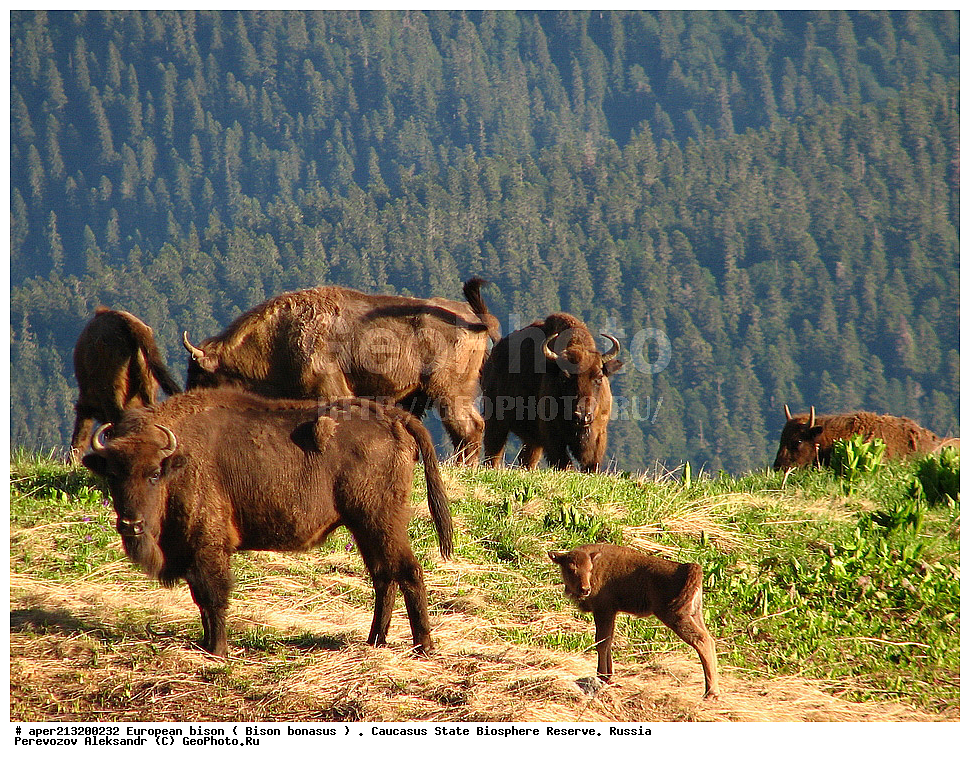
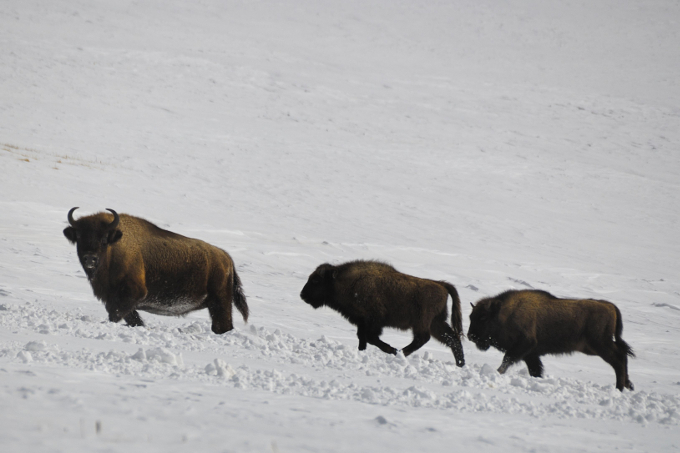
The Caucasus mountains were home to another subspecies of wisent, Bison bonasus caucasicus, until was exterminated in the first half of the 20thcentury (it is also considered a separate species by some authors). Nowadays, wisents have been reintroduced in the western Caucasus reserve, and this population is controversial for its special history. In this post I am going to explain why, have a look at the arguments against this population, why I consider it beneficial instead and what to do with it for the future. 

First and most importantly it is to note that the modern wisent went through a severe genetic bottleneck event. All modern wisents descend from only 12 founder individuals and thus the genetic basis of the species today is extremely narrow. The consequences of this a considerable inbreeding depression affecting skeletal growth leading to skull asymmetry, deformation of the male gonads, increased rate of stillbirths, decreased female fertility and reduced resistance against diseases and parasites. They are particularly vulnerable to posthitis, balanoposthitis, foot-and-mouth disease, cattle tuberculosis, bluetongue disease and others. 20% of the mortalities in the Bialowieza Forest are caused by diseases. The inbreeding depression is an immediate danger for the long-term survival of the species and an obstacle for the establishment of populations in the wild [1]. It is not rare that reintroduction attempts fail due to these effects or that whole stocks in zoos diminish because of diseases. Therefore, the species is still in danger of extinction [1]. 

That is why during the population crash in the 1920s and 1930s wisents were crossbred with American bison systematically in order to prevent an inbreeding depression. When an international herd book for pure wisent was set up, most of the hybrids were exterminated (and the expected inbreeding depression came). However, a herd of hybrids was released in the Caucasus in 1940. Subsequently the wisent percentage in the herd was increased by culling of hybrid bulls and release of pure wisents (absorptive breeding), so that the bison percentage in the modern herd is estimated to be as low as 5%. However, the hybrid influence is definitely recognizable (see here, here or here for individuals with a clear bison influence; it is not that much visible in these for example)* 

* It is interesting that the genealogic percentage is estimated that low while their phenotype is looks exactly intermediate between both species. One explanation might be that individuals with a high portion of bison genes might simply have a higher evolutionary fitness and thus the phenotypic influence of bison is still present despite absorptive breeding. 

Some authors suggest a culling of the population. There are a few arguments on why those hybrids are supposed to be maladapted and have been a bad choice for the Caucasus ecosystem: 
- allegedly the hybrids lack mountainous adaptions due to the influence of the plains bison
- allegedly, the plains bison influence made them less resistant to cold 
- allegedly, the plains bison influence has a destructive influence on the local flora 
First of all, Lowland wisent (B. b. bonasus, the only remnants of this population) do not show the mountainous adaptions of the Caucasus wisent either (which was smaller, had shorter and more rounded hooves), so the bison influence is probably not to blame on that. Furthermore, the claim that they are less cold tolerant due to bison influence is most likely incorrect as American bison resist temperatures down to -40° Celsius. Whether or not they have a destructive influence on the flora is probably subjective. The only dietary difference between American and European bison is that the American species consumes more grass than the European one. However, in the ecosystem there once were two other grazer species, aurochs and horses, so that the impact from the hybrid bison cannot be destructive for this ecosystem as it still lies within the spectrum covered by wisent, aurochs and horse. As we know, large herbivores do have an impact on the vegetation – they tend to open the habitat and stop or reduce forest growth. This is considered beneficial for European landscapes and biodiversity (intermediate disturbance hypothesis) which is why large herbivores, wisents among them, are (re)introduced in many nature reserves. Ironically, the same kind of influence that is considered beneficial elsewhere is considered a damage in the Caucasus reserve, serving as an argument to cull the population. Pure wisent would probably do exactly the same. 
Actually, I see no objective ecologic justification for culling this population and no alleged maladaptation as a result of hybridization. The sole remaining reason why this population is considered a threat is their hybrid ancestry. 

Back in the 1920s and 1930s, when there was no international herd book, hybridization was indeed a threat for the genetic integrity of the whole species. The Barbary lion, for example, is a subspecies which died out on genetic level as there are probably no remaining pure individuals due to hybridization. However, nowadays the situation is different. The pedigree of each wisent considered pure is documented in the pedigree book, and wisents that are not listed in the pedigree book are ignored to death anyway (this concerns about 700 wisents in Europe). Therefore, the existence of a wild hybrid population in the Caucasus is not a danger to captive pure herds (however, there is a neighbouring pure herd in the region, but I come back to that later). It is probably the mere existence of the hybrids that irritates some authors so that they suggest the culling of the whole population. 

Nevertheless, I want to look into the positive aspects of this population.  The inbreeding depression we see in the wisent is the result of the high degree of homozygosity in the population which leads to an expression of the effects of deleterious alleles. This can only be overcome by the introduction of new alleles in order to reduce the frequency of the deleterious alleles. Hybridization introduces new alleles and the closest living relative of the species is the American bison, so this species would offer as a possibility to increase genetic diversity. 

Hybridization of course introduces alleles specific (=diagnostic) for the foreign species, but could also introduce alleles on loci that are not relevant for the differences between wisent and bison as such but where wisent are homozygous for deleterious alleles. Thus, hybridization, when the right alleles are introduced, can help to overcome the inbreeding depression of the wisent affecting development, fertility and resistance against diseases without affecting its genetic integrity and thus be beneficial for its chances of survival as a species. Of course rampant hybridization without any kind of selection just produces a phenotypic and genotypic mosaic or mess, which is why some sort of directive selection would result in the desired goal: increasing the genetic fitness of the wisent without grossly affecting its genetic integrity as a species. Therefore just keeping those hybrids in zoos without any selective breeding would lead to technically nothing. However, in the population in the Caucasus, we have something special or even ideal acting upon their gene pool: natural selection. The start-up population was a bunch of hybrids from zoos, but since 1940 they experienced more than 70 years of natural selection. It is likely that the frequency of deleterious wisent alleles on the respective loci has decreased as a result of the higher fitness of newly introduced alleles from American bison, therefore decreasing the effects of the inbreeding depression. To put it simply, those hybrids with a healthier genetic make-up have a selective advantage over those with a high degree of deleterious alleles. I therefore expect the hybrid wisents in the Caucasus to be healthier, more resistant against diseases and have less problems with fertility and development than pure but highly inbred wisents. I strongly opt for studying the health and fitness of this population. As far as I know, this has not been studied before as there is little scientific interest in hybrids, especially for those in the wild. If the hybrid population in the Caucasus is indeed healthier and more evolutionary fit than inbred pure wisents, conservationist have one way to interpret it that can be expressed in two ways:
- Non-hybrid wisents are pure but dangerously inbred. Hybrid-influenced wisents are not pure but healthy and evolutionary fit. 
- Non-hybrid wisents are dangerously inbred but pure. Hybrid-influenced wisents are healthy and fit but not pure. 

In any case, the hybrid population in the Caucasus is probably the largest (in their best times up to 2300 animals) and healthiest wisent population since the population crash in the 1920s due to hybridization and several decades of natural selection. I am definitely not suggesting to crossbreed wisent and bison rampantly and simply release them in the wild. One argument against the hybrid wisents would be the phenotypic mosaic they are displaying which is probably the result of lacking selection on diagnostic wisent traits. The goal should be a population of wisents with increased fitness (i.e. reduced frequency of deleterious alleles) due to hybridization without any recognizable phenotypic influence from American bison in ecology, morphology or behaviour*. 

* Bison and wisent have different modes of combat behaviour. Bison butt their heads against each other while wisents fight more in a cattle-like manner by pushing and pulling with their horns. I know of now records on how the Caucasus population behaves in this respect. 

This could be achieved in a large-scale breeding project, but for the Caucasus population the solution is to increase the wisent portion in the gene pool while retaining their wild state, so that the fitness-increasing alleles donated by bison keep on replacing the deleterious alleles. One way would be to continue the absorptive breeding by culling wild hybrid bulls and releasing pure wisent bulls in the population. The problem is that this way is comparably un-directed. It would increase the wisent alleles in the gene pool, but the diagnostic wisent alleles as much as the deleterious alleles that are to be purged out. Therefore another possibility would be to release a sufficient number of pure wisents that merge into the hybrid population, so that the wisent genes find their way into the population by natural selection alone without human help. This way the survival chance for beneficial alleles is higher while the wisent percentage is still increased. This could be done several times in subsequent decades, until no American bison influence is visible in the population. 

As I wrote above, there is a neighbouring population of pure wisents in the Caucasus. The authors of the action plan for the conservation of the wisent 2002 fear an intermix between the pure and the hybrid population because they consider the hybrids, as written above, worthless and ecologically maladapted (for which, as I explained, there is no basis). I, however, hopethat there will be an intermix. It would be beneficial for both populations: beneficial alleles might enter the pure population while the wisent percentage in the hybrid population will increase. 

Although hybridization has been proven to be part of evolution in nearly all groups of related vertebrate species where it has been exanimated (see here), it is still deemed the absolute doom in conservation. This is, at one hand, probably a relict of the 19thcentury picture of nature as a stable household system as much as the lesson from cases where uncontrolled hybridization indeed threatened or threaten the genetic integrity of endangered species. However, in the wisent it is the extremely narrow genetic base that threatens the long-term survival of the species. A rigorous study of the fitness and health of the Caucasus population could indeed provide a good argument for cautiously increasing the genetic diversity in the wisent via bison introgression in single controlled populations. Due to the pedigree book, the influence would be transparent anyway (a separate herd book for these new lines could be set up). 

In the eyes of others, it is more sensible to shoot them all and replace them with a population pure wisents that have the same fitness problems as anywhere else and might crash at any time.  
If anyone was to ask me personally which kind of animal I would prefer, a wisent that is 1/8 or 1/16 bison on both its parental sides and therefore healthier and more evolutionary fit or a pure wisent that is highly inbred with all the according problems, I would, honestly, go for the first option. 

I already covered the wisent population in the Caucasus in these two posts: 

Literature

[1] Mammal Research Institute, Polish Academy of Science: European Bison Bison bonasus: Current state of the species and an action plan for its conservation. 2002


Sunday, 23 December 2018

The Origin of Maronesa

Back in a 2013 post, I called Maronesa a “relict breed” from Portugal. Not because of an alleged isolated ancient origin, but for its flawlessly aurochs-like colour make-up, the well-expressed sexual dimorphism and the inwards-facing horn curvature. 
Now there is a kind of quarrel on the English Wikipedia page regarding the origin of this draft breed. While enthusiasts of the breed claim a separate origin that is strongly influenced by local aurochs, others are convinced that it has its origins among other local breeds and is closely related or descends from Barrosa and Mirandesa. So here is my take-on to this subject based on literature references, old photos and the phenotype of Portuguese cattle breeds. 

First off, Maronesa has traditionally been considered a crossbreed of Mirandesa and Barrosa because of historic evidence [3]. It has been considered a mix population until it was categorized as a separate breed in 1835[1]. A genetic study from 1998 found a genetic distance to other Portuguese breeds [2]. However, another study from 1993 found it to be genetically intermediate between Barrosa and Mirandesa [4], which is in line with the historic evidence. Another study from 2004 found Maronesa to group closely with Barrosa [5]. 
The claim, however, that Maronesa has an isolated origin (even from from local aurochs) is not based on any genetic or archaeological evidence. Advocates of this scenario base it solely on the ground of physical traits plus the one study from 1998 that places Maronesa apart from other Portuguese breeds. The physical traits of Maronesa are not a good argument for an isolated origin. At one point, all domestic cattle had a very aurochs-like appearance since all of them descend from the aurochs. In cladistics you would say: you cannot base relationships on plesiomorphies. Furthermore, the aurochs-like morphology of Maronesa mainly concerns the coat colour scheme, the well-marked sexual dimorphism and the horn shape. While the dimorphism is indeed exceptionally good, you also find these traits in other breeds. 

Looking at the external appearance, it also becomes apparent that Maronesa has striking similarities to Barrosa (and the closely related Cachena), Mirandesa and also Arouquesa – all of them are neighbouring breeds from the same region. The similarities concern body shape, horn shape and face shape. Actually, many Arouquesa in fact look like a lighter-coloured and slightly more bulldoggish version of Maronesa. Thus, the striking phenotypic similarities plus the geographic and genetic proximity of these breeds suggest a common origin for these breeds to me. Phenotypic similarities can be misleading in domestic animals, but those of these five cattle breeds look very diagnostic and when you look at retriever dog breeds, the Irish setter and spaniels, you would also suggest a common origin or mutual influence between those breeds based on their looks – and this is exactly what is documented in their breeding history. 
Maronesa is slightly more aurochs-like than the others because of its colour – the colour is way darker than in the other breeds, making primitive colour traits like the eel stripe or sexual dichromatism more visible in Maronesa than in others. But this can be caused by only one or two alleles alone, so the difference is not that considerable. 
However, the darker colour would be an argument against a hybrid origin of Mirandesa and Barrosa for Maronesa: it is coloured darker than both of its alleged parent breeds. Also, the morphology of both Barrosa and Mirandesa is way more over-bred than in Maronesa. Thus, Maronesa seems to be more primitive and therefore cannot descend from two more derived breeds. But you have consider the origin date for Maronesa: it has been considered a separate breed since 1835, thus the origins of this breed must date back at least to the first half of the 19thcentury. All of the breeds were less-derived than today. There is a photo of old Barrosa in black and white where you can clearly see that Barrosa was way less derived than today (the individual in the front seems to be a steer). This goes for the colour (the steer seems to have a rather dark colour) as much as for body shape and skull shape. This, on the other hand, makes it credible again that Maronesa is indeed a crossbreed of Barrosa and Mirandesa. 

And even if it does not directly descend from a mix of those two breeds, I think it is very likely that the breeds Maronesa, Barrosa/Cachena, Mirandesa and Arouquesa share a common origin from the same region of Portugal somewhere in around 1800. The phenotypic similarities and the geographic proximity are striking and there is also genetic evidence backing it up. 
Thus, the scenario of Maronesa being an isolated relict breed that is somehow more closely tied to the aurochs than other Portuguese breeds is romantic and tempting looking at its colour and horns, but evidence suggests otherwise. And personally, I consider the similarities between aurochs and Lidia more deep-going than in Maronesa (see here or here). 


Literature 

[1] Marleen Felius: Cattle breeds: An Encyclopedia. 2005. 
[2] Fernandez, Iglesias & Sanchez: Genetic variability and phylogenetic relationships between ten cattle breeds from Galicia and the north of Portugal. 1998
[3] Porter, Alderson, Hall, Sponenberg: Mason’s world encyclopedia of livestock breeds and breeding. 2016. 
[4] Iannuzzi & Figueiredo: Frequency and distribution of rob (1;29) in three Portuguese cattle breeds. 1993 
[5] Mateus et al.: Genetic diversity and differentiation in Portuguese cattle breeds using microsatellites. 2004


Thursday, 20 December 2018

What can "breeding-back" achieve?

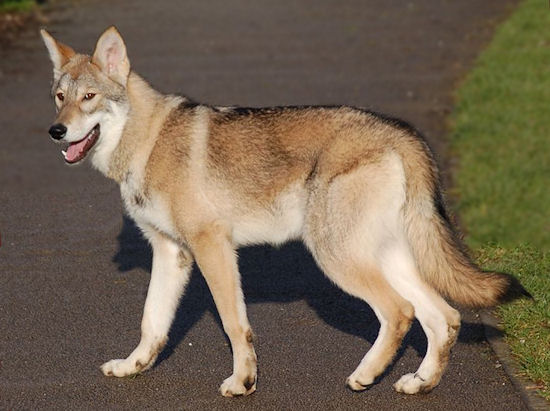
The previous three posts (here, here, here, here and here) have explored the borders of “breeding-back”. I give a quick summary. The real differences between aurochs and cattle do not only concern size, coat colour and horns but actually the whole organism: its developmental biology, its endocrinology, its neurology, its behaviour, its morphology, its genome. And all those factors are interconnected and interact in a complicated way. It was probably selection on tameness alone that dramatically changed the organism and the typical traits of a domestic animal (“domestication syndrome”) was more of a by-product. Additionally to that, some new morphologic mutations and artificial selection on certain traits produced the typical domestic phenotype that we see in cattle. The involved number of loci are probably hundreds or more likely thousands. It is very likely that cattle are uniform for these key genes that are responsible for the typical domestic traits that are universal among them, and consequently a number of important wildtype alleles was probably lost in the process. “Genetic breeding-back” is probably not feasible because of the high number of loci involved, the loss of a lot of wildtype alleles during domestication and because the necessary research work (identification of the involved loci and tracing down the wildtype alleles in cattle) has not been done yet. So we have to stick with conventional breeding. The Tamaskan is an example for exactly the same kind of “breeding-back”, but with a species that still has an extant wildtype. It shows that while a high optic resemblance can be achieved, the result is still a domestic animal with all the symptoms of the domestication syndrome. I give another example now, this time with “breeding-back” cattle itself: 

This is the Taurus bull Lamarck. I chose him as an example because I think this bull is among the best “breeding-back” results produced so far. Let us examine this animal in detail. It might be about 160-165cm in size so its size does match Holocene European aurochs bulls. Its phenotypic colour is as far as we can tell flawless. The dewlap is short, leg length is ok, horn curvature is ok and the hump is present. Overall, only some Corriente and Lidia bulls are be as aurochs-like. Yet this animal is totally domestic. The trunk is still a bit too long or the limb and skull size is reduced, the brain volume is probably reduced, the hump size is reduced. The muscling is reduced and the belly/intestines enlarged. Those are classic symptoms of the domestication syndrome and probably a result of an altered corticosteroid level and thyroid hormone activity. The shortened skull and horns are probably a result of developmental delay, as is the reduced sexual dimorphism in the population. Also, the seasonality in the reproductive circle of the population is reduced as well. Lamarck is a very relaxed and comparably tame good boy – you could never approach an aurochs or any wild animal the way you can approach and handle him, which is probably a result of the altered hormone level as well and perhaps selection on a few neurological genes. 
These symptoms of the domestication syndrome have a millennia-long history and are true of all individuals of any “breeding-back” project and probably true for any cattle breeds that are used or at least considered for “breeding-back” (even grown Lidia bulls grow very heavy and have unambiguous domestication syndromes). And therefore this will be true for any “breeding-back” result. You can fix the horn curvature as Maronesa shows, you can probably achieve even better proportions and body shape (see some Chianina) and also achieve a more aurochs-like skull (see Lidia or Hereford and Holstein) but it will still have the basic domestic traits. 
You cannot simply reverse domestication and revive the aurochs by selective breeding with domestic cattle, at least not in the conventional way. The result will always be a domestic animal, it will always have symptoms of the domestication syndrome. The best we can achieve with domestic cattle in the conventional way, or achieve in any case, is a bovine Tamaskan. But would that be that bad? I do not think that. Actually I think that is pretty much considering the purpose we are doing the whole work for (that is, filling the niche of the aurochs with something that is very aurochs-like). And in a sense a bovine Tamaskan would be more like the aurochs than it sounds at first. 

The similarities between aurochs and cattle 

The latest few posts and also this post until now focused a lot on the differences between aurochs and cattle, so it is also time to remember the similarities between both animals. And there are actually a lot, which is not surprising as cattle are just modified designer aurochs

Similarities in ecology.First of all, it is very likely that aurochs and cattle fulfil the same ecological niche. Not much is known of the food choice of aurochs, but it seems to have been the same hypsodont grazer as cattle. According to isotope analyses, it dwelled more wet habitat than cattle, but that might be an artefact of habitat limitation caused by humans (who, ironically, needed grazing areas for their cattle). Cattle are intermediary in their food choice between horses (which are almost full-grazers) and the wisent, which is intermediary between a grazer and a browser. This suggests niche partitioning and that an aurochs would not be different. Surely most domestic cattle are probably less good in digesting and seizing nutrients (see here) and consequently the spectrum many derived breeds can feed on is perhaps smaller than in the aurochs, but hardy landraces might be pretty good in this respect. It is also possible that the requirements of domestication slightly shifted the dietary focus, considering that dogs can digest carbohydrates more efficiently than wolves[1]. But I still assume the overlap of food choice between aurochs and cattle to be very large. And however large the niche overlap between aurochs and cattle truly is, European cattle seem to work very well in European nature systems. 

Similarities in behaviour. When I write that the behaviour of aurochs and cattle differs greatly, I am mainly talking about the fight/flight reaction towards humans, docility, agreeableness, trainability and everything else that is relevant when handling these animals. But of course “behaviour” encompasses a lot of other aspects as well, such as social behaviour. What we know of the social behaviour of the aurochs and cattle is absolutely congruent, and aspects of that are not documented for the aurochs are match between cattle and other wild bovines, so it must have been the same in the aurochs. For a little excurse see this article. For example, a cattle herd forms a defensive circle around calves when threatened by predators – all wild bovines do that, and so must have aurochs as well. Cattle form herds up to thirty individuals. The report by Schneeberger in Gesner 1620 also suggests that aurochs herds were not larger either. One could continue this list of matches and similarities in behaviour of aurochs, cattle and living wild bovines and also extend it to display behaviour, combat, vocalization and many other behavioural aspects. So probably the behavioural repertoire displayed by cattle under natural circumstances would be very similar to that of the aurochs, if not identical. This is not surprising as the requirements of cattle domestication probably did not affect these factors much. 

Self-sustainment/survival capacity. You might assume that domestic animals lost the ability to sustain their individual lives and reproducing populations in the wild after millennia of living in human husbandry. But this is not the case, at least not in cattle. There are numerous examples of self-sustaining populations of feral cattle that descend from farm cattle that ran wild or were released into nature. Often these populations did not descend from hardy landraces but rather common derived breeds. Cattle still do have the necessary instincts and physiological requirements (climate resistance, disease resistance, wound healing, food exploitation et cetera) in order to survive and reproduce successfully in nature – not only in Europe but actually a variety of different habitats around the world. 

Summary: what “breeding-back” can achieve

The outcome of “breeding-back” projects will always remain domestic animals with typical symptoms of the domestication syndrome concerning morphology and behaviour. However, these animals would still bear a striking overall similarity to the aurochs in many respects and they would probably show a very similar if not identical behavioural repertoire under natural circumstances. More importantly, they would fulfil a – again – very similar if not identical ecological niche and would be able to completely sustain themselves and their population in nature. 
All in all, these cattle would be very much like the aurochs and more than sufficient in order to replace it ecologically in a way that satisfies extinct animal enthusiasts. And after enough generations in the wild, dedomestication would eradicate the typical symptoms of the domestication syndrome. These animals might be hardly distinguishable from aurochs. Actually, only a genetically reconstructed aurochs would be better because it is the original, and it would be available immediately while breeding the “perfect” breeding-back result might take some more decades (but honestly, the best that are available today are already almost sufficient to me) and a true dedomestication would probably take even longer.

To put it in a nutshell, the latest posts underlining the real differences between aurochs and cattle and showing the limits of “breeding-back” are no reason to be demotivated. “Breeding-back” can still achieve very, very much in terms of replacing the aurochs authentically. And if we indeed can one day genetically reconstruct true aurochs, even better. 

Literature

[1] Axelsson: The genomic signature of dog domestication reveals adaptation to a starch-rich diet. 2013. 

Wednesday, 19 December 2018

New aurochs reconstructions

Every once in a while I do new aurochs reconstructions. Each time I think I finally achieved a reconstruction where I can say "now that's what an aurochs looked like, perfect" I start noticing some imperfections afterwards, thinking "well, this and that detail should maybe be different". It is an interesting phenomenon, maybe I am too much of a perfectionist. I think that the overlap of all my reconstruction might present a good picture of what a living aurochs might have looked like. 

Apart from that, the differences in the outcome of the reconstructions also reflects the individual variation within the species. For my most recent reconstructions, I once again choose the two Sassenberg skeletons, bull and cow. The Sassenberg bull, a cast of whose skeleton can be seen here has extensive tooth wear and probably was an old specimen. The withers height of the skeleton is 165cm according to Frisch 2010, what means that in life it was probably 175cm tall at the withers. What is interesting is that the Sassenberg bull has unusually low processus spinosi in the shoulder regions, meaning that its hump is not as tall as in other aurochs specimens - compare, for example, with the Kopenhagen bull and other specimens - but still higher than in most domestic bulls. For my reconstruction, I drew higher spines, comparable to other specimens. This is not retouching, but more an attempt to appreciate the average of the species. Here is the result: 


There are also a number of skeletons that have a deeper ribcage than this one. Here are some other bull skeletons that I reconstructed on paper a while ago: 
From left to right, up to bottom: Sassenberg, Braunschweig, Vig, Kopenhagen. It becomes pretty obvious that an aurochs bull's gross morphology is somehow intermediate between that of a wisent and a Lidia bull. Especially the Kopenhagen bull is rather Lidia-like due to its compact body and the comparably small horns. 

The Sassenberg cow is more from the gracile site as well, considering that the Cambridge cow has a way more robust and deep ribcage. Also the horns of this specimens are not that large, compared to others (but still way from small, also considering the keratinous sheath that must have covered them in life). Here is the result: 
All in all, it looks like a large-horned mix of a Lidia and Sayaguesa cow with a strongly expressed hump. 
Here are both the cow and the bull to same scale (bull 175cm at the shoulders, 145cm at the shoulders): 

For the colouration, there are more possibilities than that regarding minor details (forelocks, the extent of the muzzle ring, the colour shades of the cow), but there are a few individuals of modern cattle that match a 100% what I intuitively consider an authentic colour possibility for European aurochs. Both happen to be Heck cattle, but you can easily find these colours in other auorchs-like breeds.
Here for the bull, a Heck bull in Northern Germany: 
© www.ruhrnachrichten.de
For the cow, this cow in the Hellabrunn Zoo herd that I photographed in 2011: 
Maybe it is a kind of bias because this is the first Heck cow I ever saw in my life, but this cow just has the archetypical aurochs cow colour to me. There are other variants however that are also documented in cave art (such as black cows with a red saddle, entirely black cows or entirely brown cows). 

I also did head detail portraits for both specimens: 
While there are some cows of many breeds that do have a very reminiscent horn shape, I have not seen yet bulls of any domestic breed that have this kind of skull shape with the very elongated snout and frontal area and the small eyes with that prominent eye sockets, although some Lidia and Maltese individuals come more or less close (as far as I can tell comparing living animals in flesh with fossil bones). 

I also started doing new aurochs models, and these recent reconstructions will be the basis for them. 


Sunday, 9 December 2018

A test for breeding-back: the Tamaskan Dog

Two recent posts (The real differences between aurochs and cattle and Is genetic breeding-back possible) show the differences between wild and domestic, aurochs and cattle and also point out the limitations of “breeding-back”. Since the aurochs is extinct, it would be an interesting test for “breeding-back” to do exactly the same what we do with cattle (taking primitive individuals, crossbreed them and breed them selectively in order to approach the wildtype) but only with a species where the wildtype is still extant so that you can compare the outcome directly to it. Actually, this has been done already and the result is known as the Tamaskan dog. It is a dog breed that was created by crossing wolf-like dog breeds and selecting them towards a wolf-like appearance and the result is actually pretty good. Thus, the Tamaskan dog is a kind of “test” for “breeding-back” with cattle and therefore we are going to have a look at it today. 
(Actually, five years ago I already did a post on this subject but do not consider it not sufficient nowadays) 

History of the Tamaskan

First of all, we have to determine what the predecessors of domestic dogs were. I covered this question in this post, and evidence suggests it were basal members of the wolf species comparable to the Indian or Himalayan wolf, and not the Holarctic macropredatory wolf subspecies of the North. However, domestic dogs certainly had influx from local wolves everywhere, as cranial similarities between polar wolves and huskies[1] as much as the grey wolf-like appearance of breeds like huskies and German shepherd dogs suggest. We have a pretty similar situation as with cattle here: they originate from the near east, but had some influx of local aurochs elsewhere[2]. 
The Tamaskan dog breed originated in the UK and Finland in the 1980s. A couple of husky-like sled dogs were crossed with Siberian huskies, Alaskan malamutes and German shepherd dogs. The outcome was continuously selected for a wolf-like appearance. It was possible to achieve a rather wolf-like exterieur without any crossing-in of wolves or wolfdogs, only by crossing less-derived dog breeds and selecting for resemblance to the wildtype. The success in the case of the Tamaskan is pretty impressive. This is a Tamaskan: 
© hundeseite.de
For comparison, this is a Czechoslovakian wolfdog (which is a hybrid breed of German shepherd and wolf): 
Wikimedia commons
And this is a European grey wolf: 
Wikimedia commons
Looks and behaviour of the Tamaskan 

Tamaskan dogs have a withers height of 63-84cm in males and a body weight of 30-50kg according to Wikipedia. This is roughly identical to the measures of a European grey wolf. The colour is a little more variable than that of a grey wolf. In many individuals the colour scheme is almost identical to the typical colour of Holarctic wolves, . Also its proportions and body conformation is very similar to that of a wolf. Tamaskan dogs are slim and long-legged. Also the eye colour compromises only wolf-like brown tones although they are not quite as yellowish as that of many wolves. Overall you could easily mistake a Tamaskan for a grey wolf. So to say, the attempt to create a dog breed that looks like a wolf without any crossing-in of wolves was successful (unfortunately some breeders include wolfdogs in their breeding, what dilutes the Tamaskan as a “breeding-back” attempt). 

But taking a closer look you see that the Tamaskan is a dog. The head is somewhat larger and more domed, the snout is not as long and pointed but broader and more rounded and the eyes are larger (paedomorphy). And German shepherds have, as most domestic dogs do, proportionally smaller teeth, especially the fangs  – I assume that the same is the case with the Tamaskan. I would not be surprised if the Tamaskan also has a reduced acuity of senses, recognizable f.e. in the size of the auditory bullae in the skull, which found in any dog breed, even wolf-like ones like the German shepherd[1]. I found no sources claiming that Tamaskans take longer to mature or have a seasonal reproduction circle like wolves, so I assume that the developmental biology of these dogs is as domestic as that of any other dog. Also, some Tamaskans have a dewclaw that only domestic dogs have. 
While wolfdogs, which are hybrid breeds of German shepherds and wolves, have a recognizable different behaviour, Tamaskan dogs display a usual domestic dog behaviour. Czechoslovakian and Saarloos wolfdogs are more independent than usual dogs, shy to strangers, easier to scare, need early socialization, have a strong hunting instinct, are more enduring and remarkably good at tracing (Wikipedia), which is an obvious consequence from the influx of the wildtype. Tamaskan dogs seem to be no different in behaviour from the breeds it was bred from. It is simply a wolf-like dog breed like any other. Looking at videos, they appear very tame, friendly and trainable. Their behaviour is not comparable to that of a wolf in any respect. Here is a video of Tamaskan dogs on youtube: 

Thus the Tamaskan, although very wolf-like in overall appearance, has all the symptoms of the domestication syndrome: paedomorphy in morphology (especially skull morphology), reduced acuteness of senses, earlier maturity and loss of seasonal reproduction, tame and trainable behaviour with greatly reduced fight/flight reaction. 

I think the Tamaskan is very relevant for the way we should look at “breeding-back” cattle. I often had discussions on if we should call any cattle “rebred aurochs” or not. I would never call any cattle rebred aurochs, for reasons given in the posts linked in the first paragraph and some more. My question to those speaking of “rebred aurochs” is: would you consider the Tamaskan a wolf? Or a rebred wolf? Obviously the Tamaskan is not a wolf but a dog – their appearance is as wolf-like as can be but looking at the defining traits of a domestic dog, the Tamaskan is a dog in every respect. The same is the case with “breeding-back” results, however aurochs-like they may become in the future. It is up to you but in my opinion you also have to consider the Tamaskan a rebred wolf when you speak of a rebred aurochs. And this maybe shows how inconsistent it is to call “breeding-back” results rebred aurochs. 

Taking all the arguments of these latest three posts into account, the next post will cover the question: if we cannot achieve a true aurochs, what can we achieve with “breeding-back”? 

Literature 

[1] Koler-Maznik: Origin of the dog. 2002. 
[2] Park et al.: Genome sequencing of the extinct Eurasian aurochs, Bos primigenius, illuminates the phylogeography and evolution of cattle. 2015.