Tuesday, 21 February 2017

Tauros Project: My current opinion

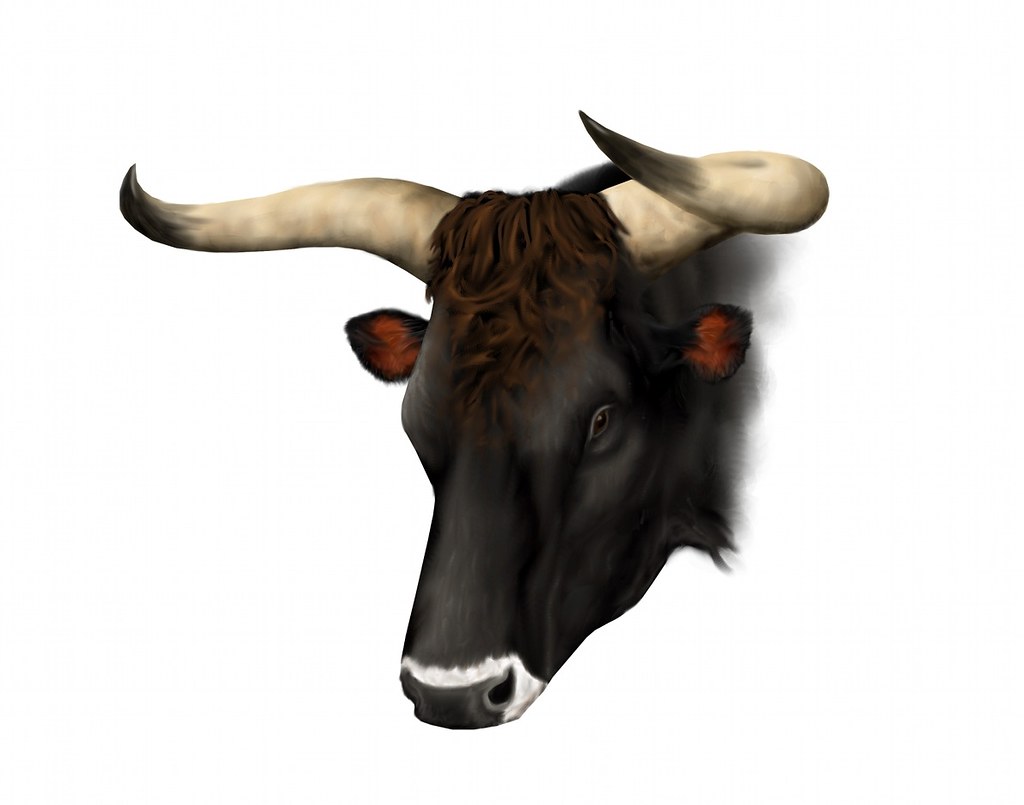
A while ago, I did a blog post “I am not so optimistic anymore” on the Tauros Project. By “not so optimistic” I meant that initially I thought/hoped the Tauros Project would surpass other breeding-back attempts with ease in a short time. Later on, having seen more animals of the project and an increased knowledge on genetics and animal breeding, my initial enthusiasm was replaced by a more deflated opinion. That is not to say that I turned to being pessimistic, not at all.
Now, having two years passed, I want to give a second opinion and prognosis for the project. My opinion is based solely on the scarce information that can be found on the web, and photo material of the herds.

The project has expanded nicely all over Europe, and has dozens of crossbred animals already. Some of them look really nice, and also the purebred founding individuals look good overall, although not always as tall and slender as I hoped. Of course they are not perfect yet, but they are of their first and second cross generation, so they just getting started. They have to genetically unify the founding breeds in one gene pool and then get rid of the undesired traits. Two years ago, I was worried about the large amount of Highland cattle in the project, which is used as a “quantity breed” to increase volume. I thought their undesirable traits would swamp the population and produce a high number of animals with small size, stubby body and short legs and face. This might be true for the first and second generation that includes Highland, but as Taurus cattle has shown, as long as they continue backcross them with slender southern European breeds, the undesired Highland body morph might be largely bred away in two or three generations.
The project is at such an early state that it might not be that effective to look at their first or second generation animals. It is more important to look at the founding individuals and to see what traits they have, what tells us what can be achieved in the future. Many of the southern European cattle they purchased and a number of crossbreeds have a slender and well-proportioned body, some do not. Sayaguesa seems to be the largest of the breeds included at large scale; Sayaguesa is a tall breed, but maybe it is necessary to include very tall breeds like Chianina to compensate the small size of breeds like Highland, Pajuna or Maronesa. The Tauros Project does not want to use that breed as far as I know, but maybe they are able to get their hands on really large Boskarin or semen from Maltese cattle – that would help to increase the size of the Tauros crossbreeds.
Many of the founding breeds of the Tauros Project are comparably short horned or have medium-sized horns. The project thus needs a breed with really large and thick horns to compensate that. The two largest-horned breeds of the project are Highland cattle and Maremmana; some individuals of both breeds have impressing horns indeed that fit in length and thickness, but many have horns that do not reach the dimensions of the aurochs, especially regarding thickness. Therefore, and this is just my personal impression, the Tauros Project might need a breed that truly boosts horn size, otherwise it might have problems in future generations in achieving impressive and authentic horn sizes.
Regarding horns, the project has the advantage of using Maronesa. Surely, Maronesa has its disadvantages too (small size, sometimes rather hefty bulls, short faces), but is very useful in two respects: the colour is nearly always a perfect wildtype colour, often with a well marked sexual dimorphism. That is the case only in very few breeds. And, much more important, Maronesa often have horns with a very clear inwards-curve, in both sexes. This is also a rarity in most breeds. Therefore, when they take advantage of this breed, the Tauros Project might have less problems in achieving inwards-facing horns in both sexes than most other projects.

I am very happy that the Tauros Project is using Maronesa. So far, it is the only project using that breed. I think Maronesa can be very helpful when crossed with the right breeds. Imagine a herd that is composed of Maronesa x Chianina only. It would bear a lot of potential, it would include almost all aurochs traits except for really elongated skulls. Using Maltese cattle instead of Chianina would also result in a much lower frequency of dilution alleles in the herd and add the elongated skull shape. Both combinations would still probably need some augmentation regarding horn size.  

Back to the Tauros Project. I think that the project is progressing well and they are doing a good job (according to the Rewidling Europe webpage, they have almost 300 crossbred animals by now, dispersed among several European countries). Regardless of whether they are going to achieve truly impressive sizes or horn volume, I think the project is going to produce many rather good individuals in any case. The basis is good, and many of the crossbred animals born already look satisfying. I repeat my statement that I think the Tauros cattle will resemble Taurus cattle, with minor differences because they have different founding breeds. And that is a good thing, as it means they will achieve a high resemblance to their common wild ancestor. Of course the project faces the same challenges as all cattle breeding projects: it has to unify the desired traits and get rid of the undesired ones. And since the rules of inheritance go for all projects, it will take a lot of time, especially in such a slowly reproducing species as cattle. Recessive alleles, such as the dilution factors inherited by Podolian cattle or the recessive red of Highland cattle, will continue to show up for decades, just as other undesired traits will do. But that is a problem that all projects are facing, that’s part of animal breeding.

All in all, I am very happy with the progress of the project. It is great to see how it creates one herd after the other, I enjoy looking at the animals, and I am looking forward to see the future cross animals and I am confident that there will be some really good individuals among them. I think that we are living in the golden age of “breeding back”. There are so many projects and herds in so many European countries, and all of them are promising. All of them have their own take-on to this subject, and this is positive, as there are probably multiple ways to the goal and it increases the genetic diversity of the herds in sum (I am still dreaming of one large “breeding back” metapopulation in the future).


Monday, 20 February 2017

What's so charming about the aurochs?

I have some material prepared for several posts, just not the time yet to finish them. Therefore, I ask for patience – more is to come soon. In the meantime, a more “philosophical” post.   

Some animals do have some sort of charisma. Dinosaurs are charismatic, for example – there are millions of dinosaur fans on this world, and some of them have made it their profession. Big cats also capture the fascination of people, otherwise they would not be the focus of wallpapers or there would be no cars or weapons named after them. The aurochs has a kind of charisma too. There have been scientists, artists and cattle breeders obsessed with this animal, and there are still dozens, probably hundred or perhaps even thousands of people that are interested in this bovine, many of them in a very passionate way (and there is reason to believe that the numbers are rising). So what makes this animal that fascinating?
Magnificent beast or ordinary cattle?

If the aurochs was not extinct, we would probably regard them as ordinary bovines. Surely, living aurochs would be an impressive sight – their size, their horns, their athletic energetic body. And some zoo visitors might even notice that their sexes have totally different colours, which is quite unusual for most mammals. But other wild bovines are very impressive too, and people do not usually go nuts about them.
I think it is mostly the fact that the aurochs is extinct that makes it that interesting in the first place. Particularly that it was evidently driven to extinction by man in recent times, and did not die out for unknown reasons some millennia ago. And it would be still around without anthropogenic influence. This makes the aurochs a lot more graspable. There is similar interest in other animals driven to extinction by man, such as the thylacine or the dodo (which, in any case, were both unique animals). It is the mere fact that we could still see these animals in flesh, living and breathing, if the actions of our species had been less consuming and destructive that provokes interest and emotions.
            Furthermore, there is something that makes the aurochs more graspable than most other extinct animals – it has living descendants that happen to be one of our most familiar livestock, cattle. But everything in the aurochs was more spectacular, wilder – its body was larger, its horns were larger, they were athletically built and powerful, of an eye-catching contrast-rich colouration and their frizzy forelocks gave them a wild and fierce look (according to people who saw them in live). And because of the fact that they are extinct they get (wrongly) associated with mammoths and the other spectacular glacial fauna (they were, however, a key part of the not less spectacular interglacial fauna). So the aurochs is on the one side an animal we can relate to, but on the other side has an aura of being wild, untamed, strong and ancient.

The fact that the aurochs has living descendants that all preserve its trait to a greater or lesser extent is what makes it really exciting. Isn’t it fascinating to see that this one cow might have horns of a shape like the wild-type that disappeared, while the other cow might be coloured exactly like a wild cow, and isn’t tempting to try unifying all those preserved optical wild-type traits in one strain? Fortunately a number of projects try exactly that. The concept is fascinating: picking the most suited breeds, crossbreeding them and trying to achieve something that optically resembles the aurochs as far as possible. And since all those suited breeds are hardy, healthy and robust enough to survive on their own, and because cattle – as direct descendants of the aurochs – probably work ecologically in a very similar if not identical manner, such a result would not only look like the aurochs but also ecologically fill its niche and probably also behave very similar. The next best thing to cloning, and exciting to watch. It is exciting to see what has been achieved so far, to watch it progressing and to think on how it might be improved. So, here we do not only have the chance of creating a close approximation to an extinct animal with living animals in flesh and blood, and not just with pen and paper as I used to do it for years, but also to fill an ecological niche that has been made vacant by human actions.

It was exactly that chance to fill a vacant ecological with animals that resemble an extinct form that got me that much into the aurochs in 2011. Now I am one of the many aurochs enthusiasts, and it is a surprisingly rich topic – it not only includes palaeontology and zooarchaeology, but also ecology, genetics and animal breeding. I am concerning myself with that topic since almost exactly six years now, and it simply does not get boring – quite the contrary, it keeps being exciting.

Thursday, 9 February 2017

Some more removed Lippeaue individuals

I already did a similar post in 2016. It was on old or removed Taurus cattle from the Lippeaue herd in North-Rhine Westphalia, Germany. I used a photo archive and stock list I was provided during my last visit in 2015 to pick out interesting individuals and presented them in the blog post. I covered the herd a lot already, but I found some more interesting individuals that I do not want to keep from you. These cross products can be interesting in a number of ways: either due to their breed combination, what they tell us about their parents or simply because of their looks. I hope you enjoy. All photos are curtesy of Matthias Scharf from the ABU, so please do not replicate without permission. 
  
84 025


This nameless bull was the son of Luca (Heck x Chianina) and Loxia (Luca x Sayaguesa). He looked a bit like a black version of his father-grandfather. His correct colour made him very beautiful to look at, although the other traits were not that convincing to me. He is being offered on the VFA’s sale page for a long time now, so some of you might already know him, but is not present in the herd since 2013 at least.

84 037


This bull has an interesting aspect. He is the son of Lombriz (50% Sayaguesa, 50% Heck x Chianina) and Lerida (Heck x Sayaguesa). The legs seem a bit short, and the spine is somewhat hanging (a trait that Sayaguesa often unfortunately have), but the overall impression on me is appealing – there are, however, better Lippeaue bulls and that is why it seemingly was removed.

92 576


This bull is the son of Churro, the Sayaguesa bull, and Lerida. Despite being three quarters, it has a reddish saddle, which is untypical for a bull with such a high portion of Sayaguesa. The left horn seemingly got injured.

Lambretta


This cow is the daughter of Lucio and Ludovica, thus (Heck x Sayaguesa) x (Heck x Chianina) and had a quite good aspect – horn shape and size good, colour accurate, body and proportions good. This cow seems just fine to me, but did not stay that long in the herd. Perhaps her behaviour was undesirable.

Lisette
Lisette was the daughter of Loco and Lerida, therefore was (Heck x Lidia) x (Heck x Sayaguesa). Now this cow looked really, really good. Her horn curvature was good, albeit a bit asymmetric, the face was elongated and colour and proportions perfect. This the Taurus cow that in my view had the best body shape of all, with a slender waist and a detectable hump (a trait that is comparably rare even in less-derived cattle). She lived in Klostermersch-Süd from 2005 to 2010 and left two descendants, of which none left a track in the current population. This cow looked really good to me – if the horns would have been a bit larger and more intensively curved, I would have been satisfied to 100% from the breeding perspective. However, she had some small white spots in the sternal region and I do not know anything about her behaviour. Perhaps it was problematic due to her quarter Lidia ancestry.

92 566 


This bull immediately got my interest – I must have overlooked it when I was looking for individuals of that combination in the past. It was a Sayaguesa x Chianina bull that stayed in the herd until the age of a bit more than two years (2010-2012). It is very interesting to see a bull of that combination at this age, and also perfectly wild type coloured with almost no saddle. This is the second bull of this combination that I know of with a dark colour, while cows of this combination tend to be of a beige colour (see here and here; there is one bull that resulted in a very light grey colour for whatever reason), which might indicate that Chianina has retained sexual dichromatism to a certain degree, masked under the colour dilution factors.
Of course the horns of this bull are very short, which is to b expected from this combination. But it is not so much what this particular F1 bull looks like that captures my enthusiasm about this combination, but the potential it bears if it would have been mated to the two Sayaguesa x Chinina cows (here and here) in the Lippeaue. The horn size probably would not end up spectacular, but anything else has the potential to become rather astonishing: size, body shape/proportions, skull shape, correct colour with dimorphism to some degree, and even horn curvature has potential. That’s why I was very much looking forward to see the Sayaguesa-Chianina cross herd planned by the Auerrindprojekt, which was not yet put into practise due to the death of the bull Johnny.   

Leonora


This cow was the daughter of the Sayaguesa x Heck bull Lucio and the Chianina cow Eloisa. I included her here because of her very slender, long-legged build and the correct, non-diluted colour. It is interesting that some half-Chianina cows and bulls are either completely wild type coloured, white/light grey or something inbetween. Chianina is most likely always homozygous for the at least two or maybe three colour dilution genes, so it is probably not the varying factor. Perhaps it is the Heck cattle influence: the Heck parents may be carry one or two of the dilution factors on occasion, in which case the offspring is (partly) of a diluted colour then. The Heck bull Lancelot, for example, had a quite diluted coat colour. Mator might also have passed on dilution alleles, as some of its offspring and its Dutch origin suggests.
Leonora was removed in 2007 or 2008, perhaps because of her meagre horns.

Lolaf


Lolaf was the son of Pablo and Lila – Pablo is a beautiful but rather hefty Heck x Sayaguesa bull, Lila is/was a cow with a quarter Lidia in her genealogy. So this bull was one eighth Lidia, and I think it shows in its face and somehow columnar trunk – yes, of course Lidia is probably the most athletically built taurine breed, but aging bulls develop a rather heavy, columnar trunk. Crossbred bulls, although being somewhat more muscular, have this columnar trunk already at young age as far as I can tell from the photos.  

Luke


Luke was three quarters Heck, one quarter Lidia. He seemingly has at least one dilution factor (either homozygous or heterozygous), and since both Lancelot and Mator are his grandfathers it might not be that surprising.

84 562


This cow is interesting because it is the daughter of Luca and a Tudanca cow that was kept in the Hellinghauser Mersch herd for a short time. She has a grey diluted coat, and the chance for her getting a diluted coat was quite high, as Tudanca is homozygous for at least one kind of dilution, and Luca perhaps was too due to him being half Lancelot and half Chianina.

This cow seemingly was not kept for long and did not leave a track in the population.

Tuesday, 7 February 2017

Confirmed: The wisent is an aurochs hybrid

Finally I have the time to present some interesting news here, that are not that quite new anymore as the paper appeared in October 2016. But I never found the time to cover a peer-reviewed paper properly.

In a 2015post, I mentioned the possibility of a hybrid origin for the wisent on my blog for the first time. I cited a 2004 paper that found the mitochondrial lineage of wisents to cluster with domestic cattle instead of American bison, although by Y-data and morphology the wisent is clearly closest to the A. bison. This provokes the idea that the wisent originated from hybridization of bulls of a bison-related species with cows of a cattle-related species [1]. Actually, I recognized some wisent individuals with a horn curvature very reminiscent of that of the aurochs already in 2013, but was reluctant to propose hybridization or introgression without having genetic data to back it up.
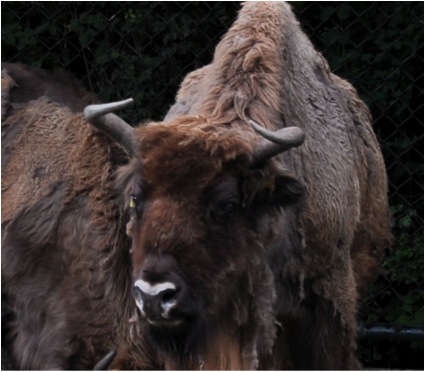
Wisent with aurochs-like horns at Hellabrunn Zoo, Munich
Now, with the recent paper by Soubrier et al. being published, the hypothesis of the wisent being a hybrid of aurochs and steppe bison, Bison priscus, seems to be confirmed [2].
The mystery of the wisent’s origin starts with the fact that there is no Pleistocene fossil record of this species, while there is solid evidence for the aurochs or the Holarctic steppe bison. Now, Soubrier et al. have analysed the genome of specimen of B. priscus, aurochs, historical and modern wisents. They found that wisent, aurochs and cattle cluster together on the mitochondrial genome, while yak, A. bison and Steppe bison form a clade. Furthermore, they found that a number of Pleistocene remains form a group preliminary called “Clade X”, which is sister to modern and historical wisents and they diverged about 120.000 years ago. On the nuclear genome, however, the wisent is a bison. This implicates that the wisent evolved from hybridization events of Steppe bison bulls with aurochs cows from more than at least 120.000 years ago (for comparison: the divergence between taurine and zebuine cattle happened about 250.000 years ago). The polygynical reproduction system of bovines probably endorsed this asymmetrical hybridization. The hybrids must have been ecologically different from both ancestor species, as they were reproductively isolated from then on [2]. This lineage lead to the modern wisent, Bison bonasus. From about 20.000 years on, wisent-like cave paintings began to show up. Prior to that, they showed a typically Steppe bison-like morphology.

It is exciting to have it confirmed, although it does not surprise me at all. Not only were the occasionally very aurochs-like horns of some wisents suspicious to me, but also its overall morphology compared to the other fossil and extant species of Bison. The wisent has a shorter trunk and longer legs, resulting in a square-like build like in the aurochs, it has a neck bulge and more horizontally oriented pelvis resembling taurine cattle. Now we can be quite confident that these traits are not a coincidence, but probably the vestiges of hybridization with aurochs. After all, both wisent and Clade X have a proportion of 10,9% of aurochs DNA in their nuclear genome.
Comparison of the morphology of A. bison (top), wisent (middle) and aurochs (bottom). Image source 1 & 2
Interestingly, the wisent as a hybrid of two large-horned species ended up being a short-horned species. To me, there are two explanations for that on genetic level: either the interplay aurochs and bison genes resulted in short horns, while respectively having only bison or aurochs alleles on all of these loci would result in large horns in both species, or new mutations showed up. In any case, short horns apparently were not disadvantageous to the hybrids, otherwise they would not have become fixated in the gene pool. Whether this fixation was the result of selective pressure or genetic drift cannot be said.

Hybridization is not an uncommon phenomenon. Textbooks tell us that hybrids between wild species tend to be unsuccessful due to pre- and postzygotic isolation factors and this might be true for most cases. But it is also evident that hybridization played a role in the speciation of a number of mammal species, including wild goats, whales, canines, mice, and our own species, Homo sapiens*. The wisent is yet another example, and there are probably a lot to find in other vertebrate groups too.

* It has become well-established by genetic studies of the past several years that modern Homo sapiens has experienced introgression by H. neanderthalensis, the Denisova Man and possible another yet undescribed human species.

The wisent being an aurochs hybrid of course provokes the question if it might be possible to obtain nuclear aurochs genes that have vanished from the modern domestic cattle gene pool (you could expand that even further to the basis of Bos; Banteng and Gaur might share basal genes that the aurochs also possessed but domestic cattle lost). However, I am sceptical to this idea. Simply crossing-in wisent in “breeding back” herds and breeding against obvious bison traits at the maxim “well, it should work somehow” is probably not a good idea. You would have to know these specific aurochs genes preserved in wisent and find a way to select on them. It would probably work only with gene targeting, and with that method you could instead try to recreate a complete aurochs with the complete genome that already has been resolved. The influx of wisent into breeding-back herds could also be problematic for rewilding those herds, as it might increase the tendency of these cattle to hybridize with wisent in the wild and lower the pre- and postzygotic isolation barriers; the (not really existent [3]) danger domestic cattle provide to the genetic integrity of wisent in the wild is sometimes used as an argument against rewilding wisent and cattle in the same area[3]. So I would not opt for Frankenstein crossbreeds, also regarding Banteng and Gaur (the Yak would be the only species for which I am open for experimental crosses, but that is another story), for practical reasons and public relations.

An interesting question is if hybridization with bison might have also left a track in the aurochs. There is one detail that makes me consider it not unlikely: the curly hair on the forehead and sometimes also neck and face that we see in many European taurine bulls (and cows, but to a lesser extent). Cattle outside of Europe, especially zebuine cattle, always lack this trait. Perhaps it is a trait that found its way into the gene pool of B. p. primigenius by occasional hybridization with bison and got fixed by sexual selection. But that is only an idea of mine.  

Literature

[1] Verkaar, Nijman, Beeke, Hanekamp, Lenstra: Maternal and Paternal Lineages in Cross-breeding bovine species. Has Wisent a Hybrid Origin?. 2004.
[2] Soubrier et al.: Early cave art and ancient DNA record the origin of the European bison. 2016.
[3] Vera: Do European Bison and domestic cattle cross spontaneously? 2002.