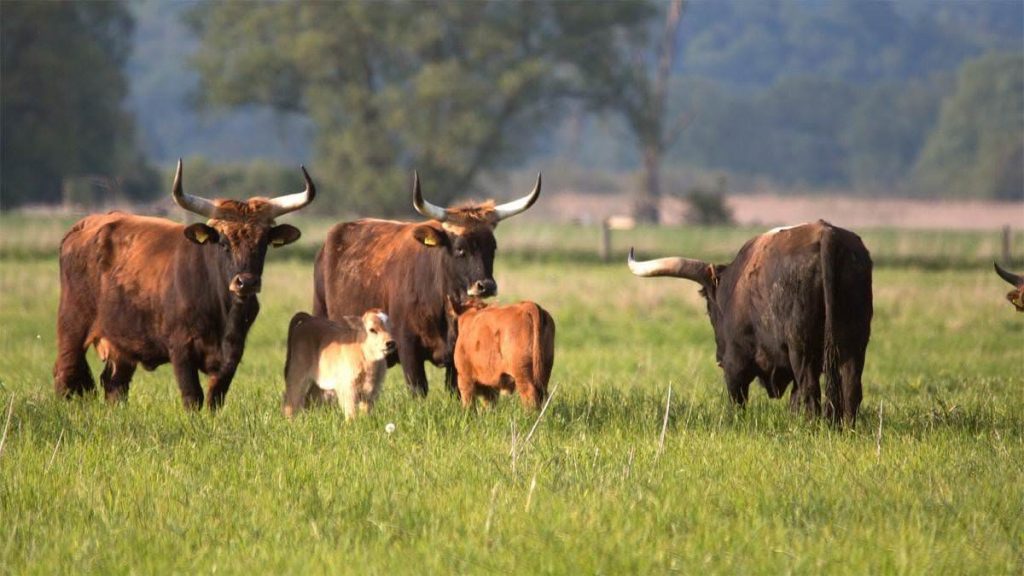
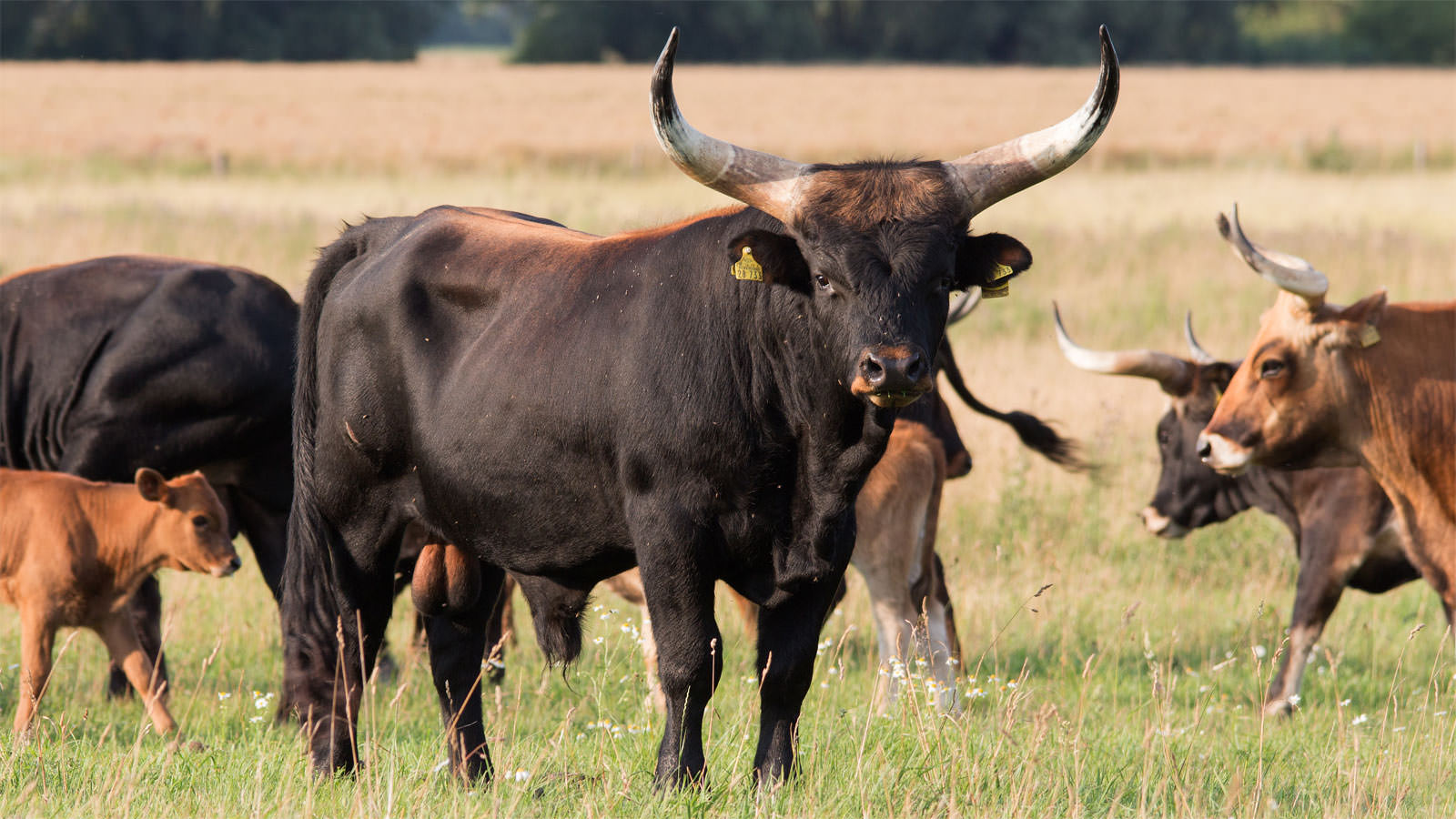
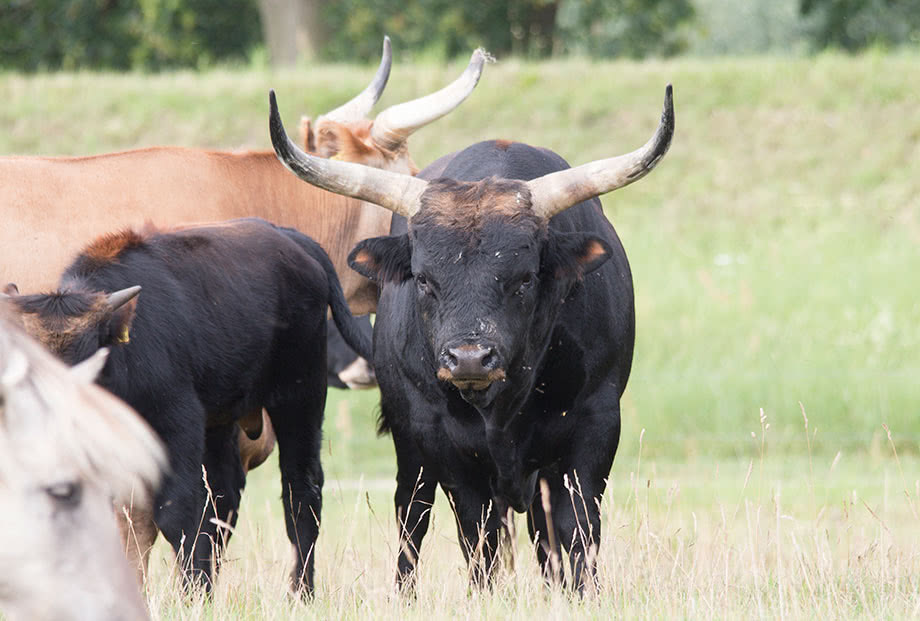
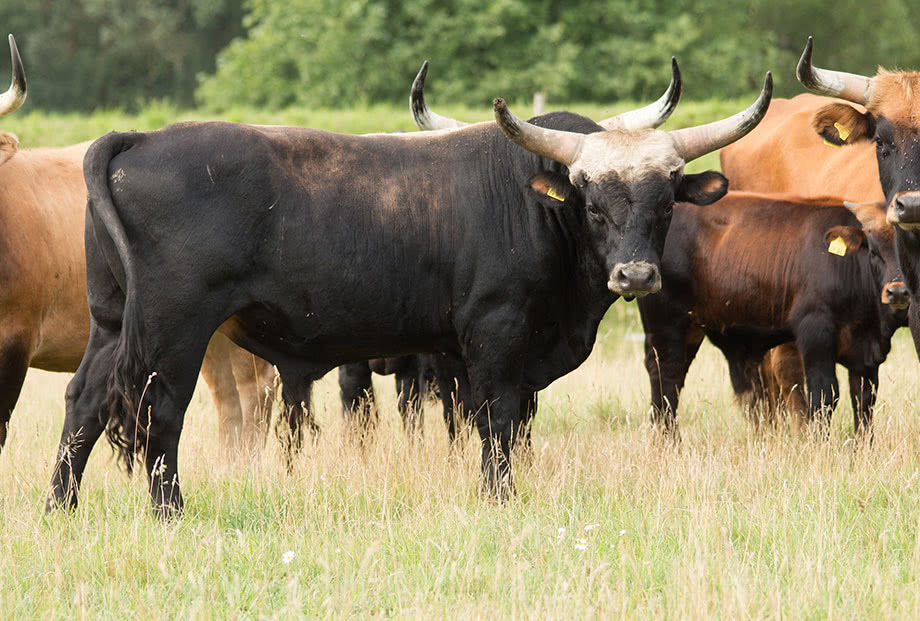
Some traits are relatively easy to achieve in “breeding-back” projects, while others are more challenging. The most important characteristic, the ecologic capacity to sustain themselves in nature, is at the same time one of the easiest to achieve, because “breeding-back” exclusively works with healthy, robust landraces. Also comparably easy to achieve are colour traits. Of all the “breeding-back” herds known to me, the Hellabrunn zoo Heck cattle herd and perhaps also the Wildgehege Neandertal Heck cattle are the only herds in which the aurochs colour scheme has been stabilized and deviant colour variants have been eliminated. This is comparably easy, as colour – being a qualitative trait – is regulated by only a few genes (the Maronesa breed is also an example for a flawless wildtype colour also with a well-marked sexual dichromatism). Other “breeding-back” herds, like the Taurus cattle, Tauros cattle and Auerrind cattle herds have not yet stabilized the aurochs colour in their gene pool, which is only due to the fact that their history is not as long as that of these two particular Heck herds. I am confident that with the right selection policy they will achieve the same “correct” aurochs colour.
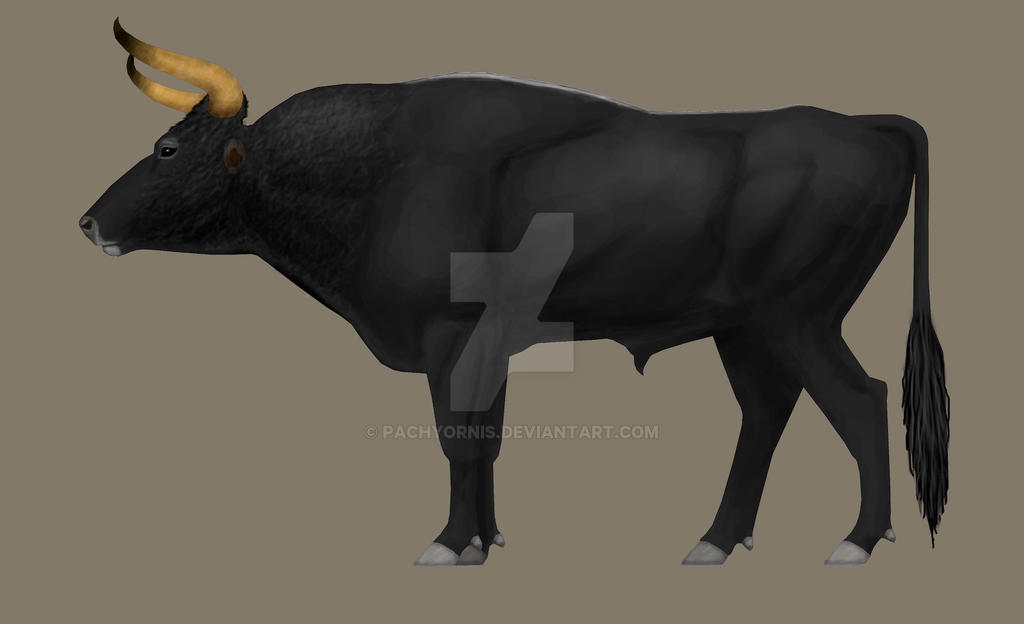
Colour is an easy fix. Other traits are not as easy, f.e. quantitative traits such as body size. Taurus cattle already have a satisfying body size, with cows over 150 cm and bulls possibly between 155 and 170 cm withers height. But to fully match Holocene aurochs, bulls with 180 cm withers or more height should be desired to be present in the population. This is achievable, as large Chianina are of that size.
But there are traits that are actually quite a challenge for “breeding-back” because they are either not found in domestic cattle, or only very rarely. There are several challenges for “breeding-back”.
Inwards-curling horn tips

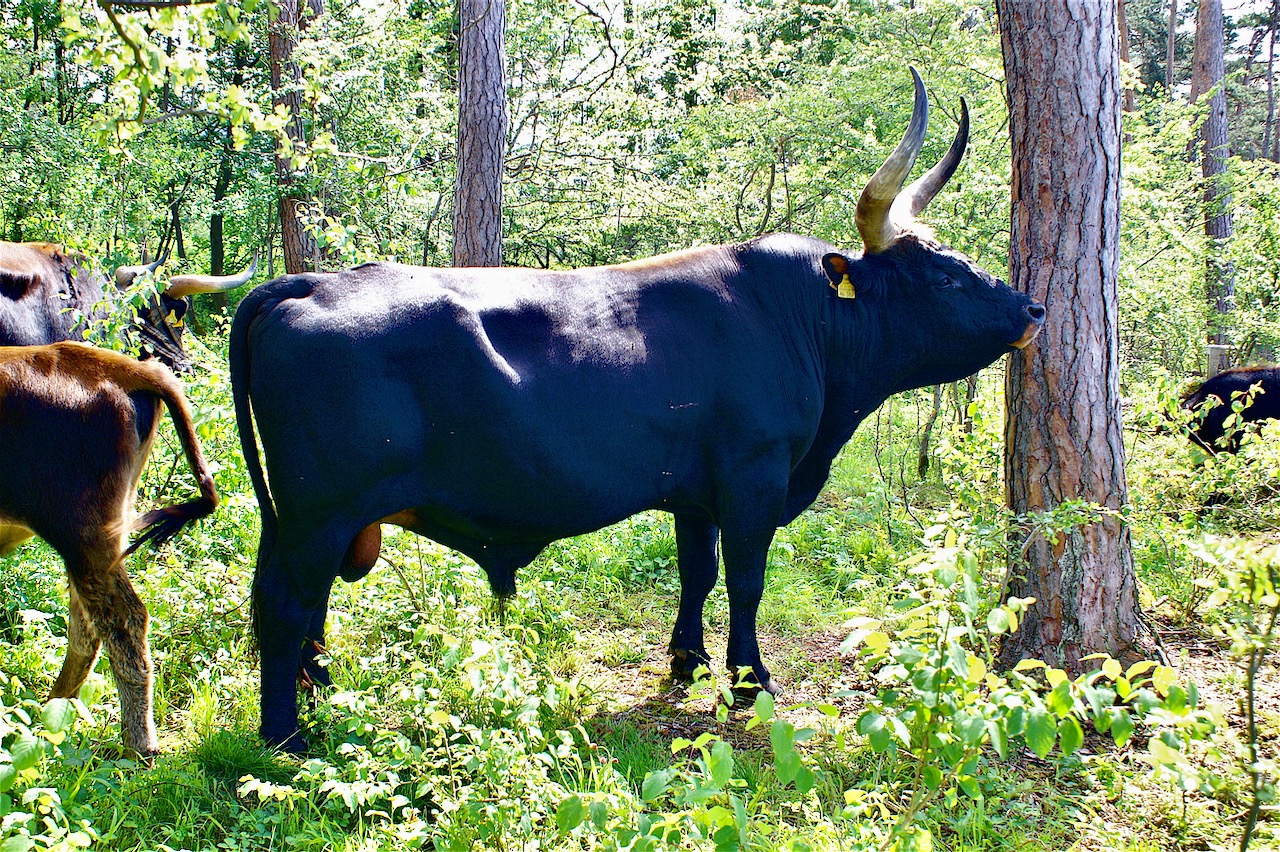
Perfectly aurochs-like horns in the Sayaguesa cow Dona-Urraca in the Lippeaue
The horns of the aurochs had a pronounced inwards curve and the horn tips of many individuals probably curled inwards (as seen in this wild yak), which is suggested by the shape of the bony core. This horn shape is not very common even among primitive landraces. The ABU, who breed the Taurus cattle in the Lippeaue, got lucky because they found a Sayaguesa individual with a perfectly aurochs-like horn curvature named Dona-Urraca. Many Taurus cattle with inwards-curving horns have them because of her. Other Sayaguesa individuals often have horn tips curling outwards or at least not inwards that strongly. Regarding other breeds, one would have to find the right Maronesa individuals, which can have a perfectly aurochs-like horn curvature, or some Lidia which also can have inwards-curving horns. In any case, because a very aurochs-like horn curvature is not common even among primitive cattle, selection has to be very strict if inwards-curling horns are to be fixated in the whole population.
The right trunk length
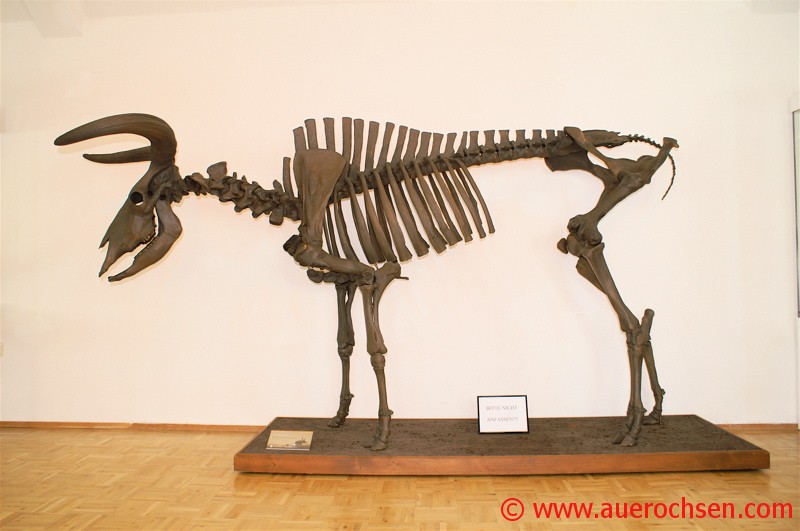
This is a very tricky one because taurine cattle only very rarely have the right trunk length. The trunk of most taurine cattle is longer than in the aurochs. Only some Chianina bulls, some Junqueira bulls and very rarely sometimes also Lidia bulls have a trunk as short as in the aurochs. In cows, the trunk should be a little bit shorter than the shoulder height, which I have not seen in any taurine cows yet that have a trunk as short as in the Sassenberg cow skeleton, the only definitive European aurochs cow skeleton that is mounted and on display:

The Sassenberg aurochs cow. All rights reserved please don't use without permission.
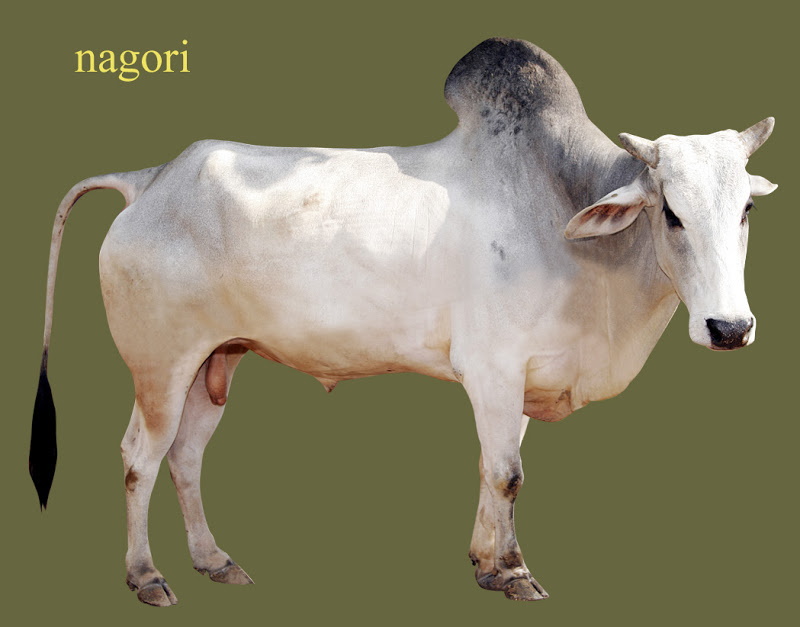
Since the right trunk length is very rare in taurine cattle (at least in the breeds commonly known, there might be some landraces in the Near and Middle East where the situation is different), all “breeding-back” results to far have a trunk that is longer than in the aurochs, even in the best Taurus cattle individuals (which, in my opinion, represent the current top level of “breeding-back”). Achieving the right trunk length will be very difficult when it is not found in at least some individuals. That is why I suggested using primitive zebu landraces, which sometimes have a very short trunk and thus proportions matching the aurochs, in order to achieve the right trunk length. Zebus of course have many undesired traits, which is why, again, strict selection would be required.
The right snout length
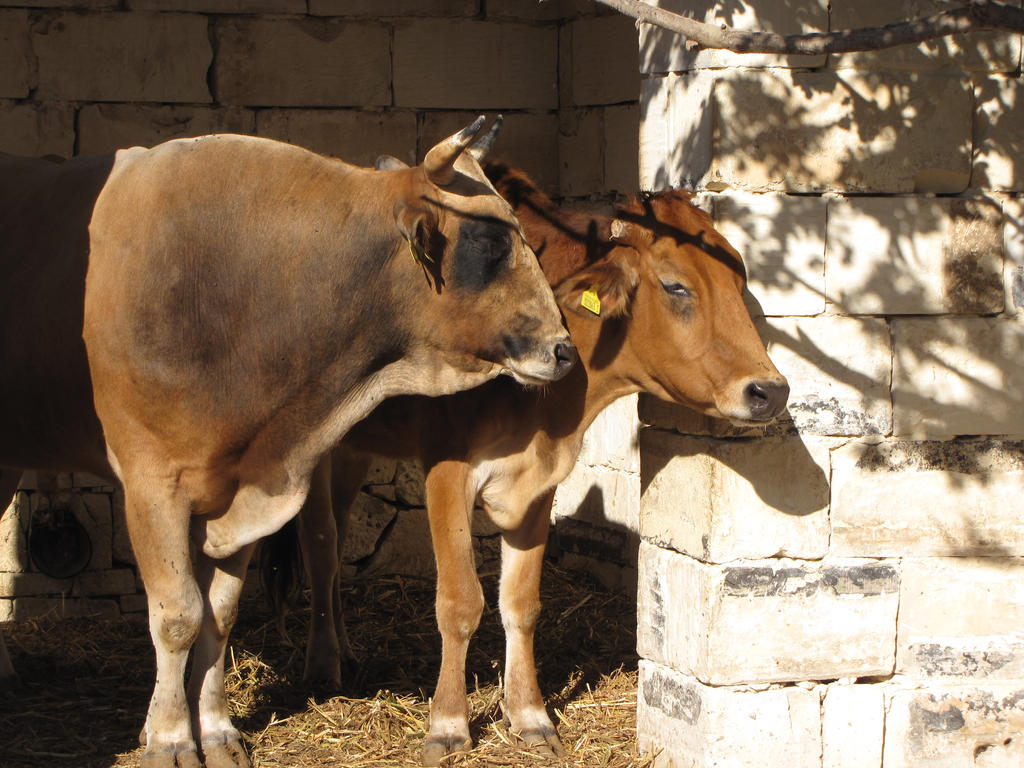
Regarding the snout length we have a similar situation. The snout of most “breeding-back” results are not quite as long as in long-snouted aurochs individuals. As outlined in a previous post, the aurochs was variable in snout length. While the Torsac dirac aurochs, and possibly also the Cambridge specimen, have snout lengths comparable to primitive breeds, many aurochs specimen have a longer snout. Some Holstein have long snouts as well, but the skull anatomy seems to be different from the aurochs. While this photo of a Holstein skeleton shows that the snout is long because the diastema is particularly long, in aurochs skulls it is the whole snout (including the toothed part) is longer than in most domestic cattle. These Maltese cattle also have a rather long snout which might match the aurochs, but I have not seen skulls of that breed yet in order to see if the anatomy is indeed identical or only superficially identical as in the case of Holstein.
In any case, as in most cattle the snout is shorter than in most aurochs, achieving the right snout length will be difficult. The snout is actually an important trait, as a shortened snout is typical of all domestic mammals – thus, achieving the right snout length would be restoring a typical wildtype trait.
The right body morphology
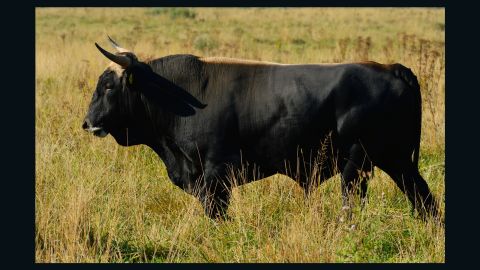
This is another trait that is very difficult to breed for because only some taurine cattle, mainly some individuals of the Lidia breed, have the right body shape. By that I mean a slender waist, a not too bulky intestinum and a muscular body. Only some Lidia individual have a body shape that is plausible for a wild bovine when you compare them with wisents or banteng. Old Lidia bulls, however, may grow quite hefty. Even the best “breeding-back” individuals have a body shape that still looks domestic. It will be very difficult to breed for the right morphology.
Udder size
The aurochs had an udder that was invisible from the side, as cave paintings and comparisons with living wild bovines tell us. Probably it was nonexistent when cows did not have suckling calves. A large udder is a typical trait of domestic cattle, and probably costs a lot of energy and heat during winter. Thus achieving the small to nonexistent udder of the aurochs is desirable for “breeding-back”. The udder is enlarged in all modern domestic cattle breeds, even in Lidia which are not bred for milk. Some Lidia have a virtually invisible udder, on the other hand. Chianina cows also have a comparably small udder as much as primitive zebu breeds. Strict selection would be required to achieve the very small udder that is desired. So far, most “breeding-back” results have udders considerably larger than in the aurochs.
Achieving the right phenotype but maintaining genetic diversity at the same time
The goal of “breeding-back” is to create a more or less homogeneously aurochs-like population. For that to be realized, strict selection is required for all of these traits mentioned above. This, on the other hand, reduces the genetic diversity. By stabilizing the desired traits, the genetic diversity becomes increasingly narrow. This is problematic because a healthy population that is self-sustaining and able to a adapt needs genetic diversity. Therefore, achieving the goal is a balancing act between fixating the desired traits and maintaining genetic diversity at the same time. This is another challenge for “breeding-back” .
As you see, there are several challenges for the breeding of aurochs-like cattle. Achieving “perfect” results that have all the desired traits will therefore take its time. Another approach would be to breed to a certain level of quality and than let natural selection do all the rest. Natural selection will “refine” the horn shape, proportions, body morphology and udder size over a sufficient amount of generations. Therefore, it is actually not necessary to breed for “perfection”. If you follow the approach of letting natural selection do the rest, “breeding-back” is actually already ready. One would have to pick the best individuals that are available so far, release them into a wilderness area and let natural selection do the work. For that approach, actually taking f.e. Lidia, the probably most primitive taurine breed, and releasing herds of them together with some Chianina cows for body size, Watussi cows for horn size, Maronesa for horn curvature and colour and Sayaguesa cows for overall appearance, would be enough and after perhaps already after 30-40 years of natural selection, very aurochs-like animals would have been produced.
Therefore, it is not really necessary to breed for perfection. Nature will do that for us after a sufficient amount of time.