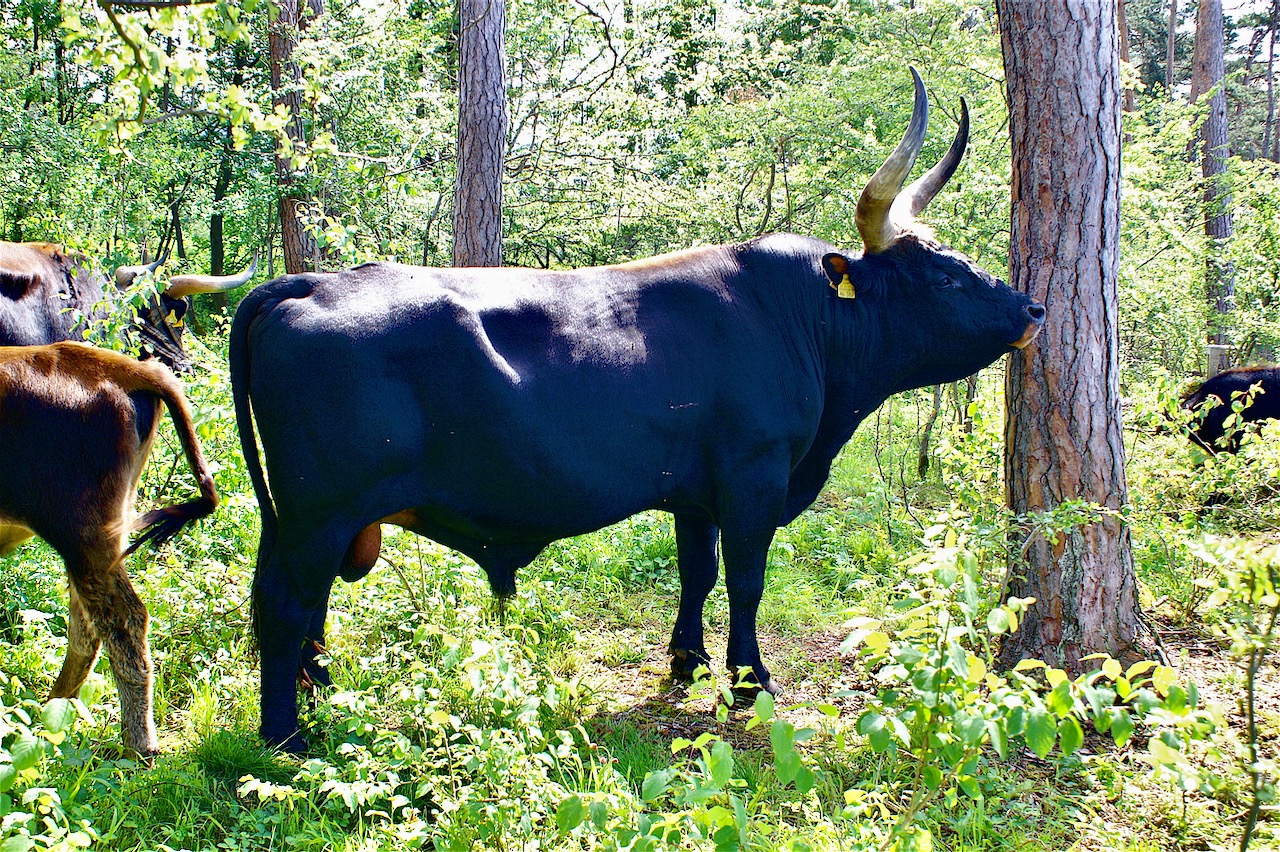
![]() |
| #1 © Csoban Peter |
![]() |
| #2 © Csoban Peter |
![]() |
| #3 Csoban Peter |
![]() |
| #4 © Csoban Peter |
![]() |
| #5 © Csoban Peter |
"Breeding-back" aims to restore or immitate extinct animals by selective breeding. This blog provides general information, the facts behind myths and news from various projects.
![]() |
| #1 © Csoban Peter |
![]() |
| #2 © Csoban Peter |
![]() |
| #3 Csoban Peter |
![]() |
| #4 © Csoban Peter |
![]() |
| #5 © Csoban Peter |
Some traits are relatively easy to achieve in “breeding-back” projects, while others are more challenging. The most important characteristic, the ecologic capacity to sustain themselves in nature, is at the same time one of the easiest to achieve, because “breeding-back” exclusively works with healthy, robust landraces. Also comparably easy to achieve are colour traits. Of all the “breeding-back” herds known to me, the Hellabrunn zoo Heck cattle herd and perhaps also the Wildgehege Neandertal Heck cattle are the only herds in which the aurochs colour scheme has been stabilized and deviant colour variants have been eliminated. This is comparably easy, as colour – being a qualitative trait – is regulated by only a few genes (the Maronesa breed is also an example for a flawless wildtype colour also with a well-marked sexual dichromatism). Other “breeding-back” herds, like the Taurus cattle, Tauros cattle and Auerrind cattle herds have not yet stabilized the aurochs colour in their gene pool, which is only due to the fact that their history is not as long as that of these two particular Heck herds. I am confident that with the right selection policy they will achieve the same “correct” aurochs colour.
Colour is an easy fix. Other traits are not as easy, f.e. quantitative traits such as body size. Taurus cattle already have a satisfying body size, with cows over 150 cm and bulls possibly between 155 and 170 cm withers height. But to fully match Holocene aurochs, bulls with 180 cm withers or more height should be desired to be present in the population. This is achievable, as large Chianina are of that size.
But there are traits that are actually quite a challenge for “breeding-back” because they are either not found in domestic cattle, or only very rarely. There are several challenges for “breeding-back”.
Inwards-curling horn tips

Perfectly aurochs-like horns in the Sayaguesa cow Dona-Urraca in the Lippeaue
The horns of the aurochs had a pronounced inwards curve and the horn tips of many individuals probably curled inwards (as seen in this wild yak), which is suggested by the shape of the bony core. This horn shape is not very common even among primitive landraces. The ABU, who breed the Taurus cattle in the Lippeaue, got lucky because they found a Sayaguesa individual with a perfectly aurochs-like horn curvature named Dona-Urraca. Many Taurus cattle with inwards-curving horns have them because of her. Other Sayaguesa individuals often have horn tips curling outwards or at least not inwards that strongly. Regarding other breeds, one would have to find the right Maronesa individuals, which can have a perfectly aurochs-like horn curvature, or some Lidia which also can have inwards-curving horns. In any case, because a very aurochs-like horn curvature is not common even among primitive cattle, selection has to be very strict if inwards-curling horns are to be fixated in the whole population.
The right trunk length
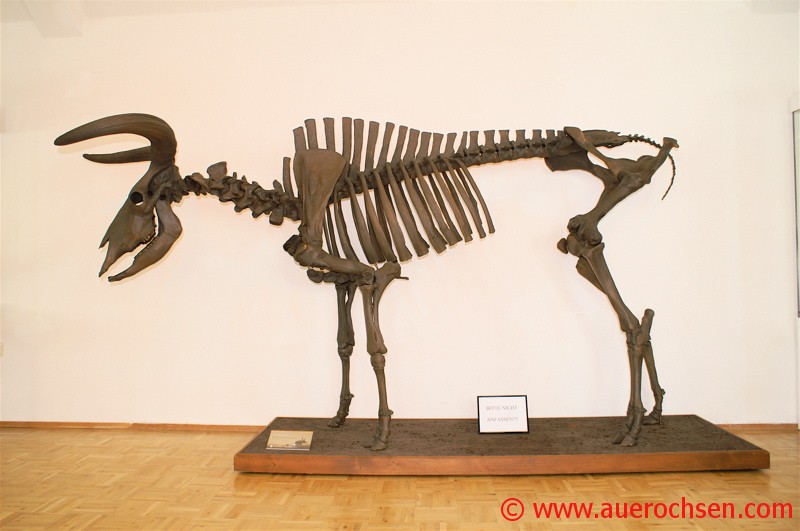
This is a very tricky one because taurine cattle only very rarely have the right trunk length. The trunk of most taurine cattle is longer than in the aurochs. Only some Chianina bulls, some Junqueira bulls and very rarely sometimes also Lidia bulls have a trunk as short as in the aurochs. In cows, the trunk should be a little bit shorter than the shoulder height, which I have not seen in any taurine cows yet that have a trunk as short as in the Sassenberg cow skeleton, the only definitive European aurochs cow skeleton that is mounted and on display:

The Sassenberg aurochs cow. All rights reserved please don't use without permission.
Since the right trunk length is very rare in taurine cattle (at least in the breeds commonly known, there might be some landraces in the Near and Middle East where the situation is different), all “breeding-back” results to far have a trunk that is longer than in the aurochs, even in the best Taurus cattle individuals (which, in my opinion, represent the current top level of “breeding-back”). Achieving the right trunk length will be very difficult when it is not found in at least some individuals. That is why I suggested using primitive zebu landraces, which sometimes have a very short trunk and thus proportions matching the aurochs, in order to achieve the right trunk length. Zebus of course have many undesired traits, which is why, again, strict selection would be required.
The right snout length
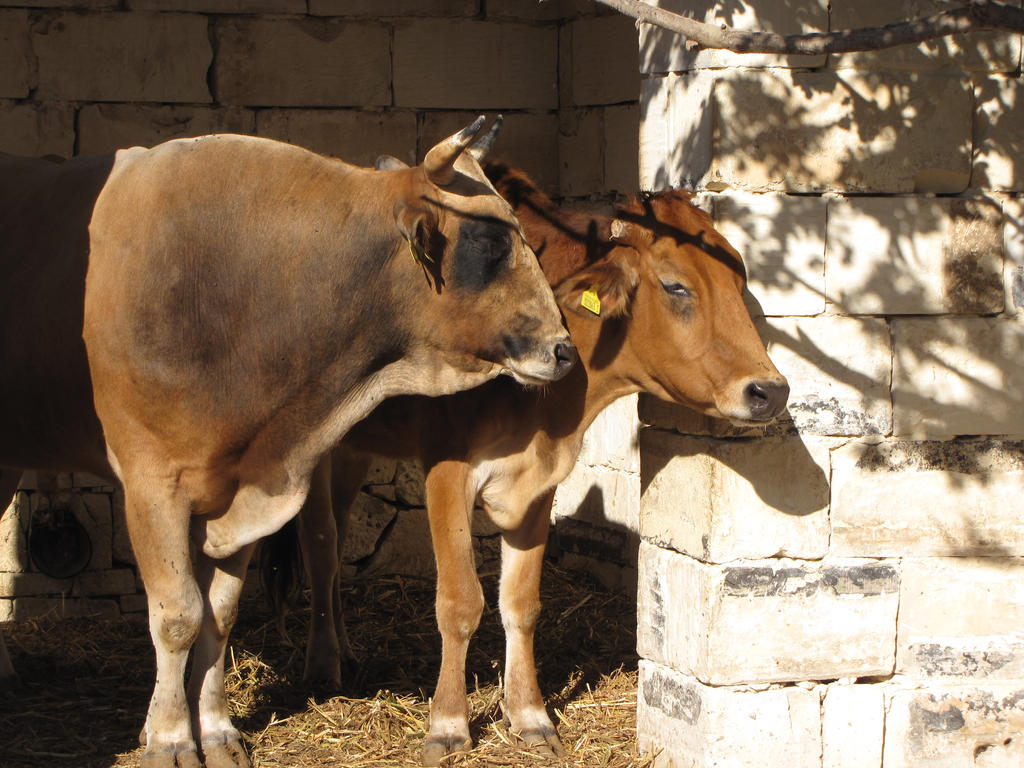
Regarding the snout length we have a similar situation. The snout of most “breeding-back” results are not quite as long as in long-snouted aurochs individuals. As outlined in a previous post, the aurochs was variable in snout length. While the Torsac dirac aurochs, and possibly also the Cambridge specimen, have snout lengths comparable to primitive breeds, many aurochs specimen have a longer snout. Some Holstein have long snouts as well, but the skull anatomy seems to be different from the aurochs. While this photo of a Holstein skeleton shows that the snout is long because the diastema is particularly long, in aurochs skulls it is the whole snout (including the toothed part) is longer than in most domestic cattle. These Maltese cattle also have a rather long snout which might match the aurochs, but I have not seen skulls of that breed yet in order to see if the anatomy is indeed identical or only superficially identical as in the case of Holstein.
In any case, as in most cattle the snout is shorter than in most aurochs, achieving the right snout length will be difficult. The snout is actually an important trait, as a shortened snout is typical of all domestic mammals – thus, achieving the right snout length would be restoring a typical wildtype trait.
The right body morphology
This is another trait that is very difficult to breed for because only some taurine cattle, mainly some individuals of the Lidia breed, have the right body shape. By that I mean a slender waist, a not too bulky intestinum and a muscular body. Only some Lidia individual have a body shape that is plausible for a wild bovine when you compare them with wisents or banteng. Old Lidia bulls, however, may grow quite hefty. Even the best “breeding-back” individuals have a body shape that still looks domestic. It will be very difficult to breed for the right morphology.
Udder size
The aurochs had an udder that was invisible from the side, as cave paintings and comparisons with living wild bovines tell us. Probably it was nonexistent when cows did not have suckling calves. A large udder is a typical trait of domestic cattle, and probably costs a lot of energy and heat during winter. Thus achieving the small to nonexistent udder of the aurochs is desirable for “breeding-back”. The udder is enlarged in all modern domestic cattle breeds, even in Lidia which are not bred for milk. Some Lidia have a virtually invisible udder, on the other hand. Chianina cows also have a comparably small udder as much as primitive zebu breeds. Strict selection would be required to achieve the very small udder that is desired. So far, most “breeding-back” results have udders considerably larger than in the aurochs.
Achieving the right phenotype but maintaining genetic diversity at the same time
The goal of “breeding-back” is to create a more or less homogeneously aurochs-like population. For that to be realized, strict selection is required for all of these traits mentioned above. This, on the other hand, reduces the genetic diversity. By stabilizing the desired traits, the genetic diversity becomes increasingly narrow. This is problematic because a healthy population that is self-sustaining and able to a adapt needs genetic diversity. Therefore, achieving the goal is a balancing act between fixating the desired traits and maintaining genetic diversity at the same time. This is another challenge for “breeding-back” .
As you see, there are several challenges for the breeding of aurochs-like cattle. Achieving “perfect” results that have all the desired traits will therefore take its time. Another approach would be to breed to a certain level of quality and than let natural selection do all the rest. Natural selection will “refine” the horn shape, proportions, body morphology and udder size over a sufficient amount of generations. Therefore, it is actually not necessary to breed for “perfection”. If you follow the approach of letting natural selection do the rest, “breeding-back” is actually already ready. One would have to pick the best individuals that are available so far, release them into a wilderness area and let natural selection do the work. For that approach, actually taking f.e. Lidia, the probably most primitive taurine breed, and releasing herds of them together with some Chianina cows for body size, Watussi cows for horn size, Maronesa for horn curvature and colour and Sayaguesa cows for overall appearance, would be enough and after perhaps already after 30-40 years of natural selection, very aurochs-like animals would have been produced.
Therefore, it is not really necessary to breed for perfection. Nature will do that for us after a sufficient amount of time.
Let us recapitulate the morphology and life appearance of the aurochs: it was large, had a short trunk and long legs, a long snout and horns facing forwards in a 60° angle relative to the snout. Right?
Yes and no. In fact, there might have been more variation on some aspects of the aurochs’ morphology than we usually expect. There is the danger of idealizing the aurochs’ life appearance by assuming that the typical or average morphology was universal.
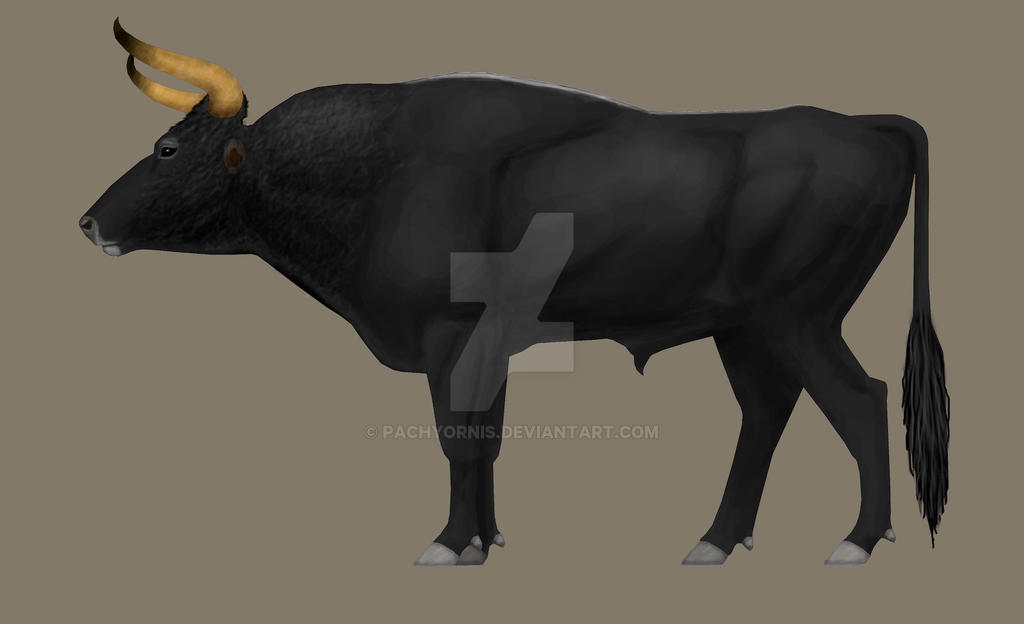
Variation did not concern the aurochs’ body morphology and proportions. All aurochs specimen have a short trunk and long legs, resulting in a trunk length that equals the shoulder height in bulls and is a little bit shorter in cows, and all individuals, male and female, had a hump. But there was variation in the skull anatomy. Generally speaking, the skull of the aurochs had a longer snout than in most domestic cattle and a larger brain volume (go here for a post on the brain volume of the aurochs), which is not surprising, as a reduction in brain volume and a shortening of the skull are typical traits of domestic animals. However, the snout length apparently varied between the individual aurochs. While some skulls, such as that of the old Friemersdorf skeletal mount or that of the Sassenberg bull, have a really long snout, longer than in any domestic cattle heads I have seen so far, the Torsac dirac bull skeleton has a comparably short-snouted skull. The snout length of that specimen is actually similar to that of many domestic bulls. Male aurochs skulls usually also have very prominent eye sockets, more so than domestic cattle – but this was not the case in all male specimen. The Vig bull has a comparably slender skull, with less prominent eye sockets.
There also was considerable variation concerning the horns within the European subspecies. Wild yaks have very aurochs-like horns. They match those of the aurochs both in dimensions and curvature as well as colour. Go here. This horn shape and size displayed by wild yaks is the “standard” when we imagine the horns of the aurochs. However, there was more variation in terms of horn shape and size in the European aurochs compared to the current wild yak population. The basic curvature was always the same – the so-called primigenius spiral. But it was present in numerous variations. Some horns were quite wide-ranging with a comparably weak curvature (such as in the Vig bull), others had a strongly-expressed curvature (such as the Prejlerup bull). The 60° orientation relative to the snout is the arithmetic mean of what Cis van Vuure found to be the average horn orientation in European aurochs (50 to 70°). The variation, however, was larger. The Vig bull has horns in a 80° angle, a skull at the museum of Horsholm has a possibly even larger angle (the narrowest angle I have seen so far is that of the oldest aurochs skull with 40°, but that skull was found in Africa and therefore likely not of the primigenius subspecies). Since those skulls with more upright horns are from the Northern half of Europe, while those skulls with a sharper angle tend to be from Southern Europe, it could be that there was a north-south gradient regarding horn orientation. Horn length also varies not inconsiderably. The skull with the smallest horns I have seen so far is that of the Himmelev bull, while very large-horned specimen are f.e. the Sassenberg bull.
My latest aurochs reconstructions illustrate some the variation found in the European aurochs. The Torsac dirac bull has a snout comparable in length to many domestic bulls, the Kiew aurochs has comparably upright and weakly curved horns, similar to the Vig bull. The horns of some good Heck cattle, f.e. of the Wörth/Steinberg lineage, are not totally dissimilar to this horn shape.

Life reconstruction of the Torsac dirac bull (left, photo © by Claude Guintard) and the Kiev bull (right, photo © by Andrzej Zieleniak)
The variability of the European aurochs’ horns and also snout length suggests to me that this subspecies was genetically quite diverse. Time is not such a big factor here as most of the specimen I mentioned in the text are from the early Holocene.
What implications does this have for “breeding-back”? I think that “breeding-back” should be able to reflect the variability found in the European aurochs in its breeding results. Considering that some good Heck cattle, f.e. the bull Aretto from the Wörth/Steinberg lineage, have horns coming close to those of the Kiew or Horsholm specimen, and that some Taurus cattle, f.e. the bull Linnet, have horns resembling those of the Preljerup specimen, the variation spectrum for aurochs-like horn shapes is already present in the total “breeding-back” gene pool. Also the horn size spectrum of the aurochs, with some Wörth/Steinberg Heck cattle having horns matching the absolute and relative dimensions of very large-horned aurochs specimen. Now the challenge is to get rid of deviant (domestic) horn shapes and let natural selection do the rest (as the Oostvaardersplassen population shows, the primigenius spiral evolves after a certain amount of time in a variable population, go here for example). Breeding has yet to produce a snout length as long as in long-snouted aurochs specimen, which is not easy and as challenging as achieving the right trunk : leg length ratio.
![]() |
| © Henri Kerkdijk-Otten |
Insular dwarfism is the evolutionary phenomenon that large species tend to decrease in size when confined to an area of limited space, most frequently an island. This is also called the island effect. The body size of large animals often adapts to the confined environment by shrinking down. The reason for that is that the island provides only limited space and limited resources, so that smaller individuals have a selective advantage over large ones due to the fact that they need less space and resources. Also, the smaller the individuals the higher is number of individuals that can survive on the given area, and the higher the number of individuals, the higher is the potential for genetic diversity and thus the chance of survival. Therefore, shrinking in size provides evolutionary advantages for large animals on islands, which is why there are plenty of examples for insular dwarfism in many vertebrate groups.
The Mediterranean Sea has numerous islands, some of them large, such as Sicily, others small, such as Crete. And consequently, there were plenty of mammal species endemic to these islands that are examples for island dwarfism until the late Pleistocene. There were pygmy hippopotamuses on Crete, Sicily, Malta and Cyprus. Famous are also the dwarf elephant species Palaeoloxodon falconeri, P. cypriotes and Mammuthus creticus, to name a few.
Sicily was home to several pygmy mammal species. Hippopotamuses, elephants, a dwarf deer (Cervus siciliae), a dwarf steppe bison (Bos priscus siciliae) and also a dwarf aurochs. It was already noted by van Vuure (2005) that aurochs on Sicily were 20% smaller than on the mainland. To be precise, the Sicilian dwarf aurochs had a withers height of only 130 cm [1]. This dwarf aurochs was described as a subspecies on its own that is barely recognized in the literature, Bos primigenius siciliae. There also was a dwarf aurochs on the small island of Pianosa, which had a shoulder height of only 100 to 120 cm and was described as Bos primigenius bubaloides [1]. Authors have suggested that this aurochs population evolved adaptions for moving on rocky uneven grounds [1], which would be unique for an aurochs.
Both B. p. siciliae and B. p. bubaloides are barely recognized in the aurochs-related literature. The very small body size found in these populations seems to justify the subspecies status, and assuming that both taxa are not nomina nuda but have been described properly, they are valid. Thus, the aurochs actually was not divided into only three subspecies, but actually six: Bos primigenius primigenius (the European aurochs), Bos primigenius africanus (the North African aurochs), Bos primigenius namadicus (the Indian aurochs), Bos primigenius suxianensis (the East-Asian aurochs, go here for details), Bos primigenius siciliae (the Sicilian dwarf aurochs) and Bos primigenius bubaloides (the Pianosa dwarf aurochs). It would be interesting to see the osteologic material of these two subspecies. Island dwarfism often goes hand in hand with other morphological changes, such as paedomorphy and changes in proportions. Also, it would be relevant to know if the material assigned to the taxa was from males or females, because of the considerable sexual dimorphism we find in the aurochs.
In contrast to other aurochs populations, the extinction of these insular forms does not necessarily have to be of anthropogenic cause. Small populations are particularly vulnerable to inbreeding and the resulting loss of genetic diversity, what makes them less able to adapt against abiotic and biotic factors. The Sicilian aurochs probably died out because it was outcompeted by the normal-sized aurochs when a land bridge between the Italian mainland and the island emerged about 20.000 years ago [2]. The same also happened to the other pygmy species [2]. In this case, human activities were not the cause of the extinction of the endemic mammal fauna.
The island effect is also relevant for rewilding and “breeding-back”. Reserves are of limited space and if the population is reproductively isolated, it is basically an island from an evolutionary perspective. This implicates that in order to avoid an inbreeding depression individuals have to be exchanged between the reserves (which is, as far as I know, common practise in African reserves), and to avoid the island effect. Chillingham cattle, which have been living reproductively isolated in the Chillingham park for several centuries, apparently decreased in body size over time (go here for my article on Chillingham cattle). Thus, while natural selection seems to replicate many of the wildtype aurochs traits in feral cattle, we cannot expect the Heck cattle at Oostvaardersplassen to become larger by natural selection – if anything, they will get smaller or already got smaller. In order to avoid this as much as an inbreeding depression in other semi-feral herds of aurochs-like cattle, individuals between the reserves would have to be exchanged on a regular basis.
Literature
[1] Masini, Palombo, Rozzi: A reappraisal of the Early to Middle Pleistocene Italian Bovidae. 2012.
[2] Sondaar, van der Geer: Evolution and extinction of Plio-Pleistocene Island ungulates. 2005.
Heck cattle are sometimes reputed as an aggressive breed, or even the “most aggressive cattle breed in the world”. Why is that? Well, mainly because of one incident.
Everybody will be familiar with the story of the British farmer who purchased a herd of Heck cattle, and slaughtered several individuals because of their behaviour. They would have attacked people without a reason. Several tabloids have reported that story in the most lurid way possible. People who are only half-educated on Heck cattle often say this aggressive behaviour is because the breed was bred using the Spanish fighting bull, which is not true (go here for details).
In the literature, however, Heck cattle are described as generally unproblematic in behaviour based on the experience of breeders [1]. And it has to be remembered that there are dozens of grazing projects using Heck cattle, where people handle the cattle and which are also open for visitors. The number of Heck cattle used in these projects in Germany alone is in the three-digit range. The majority of modern Heck cattle live in these projects. And yet there never has been an incident of an individual attacking or even injuring humans without a reason. I am not saying that there never was an attack, because there was one incident on the Isle of Wörth with the cow Arizona, which attacked because a woman approached her calf (go here). But cows attacking because they “defend” their calves is common among any cattle breed. People are killed or injured in the alps by ordinary farm cattle breeds every year, yet nobody considers Braunvieh or Fleckvieh aggressive breeds. Furthermore, Arizona is not an aggressive individual, I visited her herd in 2013. In general, the behaviour of Heck cattle in grazing projects is unproblematic. If Heck cattle were an aggressive breed, they would be difficult to handle and would not be that heavily used in grazing projects. Also there are many private keepers that have Heck cattle on farms, and there never was a case of aggressive individuals reported.
I can confirm myself that Heck cattle are usually totally unproblematic in their behaviour towards humans. I have visited several Heck herds, and there never was even one individual that showed signs of aggression. Some of them even were that tame that I could stroke them.
Why was that incident in Britain, then? It has to be noted that cattle behaviour also depends a lot on socialization. I do not know anything about the background of those Heck cattle which the British farmer purchased. If he got them from a grazing project, or any area with few human contact, it would not surprise me if he considered their behaviour too “wild” for a usual farm, because cattle redevelop wild behaviour quite quickly when living with few human contact [2]. We should not forget that cattle are prey animals that will defend themselves if they consider themselves threatened. Also, there is always variation in a breed. Even some Highland cattle individuals can have a grumpy temper on occasion. Maybe it was a combination of both factors, no socialization with humans previously and individual variation, maybe the farmer just had really bad luck with his individuals.
It inevitably seems to be a case of bad luck as the overwhelming majority of Heck cattle are unproblematic in their behaviour. If they were an aggressive breed, there would be a lot of incidents of Heck cattle attacking without a reason, which is reportedly not the case. If that was the case, the breed would not be used that heavily in grazing projects, on farms and in zoos.
Heck cattle are not an aggressive breed. Yet, that story from Britain gets repeated over and over and over because it seemingly is too entertaining for some people. But repeating that story over and over does not make Heck cattle any more aggressive than they are.
Literature
[1] Julia Poettinger, 2011: Vergleichende Studie zur Haltung und zum Verhalten des Wisents und des Heckrinds.
[2] Bunzel-Drüke et al.: Praxisleitfaden für Ganzjahresbeweidung in Naturschutz und Landschaftsentwicklung – “Wilde Weiden”. 2008.
![]() |
| © Claus Kropp |
I have been researching on the aurochs, wild horse and “breeding-back” for exactly ten years now. It was in 2011, when I worked on a drawing of Europe’s large mammals that I looked at the Wikipedia page in order to get some knowledge on the aurochs’ physical appearance. I had been aware of “breeding-back” previously, but did not pay much attention to it. The photograph of the Heck bull “Ari” from the Wörth/Steinberg lineage immediately created my fascination for this subject.
This was in a time when Heck cattle had a kind of monopoly for being an aurochs-like cattle breed, as the primitive landraces from Southern Europe were barely known outside the Iberian peninsular. But I learned of these breeds quite early because I joined the aurochs thread in the old Carnivora Forum, where a lot of photos of primitive Iberian breeds were shared. In the same year, I visited the Hellabrunn Zoo in Munich, which is where modern Heck cattle originated. The Hellabrunn Heck cattle herd is remarkable for its perfectly aurochs-like colour with a good sexual dimorphism. Being aware of the fact that Heck cattle is only one of many aurochs-like breeds, I enjoyed seeing living cattle with the colouration of an actually extinct animal very much. Thanks to the Carnivora thread, I also learned about the Tauros Project (today: Tauros Programme), which had only one crossbred individual at that time that was actually still a calf (the bull Manolo Uno). There also was barely any information on Taurus cattle on the web, with only two PDFs showing first-generation crosses at young age. I had no idea that by that time, animals like the bull Lamarck were thriving in the Lippeaue reserve. So there was Heck cattle, by many considered to be the only aurochs-like breed, Taurus cattle which were pretty much incognito back this time and the Tauros Project which only had one calf.
I felt that the monopoly of Heck cattle was unjustified, and the Wikipedia articles in German and English were pretty “pro-Heck cattle” back this time, with little well-grounded information and unempirical claims. The Wikipedia article on the aurochs was not satisfying either, with some inaccuracies and no precise information on the aurochs’ physical appearance. And it was extremely difficult to find information and photos of the primitive Southern European breeds. So I started to rewrite the Heck cattle and aurochs articles in both the German and English Wikipedia, mainly using Cis van Vuure’s 2005 work as a reference. Also, I created Wikipedia articles for some of the primitive European aurochs-like landraces, with photos, because I thought this would be the most effective way to make the knowledge on these valuable breeds more accessible to a larger-scale audience. Also, I thought that by precisely describing the aurochs’ physical characteristics on Wikipedia that the differences between Heck cattle and the aurochs would become apparent.
In 2013, I started the Breeding-back Blog. Back this time, there were not many people interested in the aurochs and “breeding-back” on the web. There was the Carnivora thread, which was mainly attended by four or five users on a regular basis. In the following years, the situation began to change.
For once, “breeding-back” itself began to grow. The Tauros Project expanded to multiple countries and acquired quantity quite fast, and a new project, the Auerrind project came into existence. Taurus cattle finally found their way into the internet, also because – excuse my self-praise here – I went to the Lippeaue reserve several times and covered them on my blog, with many photos (now Taurus cattle also have a very good web presence on the webpage of the ABU). Also, the number of rewilding projects increased, and both practices got considerable media-coverage (compared to the years before 2011). And the number of people interested in “breeding-back” and the aurochs and also of course rewilding multiplied and multiplied.
I see that every time I look at my blog’s statistics. My blog has a total of more than 900.000 clicks, with 200-400 clicks per day, some posts have over 1000 clicks and it has 2000 comments in sum (a big thanks to all my readers by the way!). I would have never expected this to happen, as “breeding-back” and the aurochs is a very small niche, so to say. But the number of people interested in this subject is constantly increasing. I see a lot of people who are not only interested in the aurochs, but also know a lot about this subject. They precisely know what an aurochs looked like, know all the projects and special herds/lineages in great detail. Also, the primitive aurochs-like breeds are now well-known to a lot of people. Back in 2011, all of this was not the case.
I think that of all the animals killed off by mankind in historical times, the aurochs is perhaps the species that currently gets the most attention. The Thylacine also has a huge fan club (a fan club that also has a longer history), but I get the feeling that the “aurochs fan community” got ahead of that of the Thylacine. The mere fact that there is such a community now is worth noticing, because it did not exist back in 2011.
Why did that change so dramatically? I think this has two main reasons: a) there are now more “breeding-back” projects than back then, with a lot more animals and also media-coverage b) the information on “breeding-back” and the aurochs is now easily accessible. The Wikipedia articles are pretty good (I just initiated the changes, a lot of people have helped to progress the pages since 2011), you can easily learn about the life appearance and biology of the aurochs, learn about the primitive aurochs-like breeds and learn about the “breeding-back” projects on the web. I hope that my blog contributes to that as well.
The fact that people are increasingly aware of the anatomy and biology of the aurochs also has a kind of positive feedback effect on “breeding-back”. I get the impression that Heck cattle has slowly increased in quality during the last 10 years because breeders are increasingly aware of the anatomy of the aurochs. The slow process of improvement is not true for all Heck herds, but for some. Also, Heck cattle lost its monopoly on being “the” aurochs-like breed. This was necessary to seize the potential we have in modern day cattle.
While the myth that Heck cattle are “recreated aurochs” is a thing of the past now, the acceptance of the myths concerning the European wild horse and its purported descendants has not changed yet. Still a lot of people believe the “the Konik is the Tarpan descendant” myth, the Sorraia myth and the Exmoor pony myth (go here for a review of these stories). These stories sometimes are even repeated in technical, peer-reviewed papers, which is concerning. But maybe this might change in the future, as fact-based information on these three breeds and on the European wild horse are at least available in the internet now.
I think that we live in the prime time of “breeding-back” today. There are several projects, people now are aware of the anatomy of the aurochs and of suitable breeds (which was not the case, f.e., when the Heck brothers did their breeding experiments) and they have more attention than ever since there is a large number of people interested in this subject. “Breeding-back” already has produced a number of great animals, and there will be much more in the future. I am looking forward to that, and I am also looking forward to cover them on my blog as I always try to do.
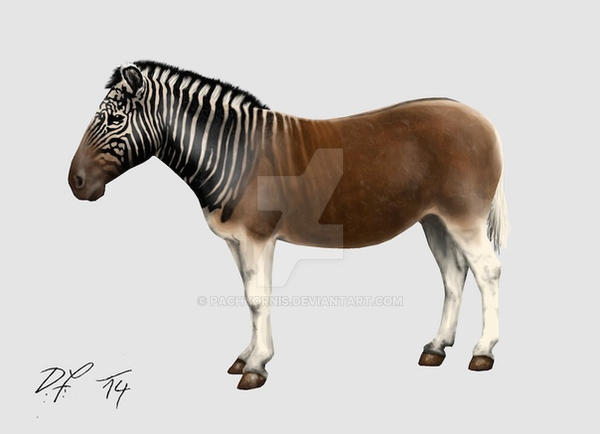
It has been established that the quagga is a subspecies of the plains zebra because it clusters genetically within this clade. This, however, does not imply that it does not differ considerably from other zebra species or subspecies. It diverged from the other plains zebra subspecies between 290 000 or 120 000 years ago [1], what is considerably longer ago than the differentiation between the lineage leading to domestic horses and Przewalski’s horse and definitely long enough to develop its own distinct traits.
The most obvious difference between the quagga and other zebras is the fact that only the anterior part of the body was striped, while the posterior half was stripeless and of a brownish colour. The coat colour, or rather the extent of the striping, varies considerably in the 24 individuals of which the skin was preserved. I illustrated and described this variation in this post. Alas, the locality of the specimen has not been documented, so that the claim that the stripe reduction of the quagga represented a cline cannot be verified for at least within the quagga itself.
Also, the quagga apparently had an idiosyncratic call (sounding like “kwa-ha-ha”, other variations are documented as well), of which the name of the animal is said to be an onomatopoeic derivation (Wikipedia). EDIT: It is possible that the quagga's call was identical with that of other plains zebras.
Another very important distinct trait of the quagga is its sexual dimorphism. Preserved quagga skins suggest that the mares were longer and taller and thus larger than the males, which is the opposite of what we see in other zebras, including the plains zebra, where the males are larger than the females [2]. This is unique among extant equines.
Another possible difference between the quagga and other plains zebra subspecies is the mane length. Looking at photographs of the 24 quagga skins preserved plus the photos of the only living mare to be photographed in the 19th century, it appears to me that the mane is shorter than in other plains zebras. Of course this has to be verified by actually measuring the mane hair and comparing it to the other subspecies, but it seems rather apparent to me.
![]() |
| My coloured version of the photo of the only quagga to be photographed, drawn with GIMP |
Thus, it has to be concluded that the quagga was, despite being nested genetically within the plains zebra species, a distinct type of zebra with unique autapomorphies. This has consequences for the guideline of the Quagga Project. The quagga is evidently more than a colour variant, even though its range might have been continuous with that of other plains zebra subspecies (we find this also in species that form a hybrid zone, such as species within Bombina, Corvus, or Loxodonta to name a few). The similarity between the quagga and the zebras of the Quagga Project will merely be superficial. But, so claims the Quagga Project, the quagga was defined only based on external features, thus making that argument invalid. However, the overwhelming majority of animal (and plant) species on this planet is described on a phenotypic basis, it’s part of the requirements of the ICZN for a valid species description. Furthermore, the differences in the fur colour are not the only defining quagga characters, as outlined above. The zebras of the Quagga Project do not exhibit the idiosyncratic call of the quagga, they do not have the reverse sexual dimorphism and the (possibly) shorter mane. Apart from the phenotype, there are genetic differences as well. The quagga has unique mitochondrial haplotypes and does not share any haplotypes with the plains zebra [1], indicating reproductive isolation for a considerable time span. Thus, the quagga was also genetically distinct and the zebras of the Quagga Project will necessarily differ also genetically.
Another problem is that the zebras of the quagga project only have a raw similarity to the quagga based on the coat colouration. While the amount of stripe reduction that was achieved is impressive, the animals lack the deep brown base colour on the trunk and also the stripe pattern is different: the white space between the stripes on the face and neck is rather white because the stripes are comparably thin, sometimes with faint brown stripes between the black stripes, while in all the preserved quagga skins the stripes on face and neck are rather broad, with a narrow white space between them and no faint stripes between the solid stripes. Therefore, the only similarity between the zebras of the quagga project is that the stripes are reduced on trunk and legs. Everything else is different. That is why I wrote the article Please don’t call it quagga in 2015, suggesting that these zebras should neither be called “quagga” nor “Rau quagga”.
Perhaps the quagga project is not even a “breeding-back” project in the strict sense, since it does not work with living descendants of the quagga but merely more or less related animals of a completely different subspecies.
Nevertheless, I am happy that there is the Quagga Project. While they cannot recreate the quagga, they have produced animals that could be useful for outbreeding a genetically resurrected quagga, for the case that the quagga one day will be recreated by using genome editing.
Literature
[1] Hofreiter et al.: A rapid loss of stripes: the evolutionary history of the extinct quagga. 2005.
[2] Heywood: Sexual dimorphism of body size in taxidermy specimens of Equus quagga quagga Boddeart (Equidae).2019.
![]() |
| © Claude Guintard |
The Store Damme specimen from Denmark is a nearly complete skeleton of a male aurochs. The mount has a withers height of 175 cm [1], what means that in life the bull might have been 180 or 185 cm tall at the withers.
As so many aurochs skeletons, it is mounted anatomically incorrect. The hind legs are bent too much, also the spine is mounted in a straight line, while in a living bovine the spine is curved on the anterior part of the trunk. Also, the front legs are not mounted entirely life-like. Using GIMP, I corrected the position of the bone elements, including the spine, front legs and hind legs. The result is about as tall as the wrongly mounted skeleton, and looks much more natural and anatomically plausible to me:
Seeing the corrected version, I could not resist doing a life restoration of it, using GIMP. Here is the result:
I will use it as a basis for a couple of new aurochs models that I am planning at the moment but do not have the time to build them right now.
Literature
Pucher, Erich: Wie kam der Auerochse auf die Alm? 2019.
Originally, “breeding-back” as it was invented by the Heck brothers, aimed to recreate extinct species. We now know that this is not possible working with domestic descendants only, as the subject is much more complicated than just uniting visible traits found in primitive breeds. Therefore, the goal of “breeding-back” changed. Nowadays the main purpose of this method is to authentically replace the extinct wildtypes in the wild, filling the empty ecologic niche. In order to accomplish that, the set of criteria now also includes ecologic traits. The cattle (or horses, if there were “breeding-back” projects for horses) not only have to look like their extinct wildtype, but they also have to be capable of surviving in nature. Achieving that is not a big problem, was most primitive breeds already are very hardy landraces.
But is “breeding-back” really necessary to fill the ecologic gap?
For this question, the answer is pretty clear: no, it is not necessary. Releasing a couple of hardy landraces back into the wild would do the job as well, no elaborate selection on wildtype traits is actually necessary for these animals to survive in nature. While it is true that large, long-legged, athletic cattle with large horns will have a much easier time to defend themselves against predators than small, short-legged cattle without horns, natural selection will probably enforce wildtype traits anyway. Also, many landraces are already quite aurochs-like, such as Sayaguesa for example. They are large, have a comparably aurochs-like morphology and horns, and the colour is right as well (except for the very reduced sexual dichromatism). Add Maronesa genes by releasing both breeds in the same area and most aurochs fans will be satisfied. The same goes for Spanish fighting cattle (Lidia). The probability that they survive in nature and function like their extinct ancestor is very high, as there are feral cattle populations that descended from derived breeds that were not landraces (such as on the Ile Amsterdam or New Zealand). So just releasing a number of cattle from several primitive landraces and letting them breed for themselves and do their thing in natural areas will do the job sufficiently in any case. I have the suspicion that this is the plan the Tauros Programme. So far, they have done exactly that and nothing more (at least nothing that they have published).
If that is the case, why doing “breeding-back” in that intensity at all? I see three main reasons:
- to see how much similarity to the extinct wildtype can be achieved by selective breeding
- educational purpose: by showing what an aurochs (or European wild horse) looked like and was like you educate people zoologically
- a homogeneously wildtype-like phenotype is important for the public acceptance as a wild animal. If the cattle are heterogeneous in appearance they would look more like a bunch of escaped farm cattle, while the phenotype of the aurochs was undoubtedly that of a wild animal. There are indeed people who are against using cattle (or horses) in rewilding because they consider it animal cruelty to let domestic animals live in the wild. It is thus important for the public acceptance of the projects to communicate these are “special” animals bred to live in the wild.
So from a purely ecological point of view “breeding-back” is not necessary. But having a breed of cattle that is as aurochs-like as possible certainly has some advantages. In the end, it is about authenticity. An authentic proxy for the aurochs is more satisfying for nature lovers, has a higher chance of being accepted as a wild animal in the public eye, is more educative, and probably has a higher ecologic fitness compared to randomly chosen landraces due to the selective advantages a wildtype-like phenotype likely has. It is also a matter of opinion. Surely there are more pragmatic people that do not care that much about authenticity, but there are also (perhaps more idealistic) people that do want to replace the aurochs as authentically as possible. And there is enough of the latter category that there are “breeding-back” projects, and even several of them.
![]() |
| The Cherson tarpan |