Monday, 19 June 2017

My third trip to the Lippeaue

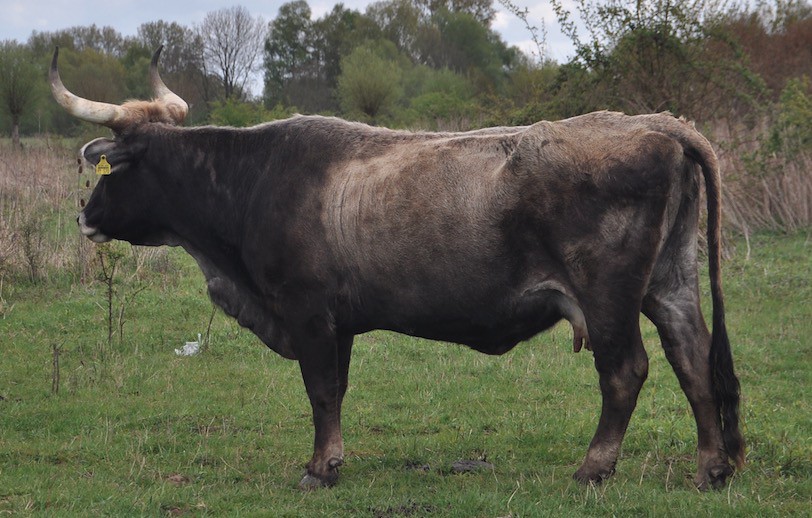
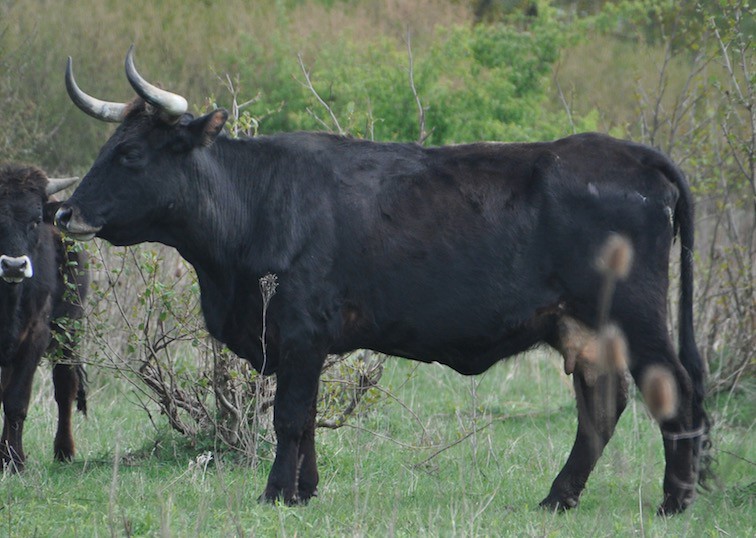
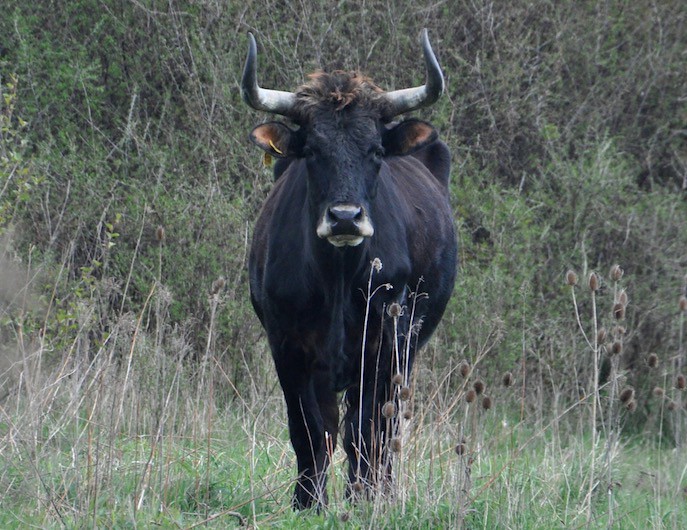
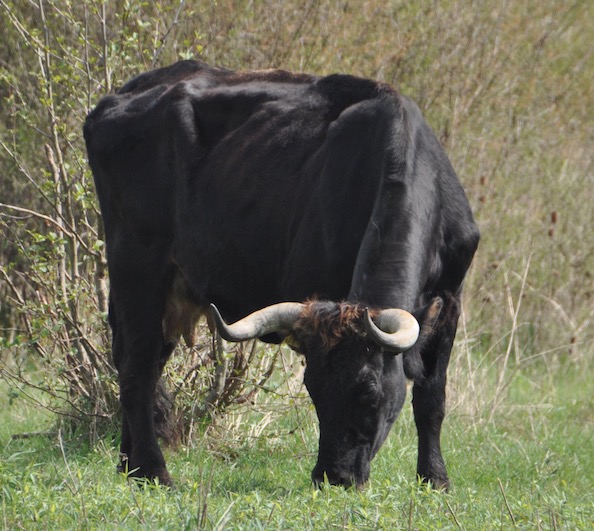
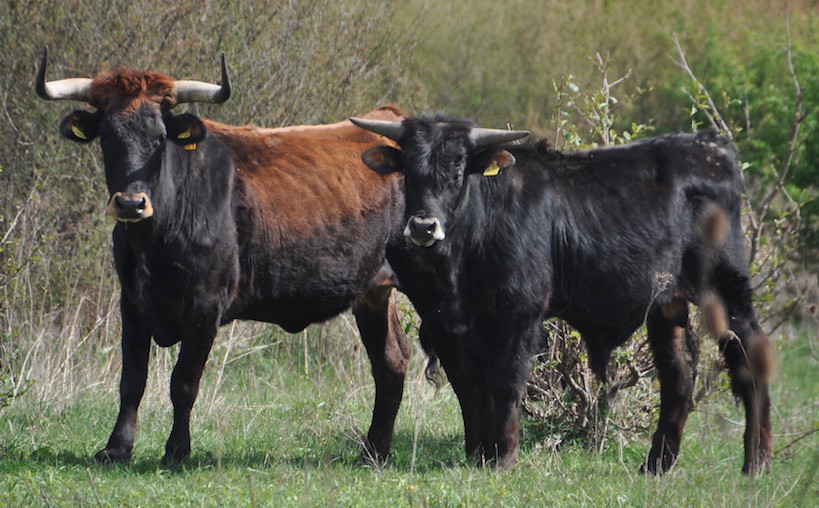
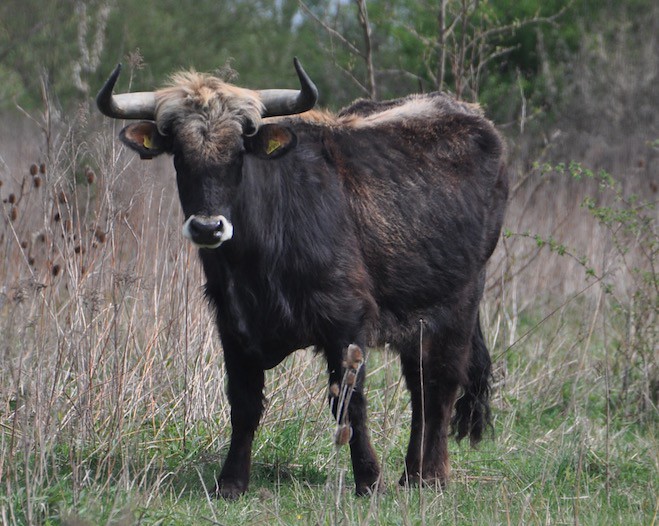
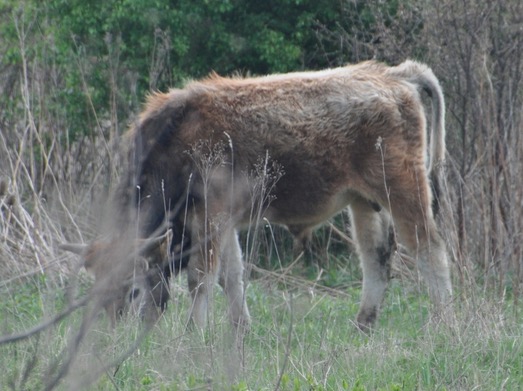
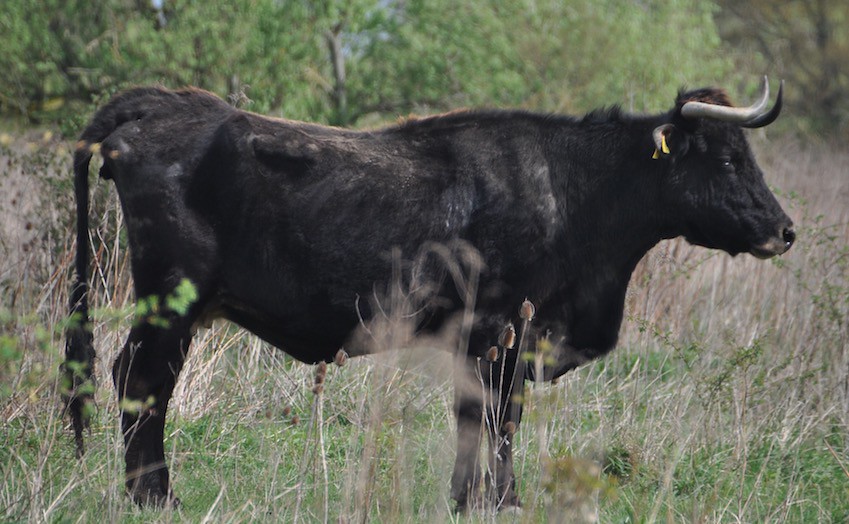
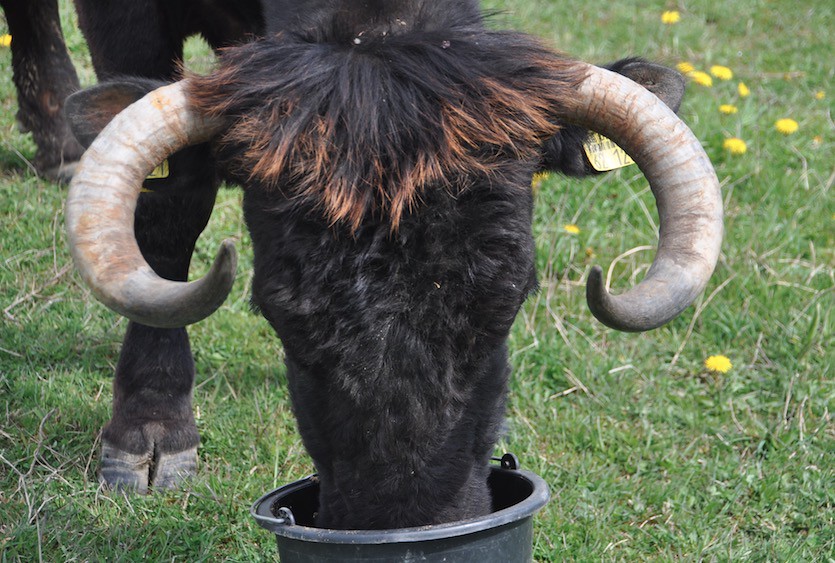
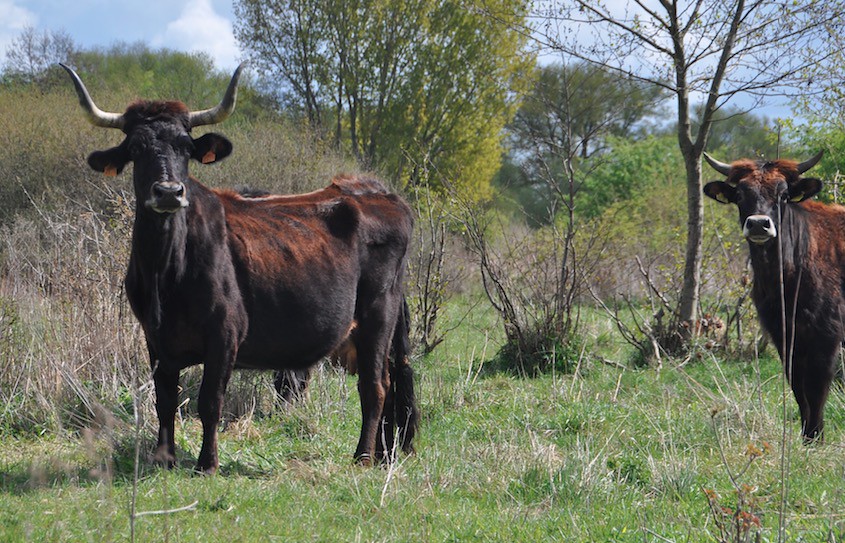
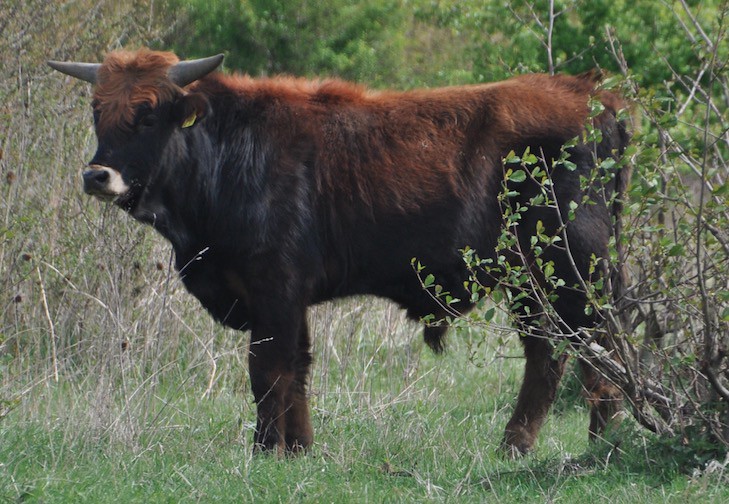
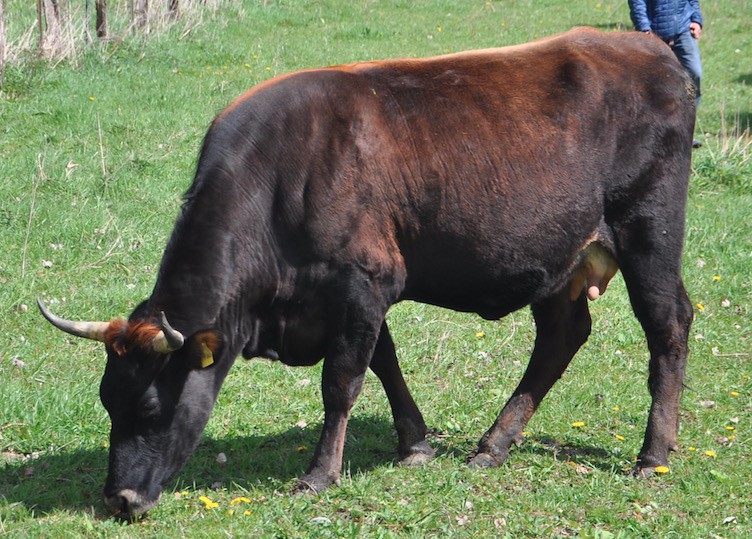
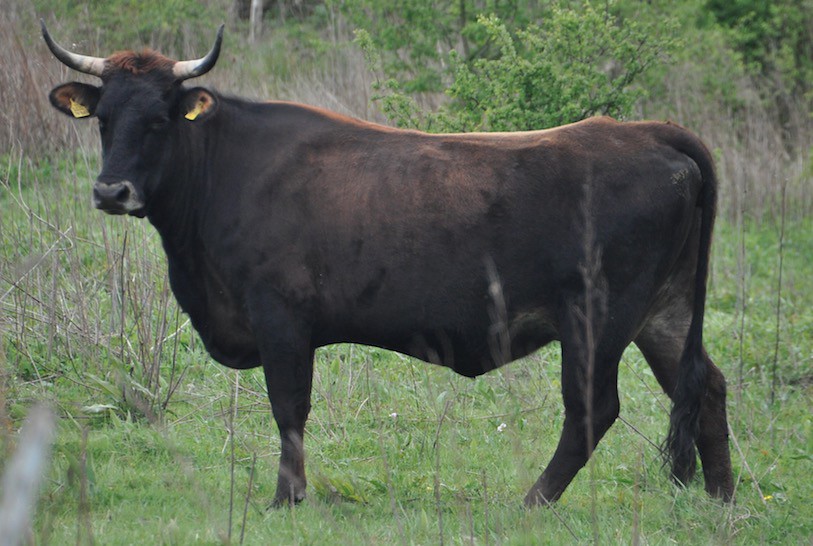
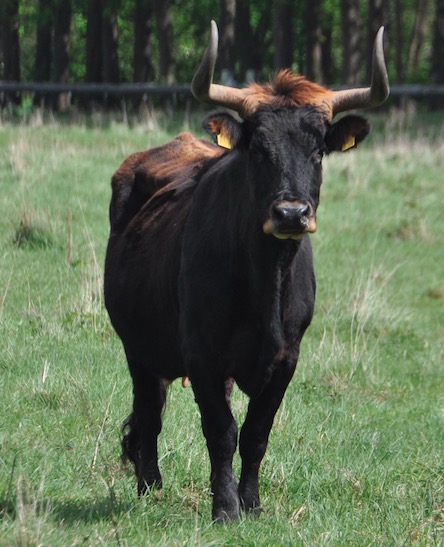
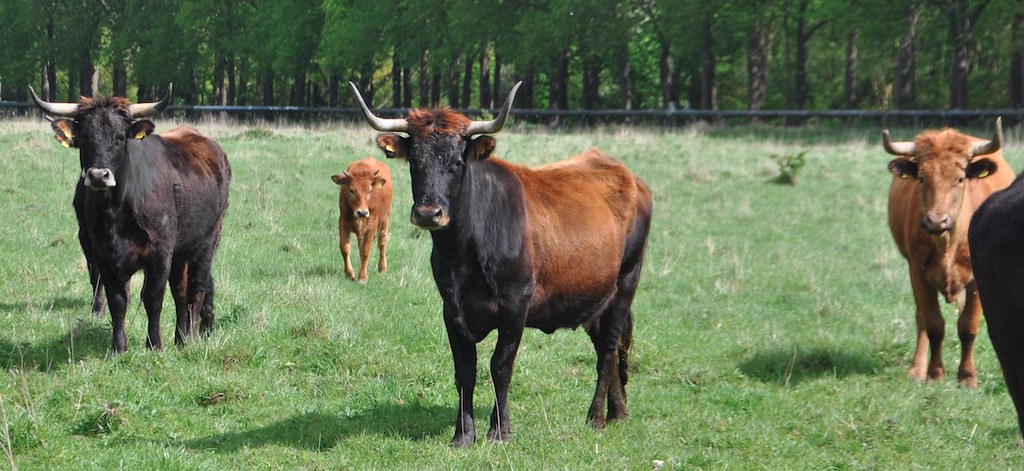
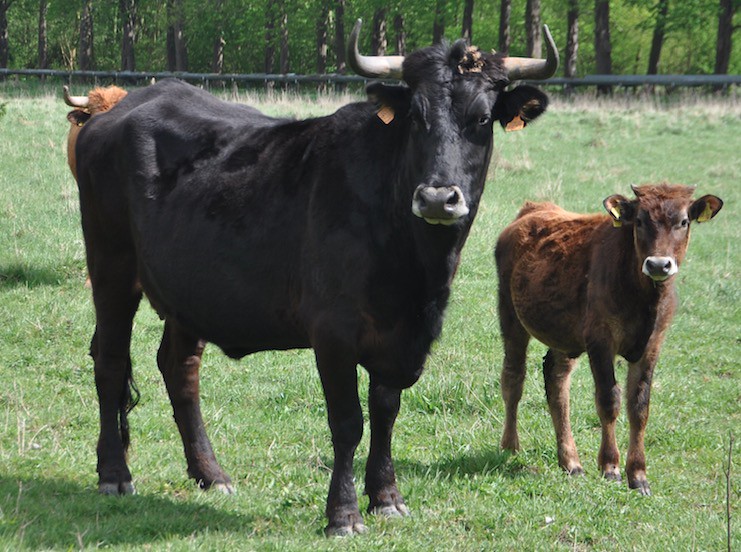
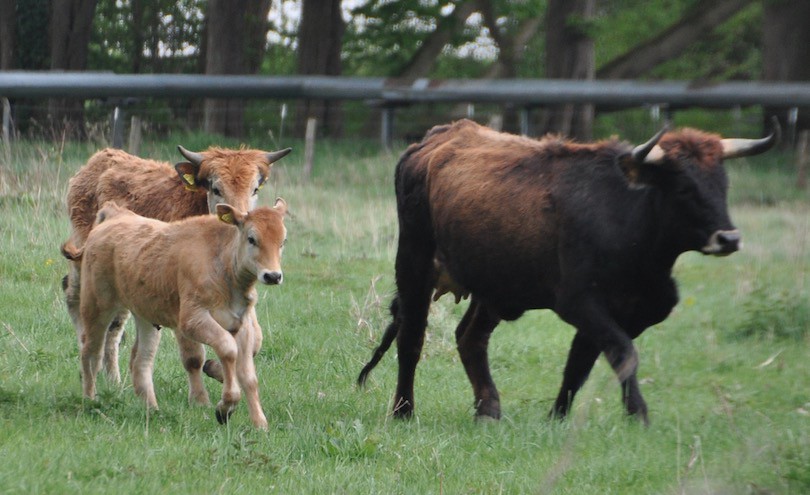
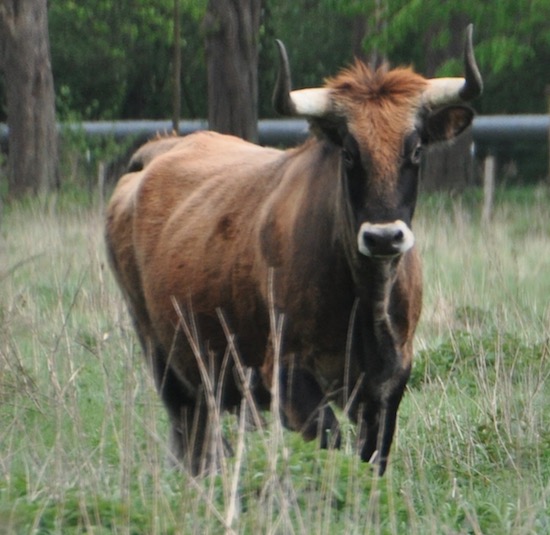
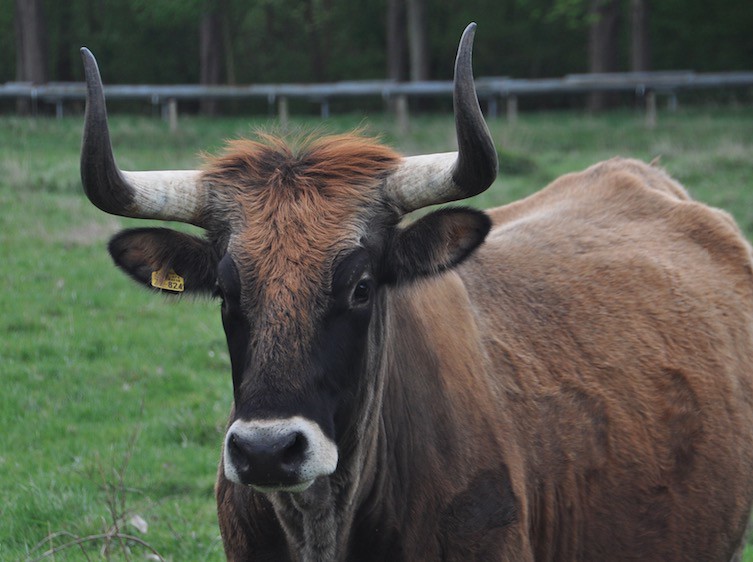
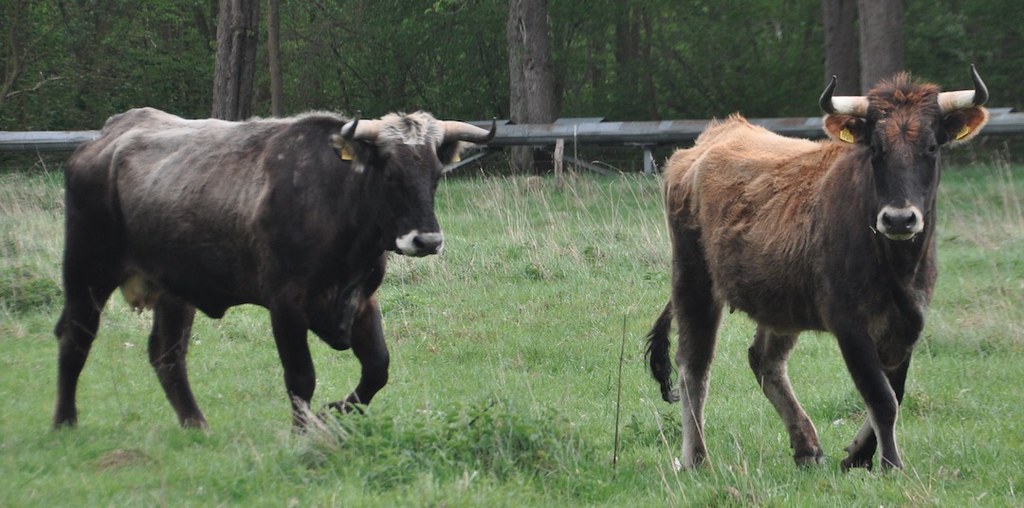
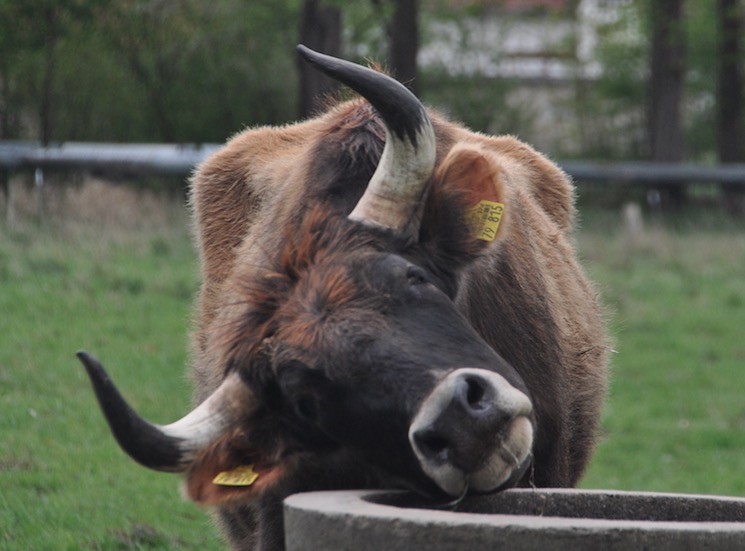
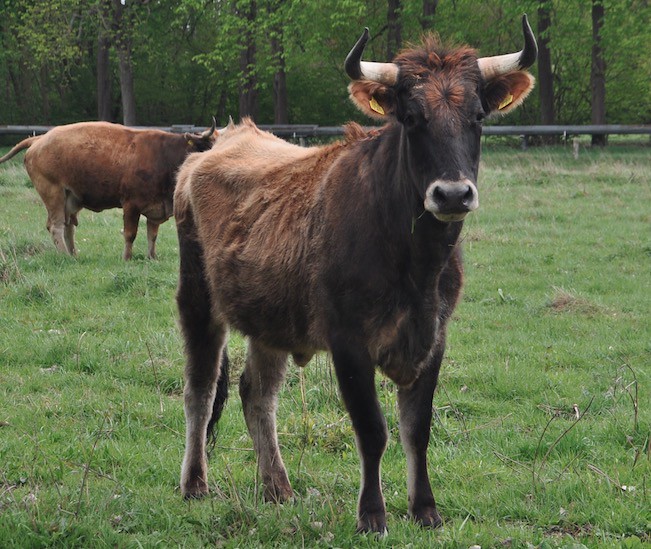
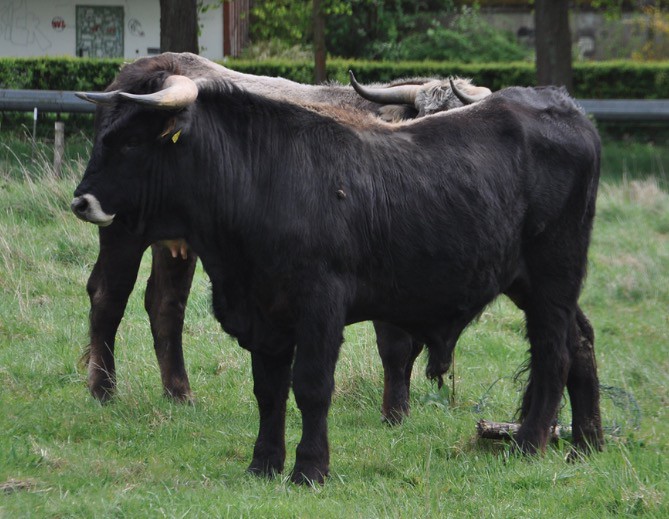
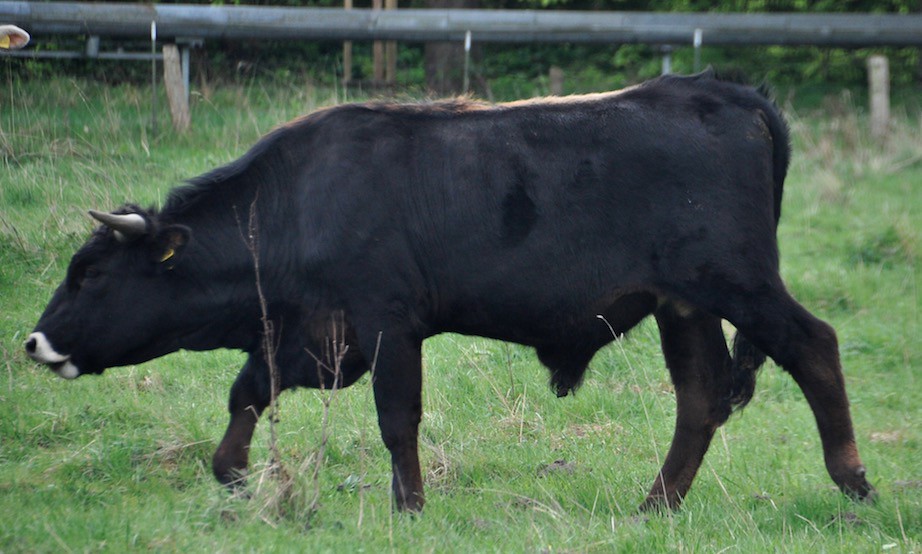
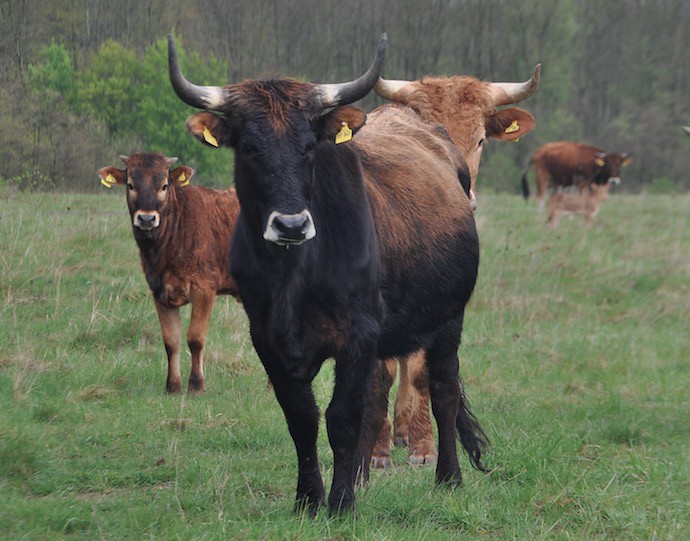
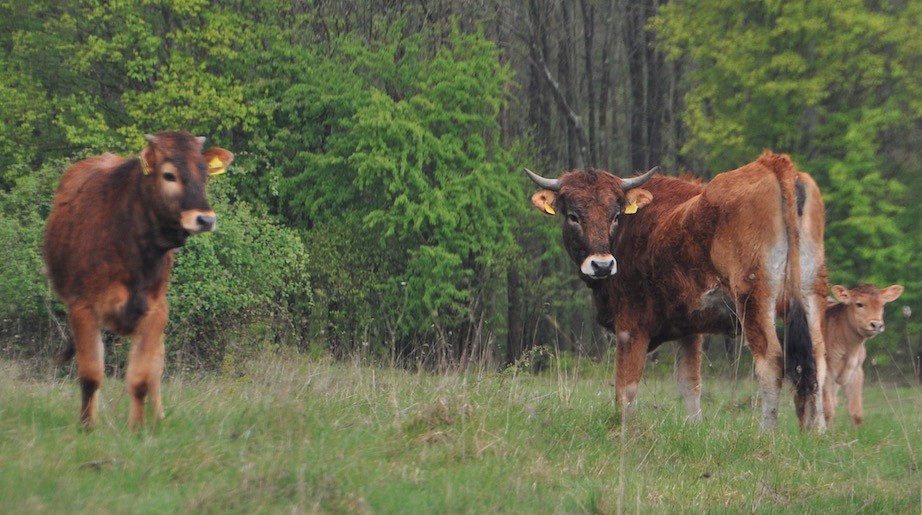
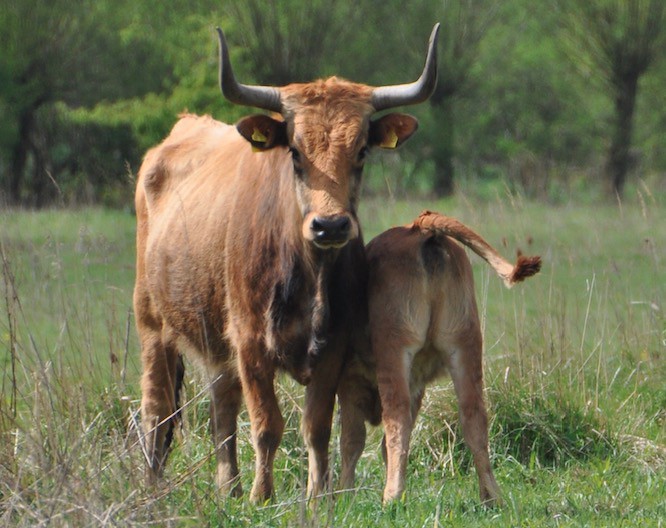
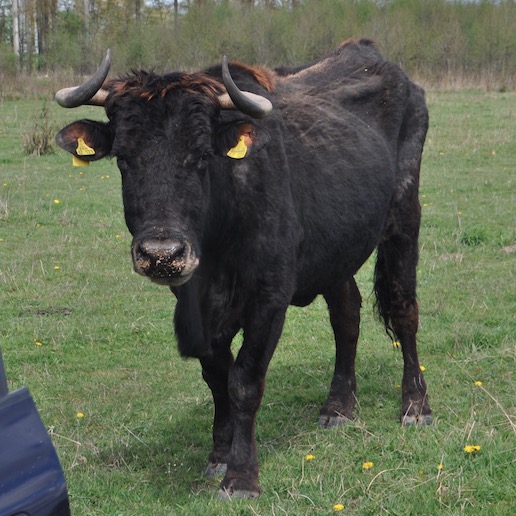
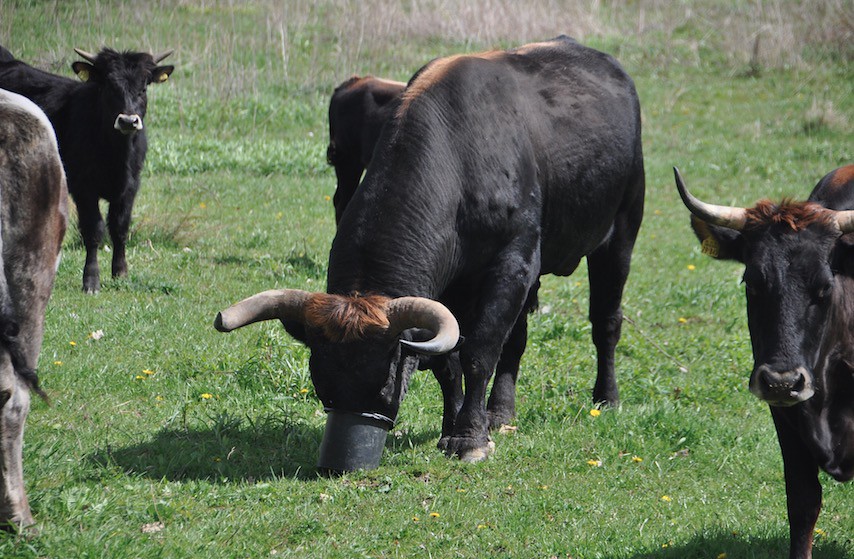
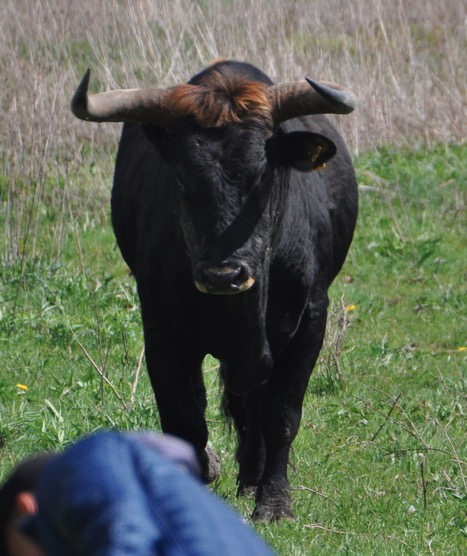
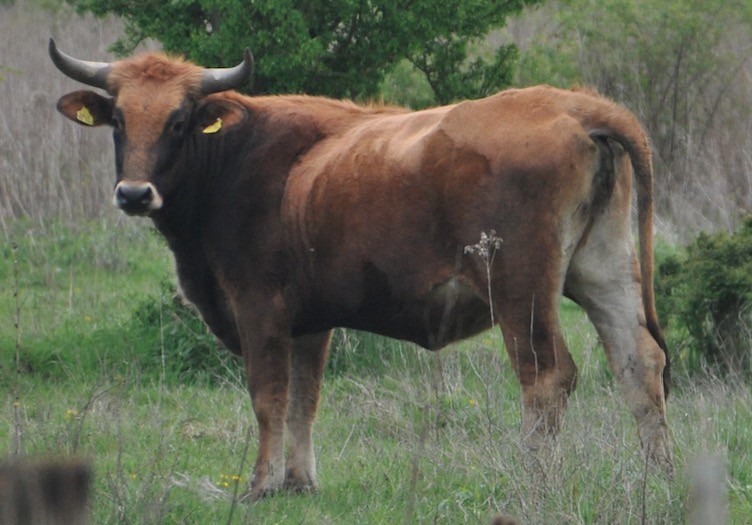
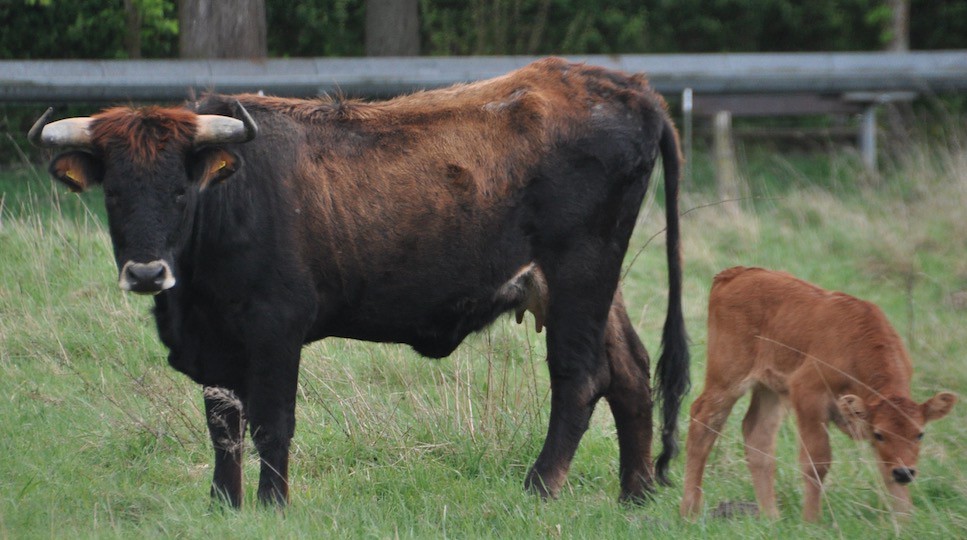
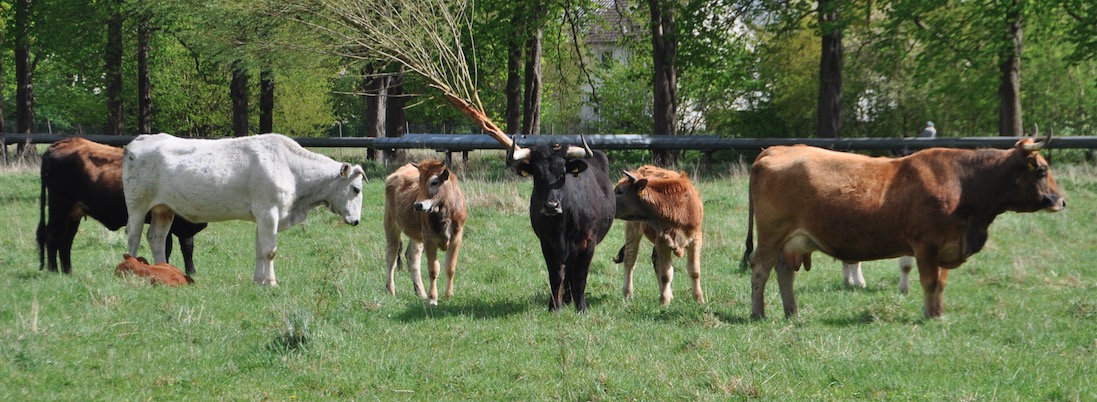
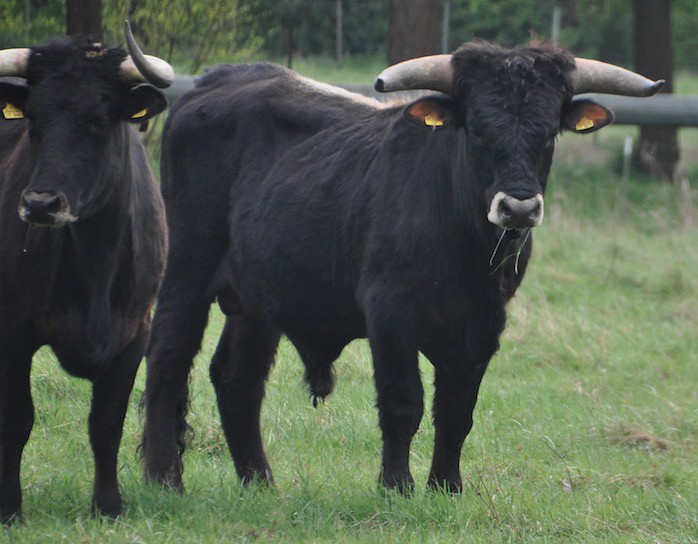
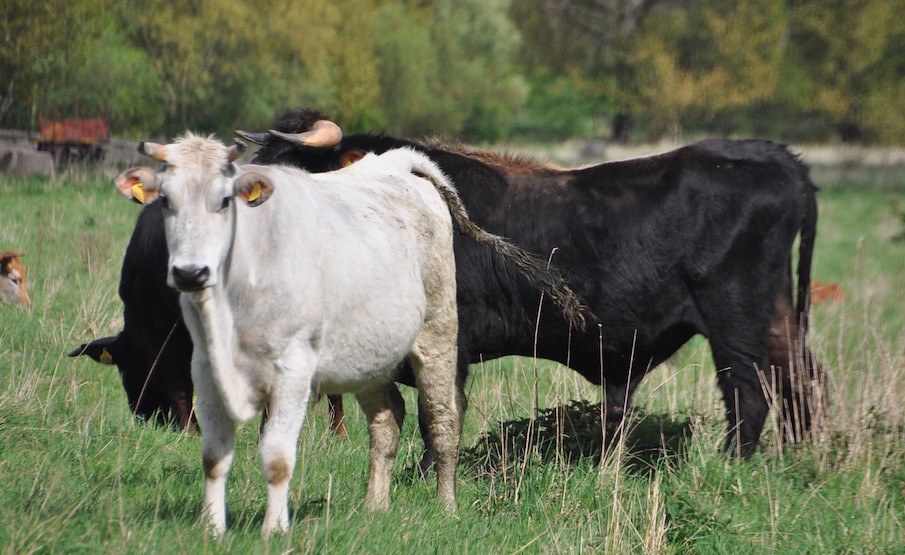
By the end of April, I visited the Lippeaue, Germany, again and met with the workers of the ABU Soest to have a look at the Taurus cattle herds and discuss. As usual, it was a very enjoyable and informative trip and I took a lot of photos. Please don't use them without permission. 
For my first trip in 2013, go here. For my second trip in 2015 go here


What has changed since 2015

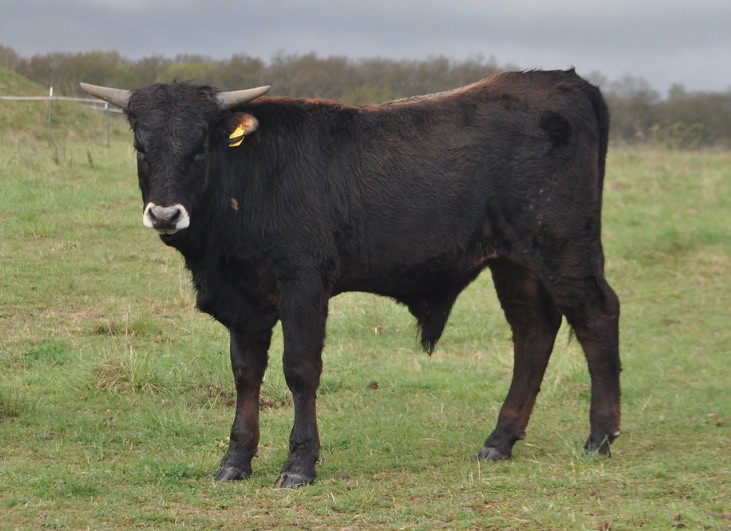
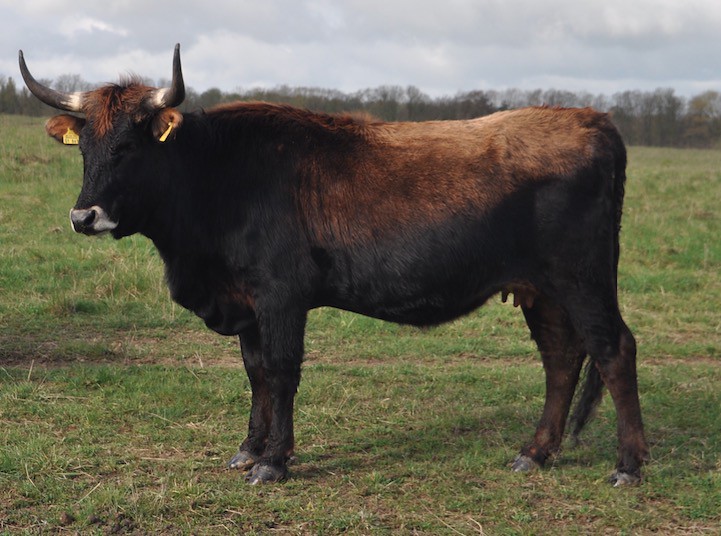
The two years since I visited the herds the last time in fall 2015 saw some deaths of good individuals unfortunately (Liberta, Lambada) but also a number of calves turned into interesting animals. As a whole, the herds were quite a bit less numerous compared to 2015 and 2013 sinc a lot of individuals were sold because the herds got too big (now there are about 85 individuals in total grazing in the Lippeaue). Two herds have new breeding bulls: Disselmersch and Klostermersch-Süd. The former bull at Disselmersch, a son of Laokoon and Larissa, was slaughtered because of his small Chianina-like horns shortly after I visited the herd. Londo, the former breeding bull at Klostermersch-Süd, was slaughtered too last year. He was too dachshund-legged and small overall, and all of his offspring turned out to be dachshund-legged as well – this an interesting and actually not all that negative fact. Londo was one of the very few “true F2” crosses, and even a cross between siblings, so I predicted him to be to be stable for a number of traits that he possessed – the good ones just as much as the undesired ones. The fact that all of his offspring shared his dachshund-leggedness shows that the concept working with “true F” crosses actually works, it just happened to work on an undesired trait. Having luck with another true F2 and using it as a breeding bull might stabilize the herd in a desirable way. The new breeding bull at Klostermersch-Süd will be introduced in the section “the herds”. We did not have enough time for Disselmersch this time unfortunately, but I saw a photo of the new bull, and it looked pretty good.

Breeding-strategies – why still back-crossing?

In the past we already discussed why limitations of area size, conservational aspects, animal welfare as much as practical obstacles make it impossible to shift to a completely different breeding scheme in the Lippeaue (or all other grazing projects, by the way), f.e. such as trying a “true F2” scheme as described in this post. Further problems would be a high degree of inbreeding and a high portion of animals not suitable for further breeding. However, I suggested that paying attention on producing single “true F” individuals that look good and using them as breeding animals might speed up the process without any additional costs or effort. While that may or may not be true, Margret Bunzel-Drüke told me that she would be cautious on increasing the degree of inbreeding that much in a cattle herd, because of the danger of fixating deleterious alleles. Cattle are not laboratory mice, after all. Nevertheless, “true Fs” are still produced in the Lippeaue, but coincidentally; f.e. the breeding bull “Laokoon’s brother” is placed among two cows of the same breed combination as he is.
Another aspect that we discussed is back-crossing with the founding breeds. The Lippeaue population actually has almost all possible combinations of the three main founding breeds already, and also in an advantageous relation: in 2013, the genealogical contribution to the gene pool was 47% Sayaguesa, 29% Heck, 20% Chianina and 4% Lidia – an almost ideal relation of breeds. Back-crossing with the founding breeds and using half-pure individuals as breeding bulls instead of working only with advanced crosses will always slow down the breeding process. So why not closing the gene pool and working with the genes that are present in the population?
I and Margret talked about this issue and the main reason for continuing the back-crossing with the founding breeds is to increase genetic volume. In the 1990s, they started with only very few individuals of Chianina and Sayaguesa (two in the case of the former and three in the case of the latter), so the genetic basis for the whole herd, which has produced hundreds of individuals since then, was comparably narrow. So they continue to back-cross them with good animals of those two breeds in order to increase the genetic diversity of the herd, which is vital, especially when considering that the Lippeaue is the main source for Taurus breeding individuals in Germany and therefore has a big influence on the Taurus and Heck cattle gene pool as a whole. And they do have really good pure Sayaguesa, such as the red cow Julia or the one at Klostermersch-Süd, and also the Chianina cow Laura is really good and of Rainer Titzentaler’s large-sized strain. The Wörth Heck cow Nadia’s job is not only back-crossing but also to increase the horn volume in the herd, and I am really looking forward to see the results of mixing the Taurus and Wörth lineage.
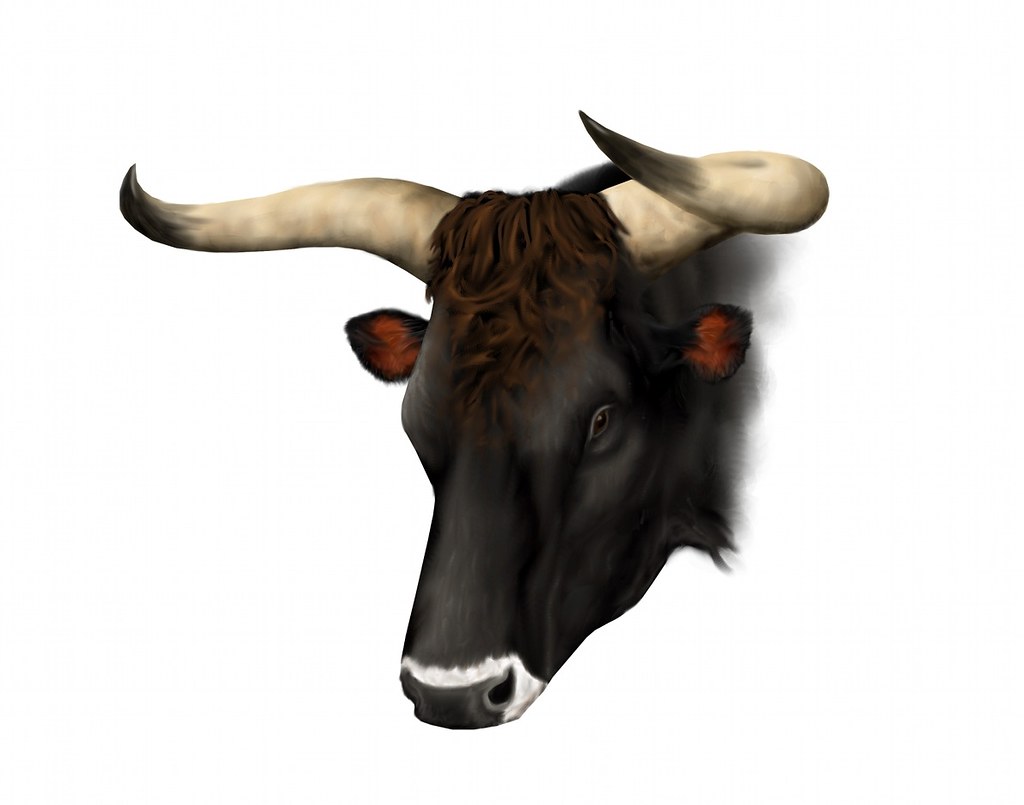
Of course traditional breeding and continuing back-crossing slows down the progress a bit, but I was told that they do not feel the need to hurry up – not to forget, the Lippeaue is not an aurochs project per se, but conservational management of a reserve using cattle, and breeding them towards an aurochs-like phenotype is a side-project, so to say (and this is the case in all grazing projects, by the way).

Bull sizes

A pretty interesting question for me has always been the size of Taurus cattle. In 2015, we managed to measure two cows (Bionade and Liberta, somewhere between 153 and 155 cm at the withers). More interesting is the size of the bulls, of course. Lucio, a pretty early cross bull, was measured somewhere between 160 and 165 cm at the withers, and it was the only bull for which height data was known so far. Because it was such a large individual, we assumed most of the other bulls would be smaller. Then there was the notion that Olaf Nowacki’s Taurus bulls (both born in the Lippeaue) would have reached 170 cm at the shoulders – I was sceptical at first, because they would have surpassed Lucio, a bull that already was seemingly an exceptionally large bull.
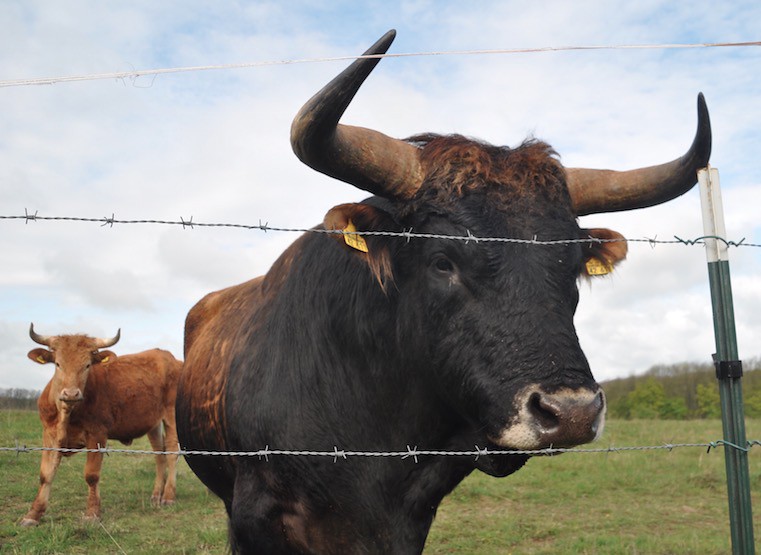
However, I once again took my yardstick with me. When we took at the look at the Kleiberg herd, Matthias Scharf managed to measure the breeding bull Linnet. The result was somewhere between 155 and 160 cm. However, Linnet is known not to be the tallest due to his shorter legs compared to other bulls. So when we moved on to Hellinghauser Mersch, where 42 623 (“Laokoon’s brother”) is the breeding bull, we measured the height of the arresting gear’s top bars, for which 42 623 was large enough to scratch is shoulders when he was in it last time for routine examination. It turned out that it was 170-175 cm high, so 42 623 must be 170 cm tall at the withers at least! This is a good size for an aurochs bull. These data, from Linnet and 42 623, sets whole new standards for the size of Taurus bulls. It means that 170 cm for both of Nowacki’s bulls is absolutely plausible and that Lamarck, which is taller than Linnet, is probably about 160-165 cm tall. It also means that Taurus bulls are, with the exception of the few pure Chianina and large Holsteins that might be here, the largest cattle in Central Europe.
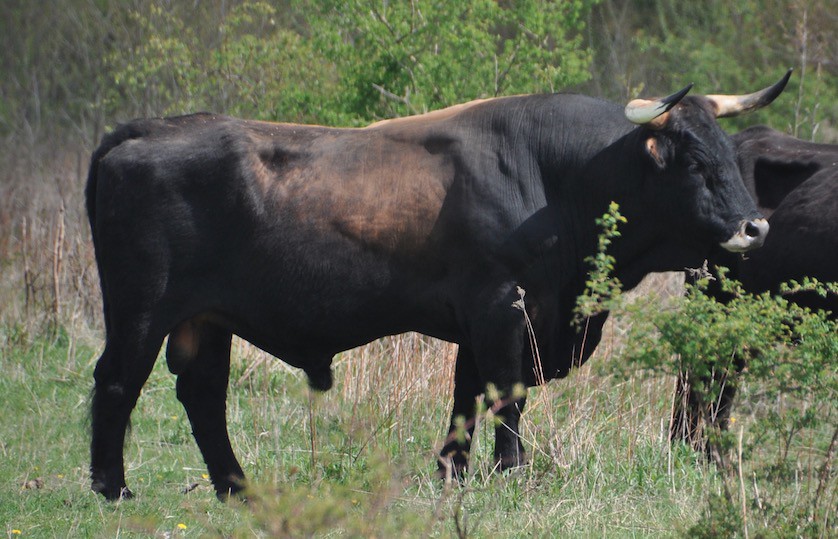
Confirmed: 42 623 is a giant
On the small end of the spectrum, there was Londo. In the field we took a look at its decaying skull, and I measured the distance between his horn tips and it was exactly 70 cm long. Then at home I used the photo of Londo in profile looking exactly towards the camera and tried to calculate his withers height. The result was 148cm – the size of a very large Heck bull, and considering that he is about the same height as many of the Taurus cows on the photos, it might be an accurate approximation. So Margret and I concluded that the size of Taurus bulls usually varies between 150 and 170 cm. For the cows, two individuals might be too few to give such a broad statement – I am pretty sure the upper size limit of Taurus cows is 160cm at the withers (Larissa is bigger than Liberta or Bionade), and I do not know the lower size limit.
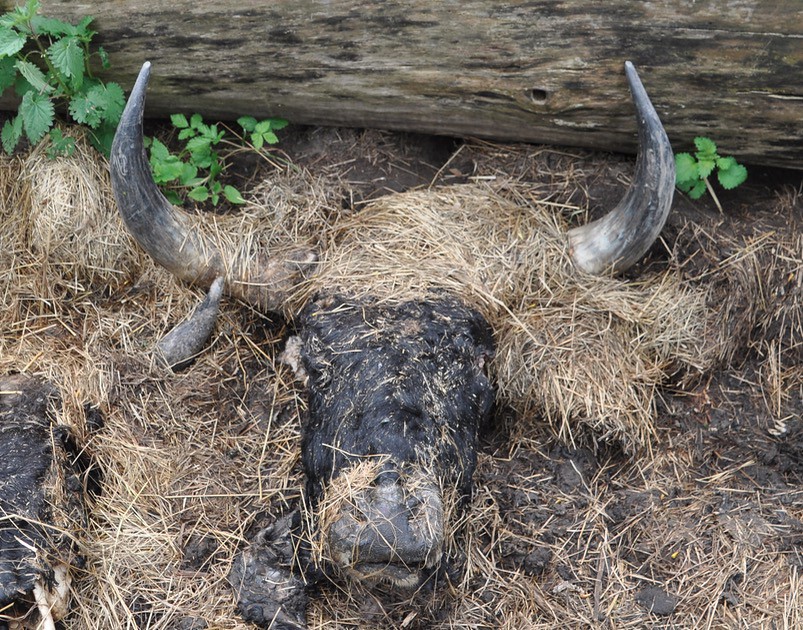
Londo's decaying head. Horn span 70 cm
The herds

- Kleiberg

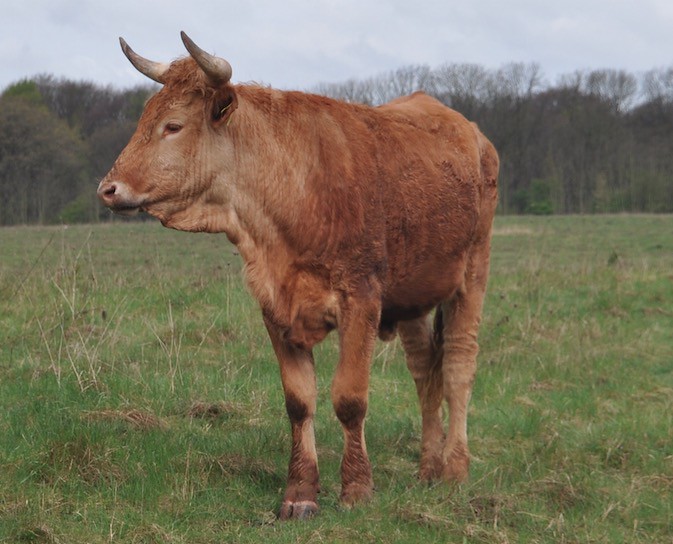
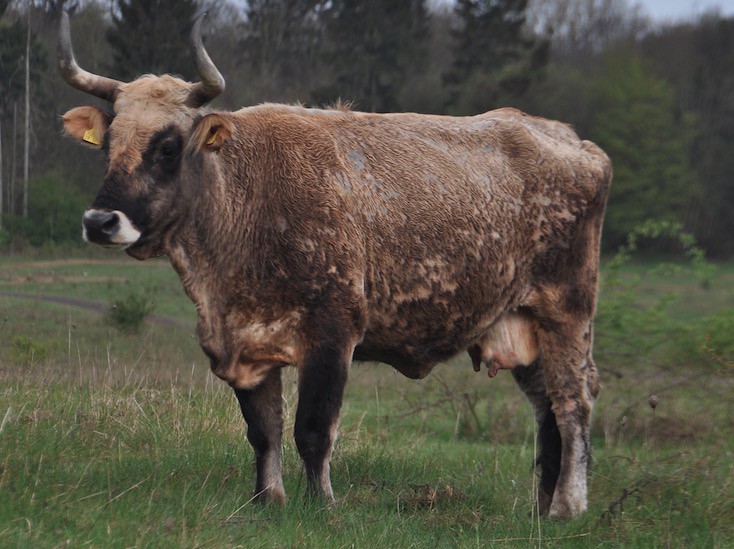
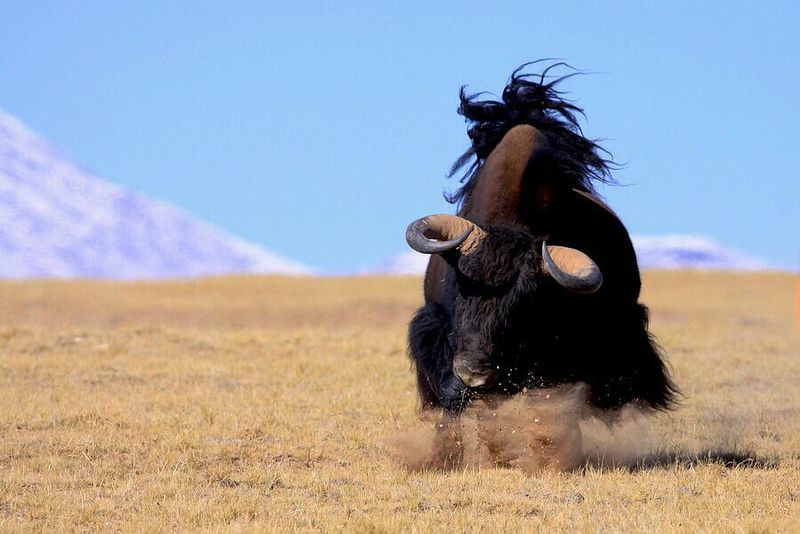
Bionade is a grown cow now and produced interesting offspring, such as the daughter 01 861 together with Linnet. In such an advanced cross like this, it is unnecessary to calculate the exact genealogical breed combination because it will not match the actual genotype, let’s just say she is more than the half Sayaguesa plus a bit of Heck and Chianina and she absolutely looks like it. She might be the best-looking cow in the Kleiberg herd, despite her horns facing not inwards. 55 400, a daughter of 42 623, although quite good regarding body and horn shape, is another one of those with the mysterious creamish colour variant with diluted nasal mucosa. We do not know which breed is responsible for this variant, perhaps more than one, and it might also be coupled with some abnormities in keratin development because their coat and horns are rather brittle. The oldest cow is Ludovica, 17 years, the only remaining first-generation cross from the 90s and Heck x Chianina. The young cows look promising. The young bull (I do not know its mother) looks quite good so far, maybe it will grow into a good possible breeding bull. Linnet himself has comparably short legs, as typical of all the offspring of the Sayaguesa bull Churro, which happened to have short legs as well. But nevertheless, Linnet is a valuable bull. Not only for his muscular build, but especially for his thick, inwards-curving horns. Truly inwards-curving horns are comparably rare even in primitive bulls (exception: Maronesa f.e.), and Linnet is the Lippeaue bull with the most inwards-curving horns. In an aurochs, they would curve even further inwards, comparable to those of this wild yak.
Father and son: Churro and Linnet (photo of Churro: Matthias Scharf)
Bionade (Sayaguesa x Chianina)
01 861
55 400
Old lady: Ludovica
- Hellinghauser Mersch

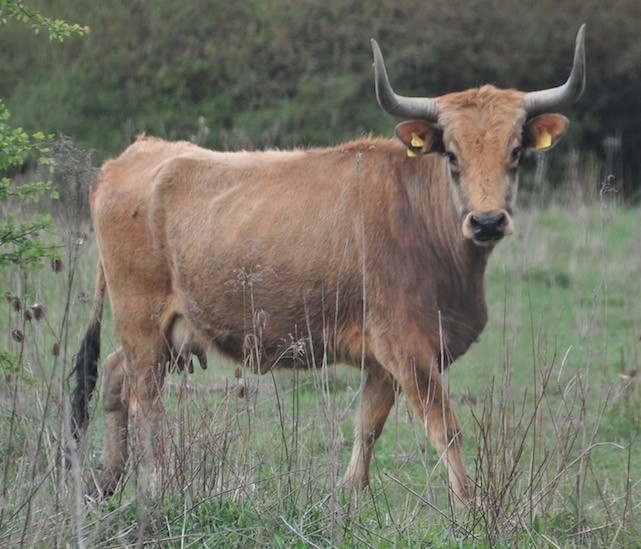
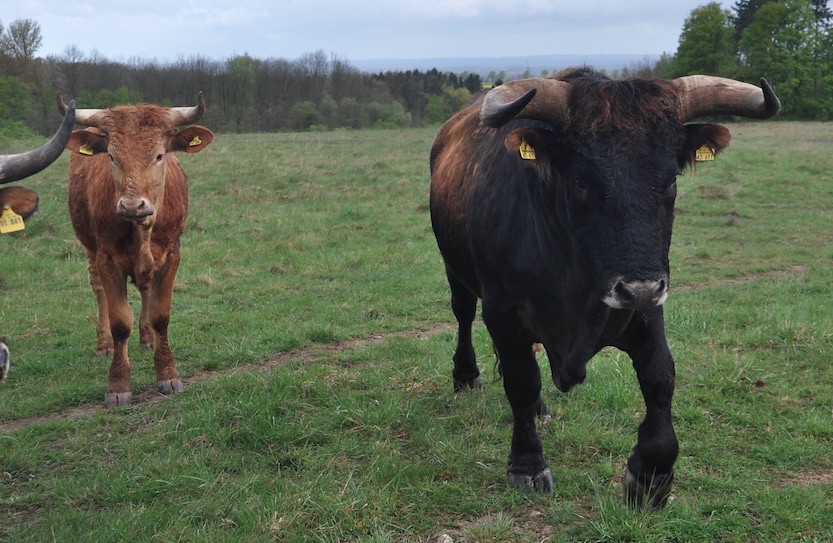
Hellinghauser Mersch is usually the largest of the herds. Dona-Urraca, the oldest of the cows (21 years) is grazing there. She is rather skinny now and probably will not calf anymore, but she produced many good individuals in the past. Her horns are remarkable for the inwards-curve that she passed on to a lot of her offspring. Another very good-horned cow is 79 813. She is a daughter of Lamarck and Lepisma, and therefore quarter Lidia. She is one of the more cautious individuals, but not nervous or aggressive. Lepisma herself clearly shows her half-Lidia descent in looks, but is comparably gentle. Two other rather good cows in the herds are Laola and 42 028 (now nicknamed “Dunja”). Both are 50% Sayaguesa 50% Heck x Chianina and therefore produce “true F2” individuals with the breeding bull 42 623 (“Laokoon’s brother”, still has no proper own name). About half of the young bulls in the herds are rather light in colour, they either have a saddle or are almost cow-coloured in one case; I suggested selecting them out, because the father 42 623 already has a saddle himself and continuing to use such a lightly coloured offspring might bear the danger of perpetuating this trait. Nevertheless, looking at 42 623 himself, I really like this giant. Not only for his size, but also for his muscular body with the well-developed hump. The horns are ok as well, the body a bit heavy on the other side. Apart from Dona-Urraca, there are three more Sayaguesa cows in the herd: Julia, a red one that looks rather aurochs-like, Baba, another brownish one (her male offspring, unfortunately, often had short faces and a heavy belly as far as I can tell), and Augustina. One of my favourite Taurus cows, 42 604, is having an injured foot since about half a year or so, and it is not clear if she is going to make it. That’s a bit depressing since she is a real beauty in my opinion, but she seems not to be that tall. There is one young son of her in the herd, a black one, perhaps he is going to develop well. Another young bull, a son of 72 813, has a surprisingly diluted colour – keeping in mind that both its parents are 12,5% and 25% Chianina, however, it might not surprise that much anymore.
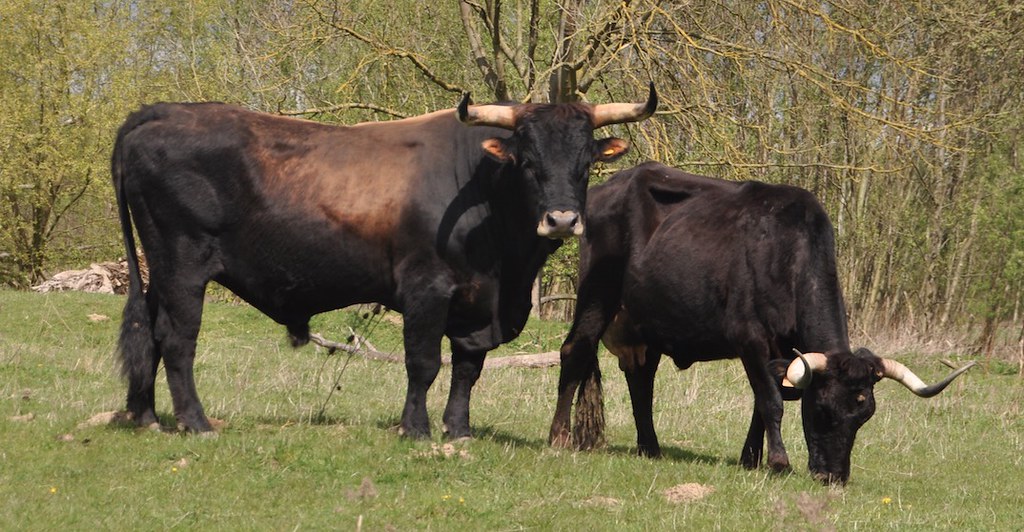
42 623 and the Sayaguesa Augustina
Lirgit (mostly Heck, a bit of Chianina and less Sayaguesa)
Lepisma: half Lidia, half Heck x Chianina
42 028
Lirgit again
42 028 again
...and again
...and again
42 604 and her son
79 813
...and her son
Dona-Urraca
...having horns shaped like the breeding goal
Sayaguesa cow Baba
One of 42 623's sons: too much red colour areas for its age

- Klostermersch-Nord

Klostermersch-Nord is the herd of my favourite Taurus bull, Lamarck. With the age of 10 years, he is one of the oldest bulls now, but still well in shape. Give him more inwards-curving horns, a slightly longer snout and a slightly more athletic body and he would match my conception of an aurochs bull very well. Linea is of the same combination as Larissa – half Chianina, half Lombritz (50% S., 25% H. & C.). 79 845 is a daughter of Linea and Churro, so mostly Sayaguesa and Chianina, yet her horns are quite Heck cattle-like. 55 386 is cow with good colour, horns and acceptable body shape. She is a daughter of Lamarck and 1/8 Lidia.
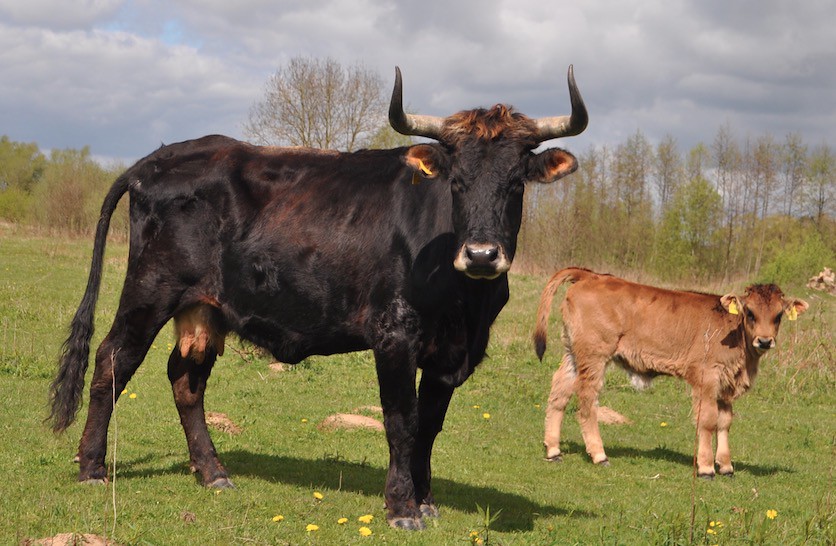
Klostermersch-Nord is also where Nadia, the pure Heck cow from the Wörth herd, grazes. She was pregnant when she arrived, and gave birth to a bull calf. They did not keep it, as a pure Heck bull would deplete the success that has been achieved regarding size, proportions and body shape. However, this year, she calved again and gave birth to a daughter of Lamarck. Therefore it is about 62,5% Heck, 25% Sayaguesa and 12,5% Chianina. I am looking forward to see this cow grow and see what a mix between the best Taurus bull and best-horned Heck cattle lineage is going to look like. If she is good enough to be kept, she could produce a good future breeding bull that has an impressive horn volume.
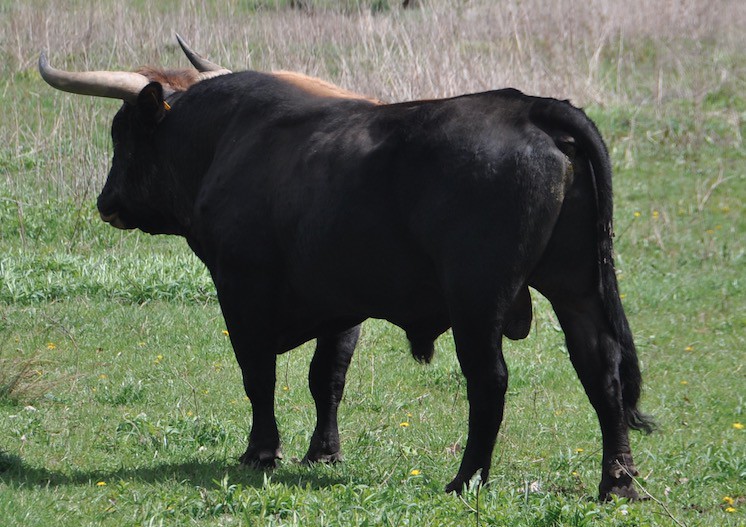
Lamarck: ten years old now and still in shape
Linea
79 845
...again
Heck cow Nadia from Insel Wörth


- Klostermersch-Süd


This herd contains several good cows – 18-year-old Lerida, one of the very first Heck x Sayaguesa, Larissa, the largest cow to date, 79 815, a long-faced good-horned daughter of Laokoon and Liberta, plus Lena II, a well-horned daughter of Larissa and Churro. There is also a daughter of Laokoon and Laniana (01 870) that is somehow short-necked but otherwise rather good overall, plus a Sayaguesa cow with good horns. Londo’s short-legged offspring has been removed, and there are some grayish half-Chianina in the herd. The preliminary breeding bull of the herd is quite young yet, and has been nicknamed “Laniel” so far. It is a son of 42 623 and Augustina, therefore 75% Sayaguesa, 12% Heck and 12% Chianina. He seems to be short-snouted and has the slightly hanging back that many Sayaguesa have, but he also has the chance to grow big and also has really thick horn bases, probably inherited from its Heck great-grandfather Lancelot. Together with Larissa, he might produce some really good individuals: they would consist mostly of Sayaguesa and Chianina, and have the chance to be large-horned a the same time. I am looking forward to it. There is also a young Sayaguesa bull in the herd. As far as I know, they don’t have a plan for him yet.
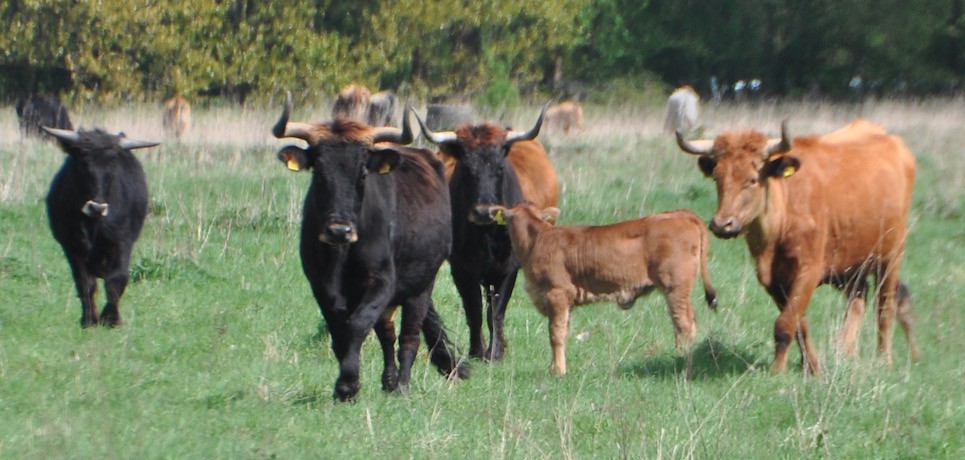
Lerida
Laniana: 1/8 Lidia
pure Sayaguesa
01 840
Lena II
... and again
Larissa and 79 815
79 815 again
... and again
Chianina cow Laura
The new breeding bull
The young pure Sayaguesa bull

Tuesday, 13 June 2017

The first Maremmana x Watussi calves are born!

Finally, two more first-generation calves of the Auerrindprojekt were born on May 26th. It is one bull calf and one cow calf, and both are of the combination Watussi x Maremmana. 
One of the calves with the mothers (© auerrind.wordpress.com)
The bull calf (© auerrind.wordpress.com)
It is great that both a bull calf and a cow calf were born. It opens the possibility to produce true F2 offspring of this generation, and we can see what this combination looks like in both sexes. The bull calf at least seems to develop a shallow zebuine hump, but that's not dramatic in my opinion. After all, the looks of an F1 are largely irrelevant because they are solely the product of heterozygosity and should give only little clue about later breeding success. I am still looking forward to see how the colour, size and body shape will turn out. The horns will most likely be pretty large, but also pretty upright. The F2 generation will be even more interesting, it will give us the opportunity to see what is the maximum of dark colour in this combination. 


Sunday, 30 April 2017

Teaser: Back from the Lippeaue

Last weekend, I visited the Lippeaue and met with the workers of the ABU again. We discussed and also managed to take some more measurements, two bulls (!) among them. I am going to present some photos and results soon, but I need some time to collect the data and also to identify the animals I photographed using up to date stock lists and make one or two posts of it. 

Until then, I provide you with a photo of the huge bull 42 623 (nicknamed Laokoon's brother) as a little teaser. 


Tuesday, 4 April 2017

News from the Auerrind project + the Maashorst bull

Several weeks passed since my last posts, I apologize. But I have good news from the Auerrind project, Germany. 

They announced that their Maremmana and Sayaguesa cows, which have been covered by the Watussi bull Thando last year, are expected to calf within the next weeks. This means that we can look forward to seeing several Maremmana x Watussi plus Sayaguesa x Watussi calves being born. I am especially looking forward to the latter combination, because of the potential for the F2 generation (strict sense) - imagine a Sayaguesa with mighty horns and the colour dimorphism that their strain has, already a good step towards aurochs-like looks. 

For this year, the Auerrind project is planning to set up the following combinations: the Hungarian Grey cows together with the Sayaguesa bull Takkie (the one without the saddle), the three Chianina cows plus the Sayaguesa bull Leo, and Bruno the Chianina bull together with the two older Watussi cows. 

While I think that Maremmana x Sayaguesa and Hungarian Gray x Sayaguesa might resemble many Taurus and Tauros individuals quite well, I am particularly excited on seeing Sayaguesa x Chianina and Watussi x Chianina animals. The first combination has a big potential for the F2 and following generations, while the latter combination is completely open what it is going to look like. But in any case, the combination has a good potential as well, especially because the body shape and size of the Chianina in the Auerrind project is superb. 

They also published a new photo of the Sayaguesa x Hungarian Grey heifer. The winter coat starts to shed on face and neck and seems to reveal that at least the anterior part of the body is going to have a slightly diluted colour. The next weeks will probably reveal how far this dilution is going to go; even if it ends up totally grey (which I do not believe) it is not relevant, as it is "just" an F1. It will be interesting to see in what angle the horns are going to grow, but we have to wait for about two or three years to be sure. 
© www.auerrind.wordpress.com

Moving to a different project, I recently found some more photos of the bull at Maashorst: 
Copyright as given in the picture. I still suspect it is another Maremmana x Pajuna cross. I really like the well-developed hump, it has a good body shape and looks like a good start. I keep guessing which breed might be ideal to cross it in the following generation; adding Maronesa would probably bring in genes for the right horn shape and would not add any deviant colours, but the results would decrease in size. 

Yet another project, I also found another photo of a Taurus bull from Hortobagy, Hungary that has been presented on the Carnivora Forum already. 
I have no idea concerning its breed background. I wonder if the impressive horn size is due to the influence of Hungarian Grey or Watussi, or maybe large-horned Heck cattle. 

Looking at all this, I think these years are the best in terms of breeding-back so far. There are so many projects working with different breeds distributed over a range of countries all over Europe. It is really enjoyable to watch. 


Friday, 3 March 2017

A European Krüger National Park?

The Krüger National Park is world famous – almost half as big as Switzerland, it houses a great biodiversity including a diverse megafauna, Africa’s “big five” among them. It attracts thousands of visitors every year and is one of the most important reserves in South Africa, protecting the megafaunal community.

Africa is the last continent on earth that houses more or less intact megafaunal communities. On all other continents, they have been depleted either a long time ago and/or have been disrupted quite recently (thinking of North America). Europe does not have a single place where all of the original Holocene megafauna species can be found living side by side, especially since two of them have been exterminated in their wild type, the aurochs and the European wild horse. Now imagine there would be something like the Krüger National Park in Europe – a reserve that is large enough to restore the complete megafaunal community with viable populations and that is open to visitors. This continent probably does not offer the same area size, so we have to think on a smaller scale.
Perhaps this idea is just a dream, but there is nothing wrong about dreaming it. And many great success stories started being just a dream as well, so let us be inspired by this idea and hope it might one day be possible.

A great big game park in Central Europe that contains all of the original Holocene megafaunal species would have to include:
Herbivores:
- Roe deer, Capreolus capreolus
- Red deer, Cervus elaphus
- Horse, Equus ferus
- Cattle, Bos primigenius
- Wisent, Bison bonasus
- Elk, Alces alces
- Wild boar, Sus scrofa (yes, it is of course an omnivore)
Carnivores:
- Eurasian lynx, Lynx lynx
- Wolf, Canis lupus
- Brown bear, Ursus arctos 

In a suited habitat, such as the Danube delta, one could also think about adding water buffalo to the list, although the presence of this genus in the Holocene of Europe is speculative. In higher regions, there would also be ibex and chamois. Northwards to the Limes norrlandicus, one could add reindeer and rewild musk ox instead of cattle. In southern Europe, the presence of lions and leopards would be supported by archaeological data but the introduction of these animals would probably be legally problematical. Fallow deer is controversial as a native European mammal in the Holocene, so it does not have to be added necessarily.

Imagine an area large enough to house all these species was declared a nature reserve. I do not even dare to make a guess on how large such an area must be in order to house all important European megafauna species and to allow them build up a viable population. It would be a natural or semi-natural landscape, that would be shaped in interaction with the large herbivores from now on. Red deer and roe deer, perhaps also fallow deer, would live there already. The first two species to be reintroduced into the reserve would be cattle and horses, as they are the most uncomplicated. However, they would have to be certified as wild animals in the preparation of being released, so that natural selection can shape their gene pool and there would be no need for medical examinations as currently dictated for cattle in grazing projects. One consequence might be that the cattle might not be allowed to be taken from the reserve, as it is the case in Oostvaardersplassen. When choosing the cattle to be released in the reserve, a number of the best individuals of all “breeding-back” projects was chosen, together with a few pure individuals from primitive landraces to get a broad genetic basis and all aurochs traits. For the horses, there are a lot of hardy landraces that can be used as a proxy for their extinct wild type, but the question of which colour type was predominant in European wild horses is still unclear. Genetic studies suggest that four colour variants might have been present at the same time. One would have to find a consensus if they want just one type, in which picking one hardy breed alone would be sufficient, or if they want more than one colour variant to be seen in the reserve, in which case they could mix the herds.
The next step would be to reintroduce wisent and elk. While it would probably not be that problematic to get a grown, healthy elk population, one has to be careful with the wisents which still suffer from a severe inbreeding depression. One should take care of obtaining a diverse gene pool and taking healthy individuals only, otherwise the population might crash before achieving satisfying numbers.

Having reintroduced all megaherbivores into the reserve, one should wait for a few years for the herbivores to build up large, healthy populations before predators should be introduced. The reserve could be opened for visitors in the meantime.
Lynx, which are definitely the most unproblematic of the three, could be reintroduced first. The reserve would probably not be large enough for more than one pack of wolves. And the number of bears would probably be restricted to below one dozen at maximum.

Predators are controversial for many reasons and their reintroduction is connected to many problems that do not need to be repeated here. But it is part of my dream that they are part of my dream reserve. Not just out of romantic reasons. It would be very interesting to see their impact on the herbivore populations. For example, cattle seem to be in slight disadvantage to deer and horses under circumstances like in Oostvaardersplassen, when looking at the development of the population numbers. It would be interesting if predators could change that by their prey choice. Perhaps cattle would be less prayed on by wolves than deer and horses, thus reducing the competitive pressure on their population by the other two species (in German, there is a name for it: “Prädations-vermittelte Koexistenz”, meaning something like “coexistence enabled by predation”). Also, if the aurochs-like cattle start to develop a more homogeneous coat colour, part of it could be the result of predation (there is the hypothesis that predators tend to pick out individuals with deviant colours). But that effect would probably only be visible after decades.

When thinking of megafauna, I am not thinking of mammals only. The reserve could also house golden eagles, and if a certain number of carcasses is allowed to stay in the field, it would also be a paradise for vultures. Therefore, such a reserve could be a precious contribution to the conservation and reintroduction of these species.

This kind of reserve would probably be fenced, but I would like it to be open to visitors, perhaps in the form of guided tours with a jeep. It would have some major advantages. Not only would it have educational benefits, the reserve might turn into a treasure of regional development. It might even boost tourism – Europeans would not have to leave the continent in order to see large herds of big game anymore; they could have a reserve with up to nine big game species plus eagles and vultures at their doorstep. Commercial hunting could also take place in the reserve, but only for the excess individuals that need to be culled each year (don’t get me wrong, hunting for joy repels me). This, on the other hand, could also be used to select out the deviant individuals among the aurochs-like cattle, which would be in turn beneficial for the educational component.

Tuesday, 21 February 2017

Cattle and ontogeny

All animals change during individual development (ontogeny), and this process of changing continues until death. For “breeding-back”, it is important to look at how a bull or cow might change during its life as it is relevant for selection.

Usually, it is impossible to judge an the bull or cow properly before the age of 3 years. The bodily proportions and shape are still going to change considerably, and the horns are not nearly developed enough.
Usually, all calves are rather long-legged animals, proportioned like deer. During its life, the legs always get shorter and the trunk longer. Also, the trunk gets heavier. A bull usually does not have its full bulk until the age of 6 years (Frisch, 2010), and bulk continues increasing. So if a young bull at the age of 3 years already is proportioned and shaped like an aurochs, you can assume that it will end up heavier and more longish at reproductive age. Also, the hump is a trait that increases with age. A bull that shows no hump at the age of 3 might still develop one later on.
Also, horn seem to continue to grow all life long, and they also slightly alter their shape by continuing the curve. Horns that might not look much aurochs-like at the age of three might end up satisfying by the age of five years.

I give you some examples for changing body shape and horns in Taurus cattle now that I was able to find thanks to an extensive photo archive I was provided by Matthias Scharf from the ABU. Most of the photos are courtesy of Matthias Scharf so please do not replicate without permission.

Lamarck

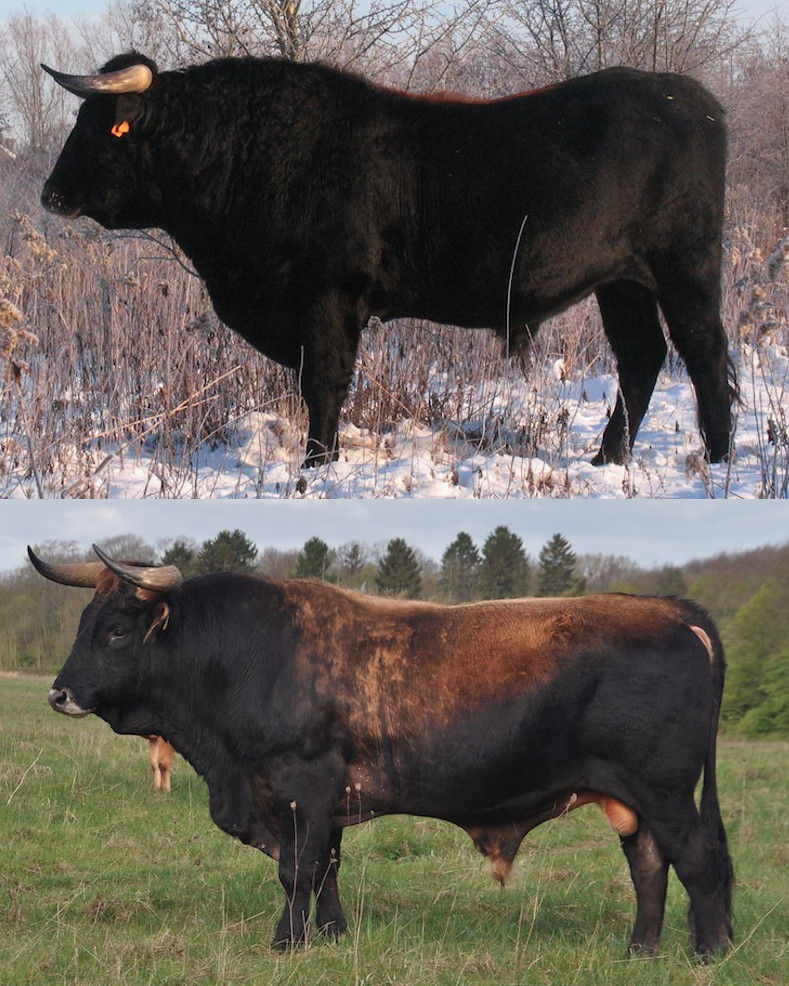
On the upper photo, you see Lamarck at the age of three years. Although one would assume this bull is more or less adult based on its looks, and simply lacks the inwards-curve in its horns, he developed very clearly inwards-facing horn tips later on. Not quite as spiral-shaped as in an aurochs, but satisfying. The second photo shows him at the age of eight years.

42 604
This nameless and extremely beautiful cow had horns that did not curve that much either when I saw her in 2013, when she was two years old. One year later, her horns developed a nice shape – in most aurochs cows, they would probably still be more curled, but those are satisfying horns.

Lerida 
Lerida is and always has been one of my favourite Taurus cows. The upper photo shows her with a nice slender body at the age of five. Three years later, she “put on some weight”, but still is a beautiful individual.

42 623
42 623 is the current breeding bull at Hellinghauser Mersch. The upper photo shows him at the age of one and a half year, he has squarely built proportions and a body of acceptable bulk. In 2015, the year the lower photo was taken, he developed a rather massive body, but the trunk-height ratio still seems to be ok, the shoulder hump is more pronounced and he is also one of the largest bulls.

We should not forget the ontogenic changes of wild-type colour as well. Phenotypical E+ is the only colour variant that shows ontogenic changes. All wildtype coloured calfs are born in a chestnut colour – during their first life months the colour changes (or: should change) to black in bulls, and cows darken only on certain areas (depending on the degree of sexual dichromatism). If the wildtype coloured calf is going to show dilution factors, it will show them later on, when the change in colour appears. Therefore, also Chianina or Podolian calfs are born in a chestnut brown colour, but their fur looses the pigment in the aftermath.  


Tauros Project: My current opinion

A while ago, I did a blog post “I am not so optimistic anymore” on the Tauros Project. By “not so optimistic” I meant that initially I thought/hoped the Tauros Project would surpass other breeding-back attempts with ease in a short time. Later on, having seen more animals of the project and an increased knowledge on genetics and animal breeding, my initial enthusiasm was replaced by a more deflated opinion. That is not to say that I turned to being pessimistic, not at all.
Now, having two years passed, I want to give a second opinion and prognosis for the project. My opinion is based solely on the scarce information that can be found on the web, and photo material of the herds.

The project has expanded nicely all over Europe, and has dozens of crossbred animals already. Some of them look really nice, and also the purebred founding individuals look good overall, although not always as tall and slender as I hoped. Of course they are not perfect yet, but they are of their first and second cross generation, so they just getting started. They have to genetically unify the founding breeds in one gene pool and then get rid of the undesired traits. Two years ago, I was worried about the large amount of Highland cattle in the project, which is used as a “quantity breed” to increase volume. I thought their undesirable traits would swamp the population and produce a high number of animals with small size, stubby body and short legs and face. This might be true for the first and second generation that includes Highland, but as Taurus cattle has shown, as long as they continue backcross them with slender southern European breeds, the undesired Highland body morph might be largely bred away in two or three generations.
The project is at such an early state that it might not be that effective to look at their first or second generation animals. It is more important to look at the founding individuals and to see what traits they have, what tells us what can be achieved in the future. Many of the southern European cattle they purchased and a number of crossbreeds have a slender and well-proportioned body, some do not. Sayaguesa seems to be the largest of the breeds included at large scale; Sayaguesa is a tall breed, but maybe it is necessary to include very tall breeds like Chianina to compensate the small size of breeds like Highland, Pajuna or Maronesa. The Tauros Project does not want to use that breed as far as I know, but maybe they are able to get their hands on really large Boskarin or semen from Maltese cattle – that would help to increase the size of the Tauros crossbreeds.
Many of the founding breeds of the Tauros Project are comparably short horned or have medium-sized horns. The project thus needs a breed with really large and thick horns to compensate that. The two largest-horned breeds of the project are Highland cattle and Maremmana; some individuals of both breeds have impressing horns indeed that fit in length and thickness, but many have horns that do not reach the dimensions of the aurochs, especially regarding thickness. Therefore, and this is just my personal impression, the Tauros Project might need a breed that truly boosts horn size, otherwise it might have problems in future generations in achieving impressive and authentic horn sizes.
Regarding horns, the project has the advantage of using Maronesa. Surely, Maronesa has its disadvantages too (small size, sometimes rather hefty bulls, short faces), but is very useful in two respects: the colour is nearly always a perfect wildtype colour, often with a well marked sexual dimorphism. That is the case only in very few breeds. And, much more important, Maronesa often have horns with a very clear inwards-curve, in both sexes. This is also a rarity in most breeds. Therefore, when they take advantage of this breed, the Tauros Project might have less problems in achieving inwards-facing horns in both sexes than most other projects.

I am very happy that the Tauros Project is using Maronesa. So far, it is the only project using that breed. I think Maronesa can be very helpful when crossed with the right breeds. Imagine a herd that is composed of Maronesa x Chianina only. It would bear a lot of potential, it would include almost all aurochs traits except for really elongated skulls. Using Maltese cattle instead of Chianina would also result in a much lower frequency of dilution alleles in the herd and add the elongated skull shape. Both combinations would still probably need some augmentation regarding horn size.  

Back to the Tauros Project. I think that the project is progressing well and they are doing a good job (according to the Rewidling Europe webpage, they have almost 300 crossbred animals by now, dispersed among several European countries). Regardless of whether they are going to achieve truly impressive sizes or horn volume, I think the project is going to produce many rather good individuals in any case. The basis is good, and many of the crossbred animals born already look satisfying. I repeat my statement that I think the Tauros cattle will resemble Taurus cattle, with minor differences because they have different founding breeds. And that is a good thing, as it means they will achieve a high resemblance to their common wild ancestor. Of course the project faces the same challenges as all cattle breeding projects: it has to unify the desired traits and get rid of the undesired ones. And since the rules of inheritance go for all projects, it will take a lot of time, especially in such a slowly reproducing species as cattle. Recessive alleles, such as the dilution factors inherited by Podolian cattle or the recessive red of Highland cattle, will continue to show up for decades, just as other undesired traits will do. But that is a problem that all projects are facing, that’s part of animal breeding.

All in all, I am very happy with the progress of the project. It is great to see how it creates one herd after the other, I enjoy looking at the animals, and I am looking forward to see the future cross animals and I am confident that there will be some really good individuals among them. I think that we are living in the golden age of “breeding back”. There are so many projects and herds in so many European countries, and all of them are promising. All of them have their own take-on to this subject, and this is positive, as there are probably multiple ways to the goal and it increases the genetic diversity of the herds in sum (I am still dreaming of one large “breeding back” metapopulation in the future).


Monday, 20 February 2017

What's so charming about the aurochs?

I have some material prepared for several posts, just not the time yet to finish them. Therefore, I ask for patience – more is to come soon. In the meantime, a more “philosophical” post.   

Some animals do have some sort of charisma. Dinosaurs are charismatic, for example – there are millions of dinosaur fans on this world, and some of them have made it their profession. Big cats also capture the fascination of people, otherwise they would not be the focus of wallpapers or there would be no cars or weapons named after them. The aurochs has a kind of charisma too. There have been scientists, artists and cattle breeders obsessed with this animal, and there are still dozens, probably hundred or perhaps even thousands of people that are interested in this bovine, many of them in a very passionate way (and there is reason to believe that the numbers are rising). So what makes this animal that fascinating?
Magnificent beast or ordinary cattle?

If the aurochs was not extinct, we would probably regard them as ordinary bovines. Surely, living aurochs would be an impressive sight – their size, their horns, their athletic energetic body. And some zoo visitors might even notice that their sexes have totally different colours, which is quite unusual for most mammals. But other wild bovines are very impressive too, and people do not usually go nuts about them.
I think it is mostly the fact that the aurochs is extinct that makes it that interesting in the first place. Particularly that it was evidently driven to extinction by man in recent times, and did not die out for unknown reasons some millennia ago. And it would be still around without anthropogenic influence. This makes the aurochs a lot more graspable. There is similar interest in other animals driven to extinction by man, such as the thylacine or the dodo (which, in any case, were both unique animals). It is the mere fact that we could still see these animals in flesh, living and breathing, if the actions of our species had been less consuming and destructive that provokes interest and emotions.
            Furthermore, there is something that makes the aurochs more graspable than most other extinct animals – it has living descendants that happen to be one of our most familiar livestock, cattle. But everything in the aurochs was more spectacular, wilder – its body was larger, its horns were larger, they were athletically built and powerful, of an eye-catching contrast-rich colouration and their frizzy forelocks gave them a wild and fierce look (according to people who saw them in live). And because of the fact that they are extinct they get (wrongly) associated with mammoths and the other spectacular glacial fauna (they were, however, a key part of the not less spectacular interglacial fauna). So the aurochs is on the one side an animal we can relate to, but on the other side has an aura of being wild, untamed, strong and ancient.

The fact that the aurochs has living descendants that all preserve its trait to a greater or lesser extent is what makes it really exciting. Isn’t it fascinating to see that this one cow might have horns of a shape like the wild-type that disappeared, while the other cow might be coloured exactly like a wild cow, and isn’t tempting to try unifying all those preserved optical wild-type traits in one strain? Fortunately a number of projects try exactly that. The concept is fascinating: picking the most suited breeds, crossbreeding them and trying to achieve something that optically resembles the aurochs as far as possible. And since all those suited breeds are hardy, healthy and robust enough to survive on their own, and because cattle – as direct descendants of the aurochs – probably work ecologically in a very similar if not identical manner, such a result would not only look like the aurochs but also ecologically fill its niche and probably also behave very similar. The next best thing to cloning, and exciting to watch. It is exciting to see what has been achieved so far, to watch it progressing and to think on how it might be improved. So, here we do not only have the chance of creating a close approximation to an extinct animal with living animals in flesh and blood, and not just with pen and paper as I used to do it for years, but also to fill an ecological niche that has been made vacant by human actions.

It was exactly that chance to fill a vacant ecological with animals that resemble an extinct form that got me that much into the aurochs in 2011. Now I am one of the many aurochs enthusiasts, and it is a surprisingly rich topic – it not only includes palaeontology and zooarchaeology, but also ecology, genetics and animal breeding. I am concerning myself with that topic since almost exactly six years now, and it simply does not get boring – quite the contrary, it keeps being exciting.