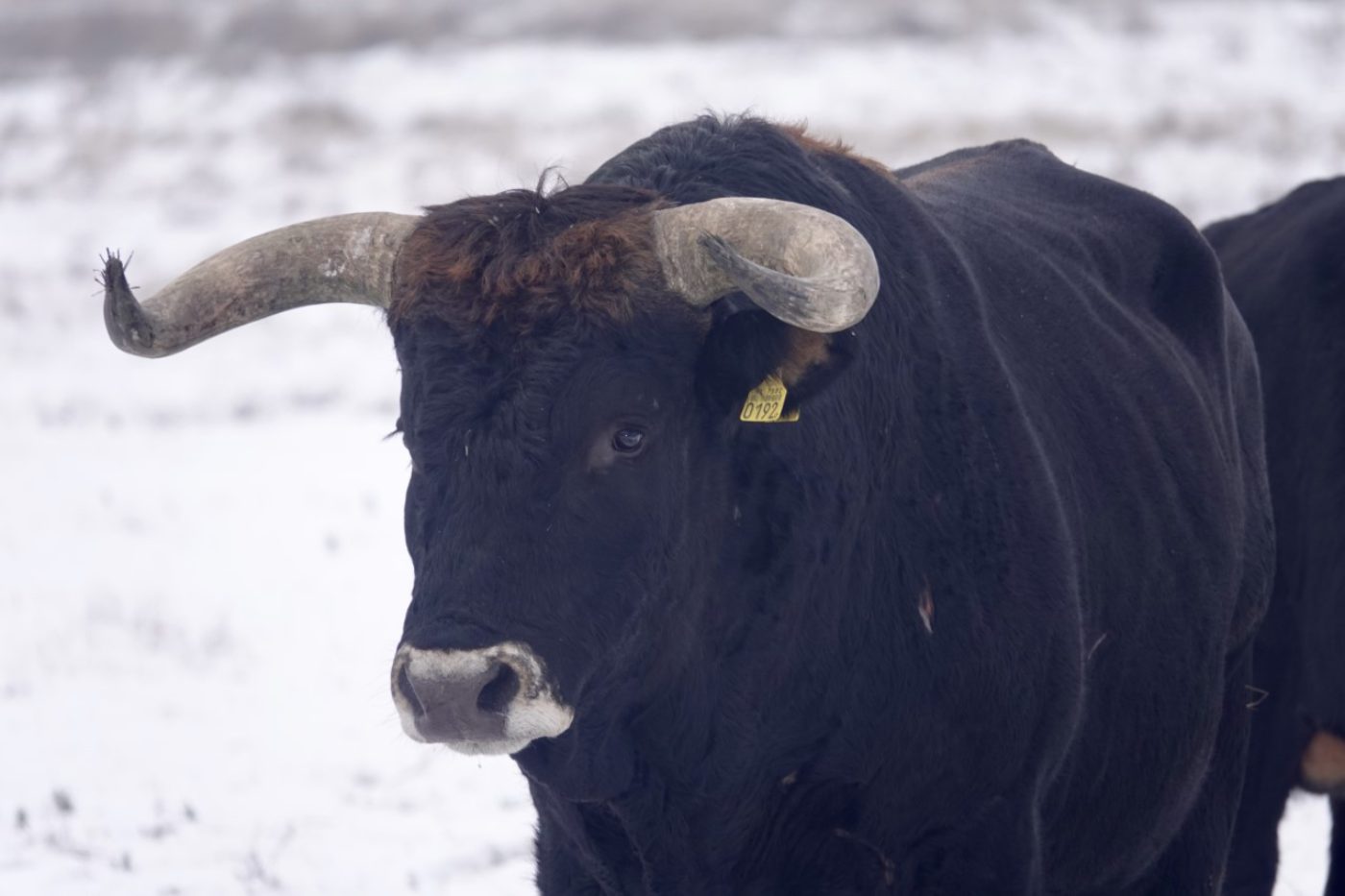
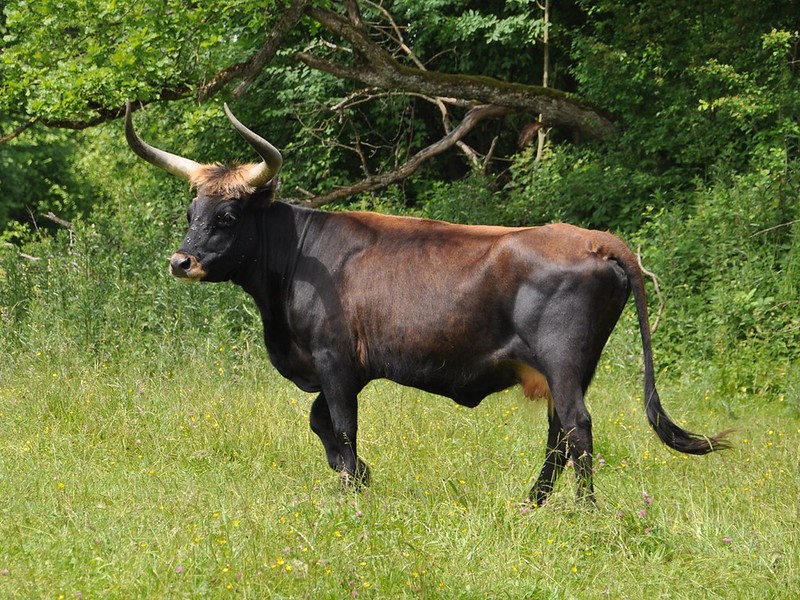
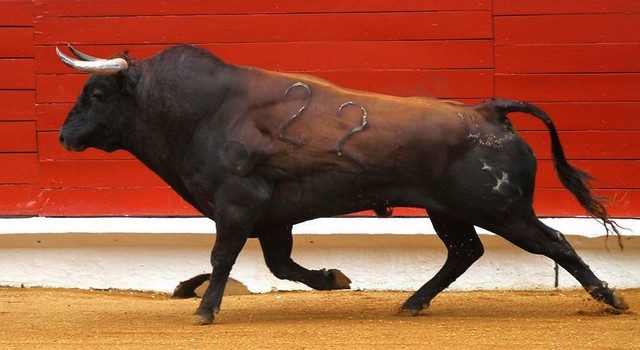
This includes a bull at Maashorst. The horns are really good. The size is ok, the curvature is basically right but should be more intense in order to be perfect. Actually the horns are better than in most Taurus cattle. The body shape and proportion cannot be judged because the bull is lying.
"Breeding-back" aims to restore or immitate extinct animals by selective breeding. This blog provides general information, the facts behind myths and news from various projects.
Tuesday, 29 September 2020
Three more Tauros bulls
This includes a bull at Maashorst. The horns are really good. The size is ok, the curvature is basically right but should be more intense in order to be perfect. Actually the horns are better than in most Taurus cattle. The body shape and proportion cannot be judged because the bull is lying.
Monday, 21 September 2020
K. L. Hartig's aurochs painting
![]() |
Friday, 11 September 2020
The Tauros cattle of Kettingdijk, Netherlands
The herd consists of crossbreeds and possibly also pure individuals of Limia and maybe also Maremmana as well as a pure Maronesa bull. The influence of Highland cattle still shows in a number of individuals that have the brindle coat colour pattern (see here or here for example). The Highland influence also shows in the colour and horns of this cow. Some individuals could easily be sold as Heck cattle, such as this bull or these cows. Interestingly, one bull is very pale-coloured, perhaps a combination of Maremmana and Highland colour alleles. There are also bulls with a correct colour such as this one. The adult bull on this photo also looks nice. Concerning the sexual dimorphism, there are lightly coloured cows but also many dark cows, bulls can be wholly black but about the half seems to have a colour saddle. So the sexual dichromatism is not very marked in the herd. Also, the bulls seem to be barely larger than the cows, which might be because they are not fully grown yet. All of the bulls seem to have a hump, which is good. The bulls are muscular overall, they just need longer legs. If I had to rank these Tauros cattle, I would say they are somewhere between Heck cattle and Taurus cattle.
Wednesday, 9 September 2020
Przewalski's horse cloned for genetic diversity
In 2015 I proposed cloning as a chance for the wisent's survival. Cloning pre-bottleneck wisents would greatly increase the genetic diversity of the species, since the modern population descends from a population of only about 50 individuals which itself descended from only 12 individuals. Adding the genetic diversity of wisents that lived before the dramatic bottleneck event in the 20th century would help the species to overcome its inbreeding depression. And if cloning is not possible, genome editing with CRISPR-Cas9 is a viable alternative.
It seems that there are people who had the same idea for the Przewalski's horse, which descends from only 12 individuals as well. A stallion has been cloned from an individual that has been cryopreserved since 1980. For details, you can have a look at the article from Revive & Restore.
I hope that cloning for conservation will not be restricted to this one individual. I hope this idea will be put into practice for other species as well, including the wisent.
Tuesday, 8 September 2020
Reconstruction of aurochs cow horns
Recently I did a reconstruction of the horns of the Asti specimen at the Museo paleontologico territoriale dell'Astiagiano.
Reconstructing the horn sheaths on the bony cores always requires speculation to a certain degree. The horn sheath continues the curvature of the bone, but there is no rule of thumb on how much the sheath increases length and thickness of the horn. Especially the length of the sheath may vary greatly in comparison to the bony core (see van Vuure 2005). So we can only guess how much the sheath added to the horns in the individual specimen. I usually reconstruct the horn sheath with 133% of the length of the bony core.
Here is the result:
Wednesday, 2 September 2020
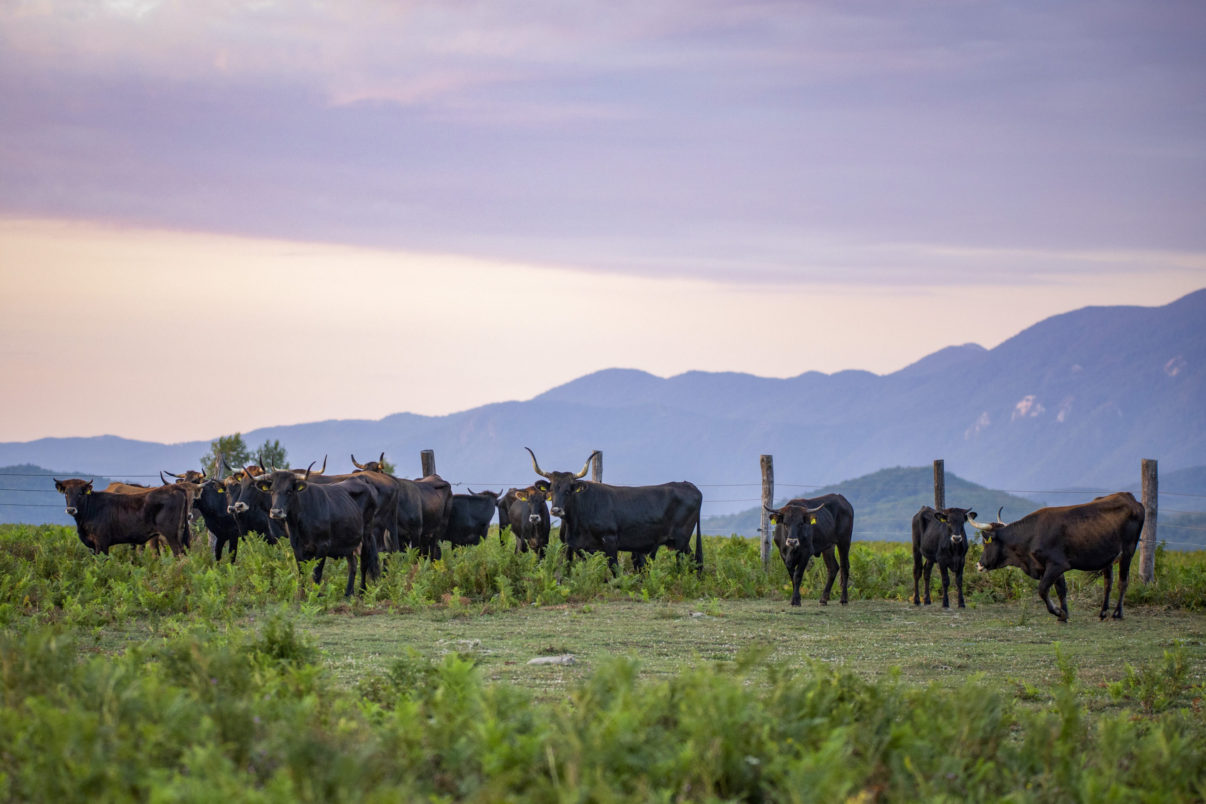
Tauros cattle arrived in Velebit, Croatia
You can see photos of the herd here and here.
Based on their looks, the herd might include Maremmana x Sayaguesa, Limia x Maremmana and Pajuna x Maremmana individuals. But that is only a guess. I doubt that these fully grown individuals are fifth-generation. First of all, the Tauros Programme counts the parental generation as first-generation, what means that their second-generation animals are actually the first cross generation. So that means they mean fourth-generation. Also that seems a far stretch for a breeding period of 11 years. Body shape and proportions are OK, they are pretty much the standard we see in Taurus cattle and primitive cattle breeds. So is the skull shape. The horns, however, are not that impressing, as in most Tauros cattle. They are to small and the curvature is not aurochs-like either. What I also noticed is that the cows are mostly pretty dark, what is true for most Tauros cattle. I wonder why. Surely, Sayaguesa contributes dark colour shades in cows but other projects achieve a nice reddish-brown coat colour even in half-Sayaguesas. Maremmana, Limia, Tudanca and Pajuna also have lightly coloured cows. So I wonder why most Tauros cows are that dark.
The Tauros Programme, after 11 years of breeding, now has reached a level of good quantity. They have a total animal count in the three-figure range. What the programme needs is to improve the sexual dichromatism (i.e. achieve more lighter-coloured cows) and to improve the horns in both size and curvature. There are no size measurements for Tauros cattle (at least none that have been published) but the cattle at Keent (NL) do not look large. So they also might want to improve the size of the animals, considering that they are using a number of small breeds (Pajuna, Highland cattle, Maronesa). While selection can improve the sexual dichromatism and if they pay attention on only using bulls with good horns also the horn shape, I doubt that they can achieve the improvement of the horns and body size with the breeds they are currently using. The horn size of many Maremmana (the largest-horned breed they are using) is actually smaller than in the aurochs (see here, for example). Maremmana is also the largest breed they are using, and Maremmana does reach sizes of 170cm and allegedly more, but their Maremmana individuals don't look large (one of their Maremmana bulls was barely larger than the Pajuna bull, and the other one didn't look much taller than the Highland individuals).
Summa summarum, I think the Tauros Programme needs breeds that add large size, truly large horn volume, and also a good horn curvature when starting the quality-building phase otherwise Tauros cattle might end up deficient in terms of horns and body size.
Friday, 28 August 2020
A Watussi steer with perfectly aurochs-like horns
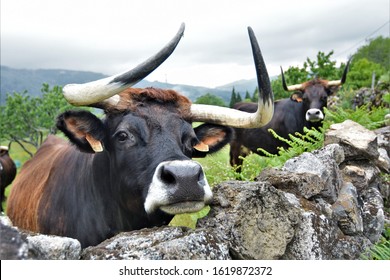
This has two implications for "breeding-back". For once, it means that bulls with banana-shaped forwards-facing horns (as we see it in many primitive breeds and "breeding-back" cattle) actually have the right genes for an aurochs-like horn curvature (the horns would also end up longer). It are developmental factors that result in the domestic condition. Furthermore, the big question is then: can "breeding-back", with the cattle that we have, produce perfectly aurochs-like horns at all? Selecting just on the phenotype that we want would not reverse the developmental changes from wildtype to domestic that we have in cattle. However, there are occasionally bulls with horns very close to the original aurochs horn shape, such as some Maronesa bulls (and also cows). And maybe it is not a coincidence that this breed has also retained a substantial degree of colour dimorphism.
Tuesday, 25 August 2020
Two Tauros bulls with good horns
Go here and here. The head of the first bull resembles some Taurus bulls quite closely. The second bull might have Maronesa ancestry but I could be wrong on that.
It's really good to see Tauros bulls with such nice horns, it makes me hope that future Tauros cattle will develop better horns than the current majority. However, I think the project still needs a breed that reliably and truly adds slenderness, long legs and large size. Maremmana alone probably will not do it.
Friday, 10 July 2020
New photos from the Auerrind project
![]() |
| © Claus Kropp |
![]() | |
|
![]() | |
|
![]() | |
|
![]() | |
|
More Sayaguesa x Chianina calves have been born:
![]() | |
|
![]() | |
|
It is very exciting to see those interesting combinations growing up and I am looking forward to the second-generation animals they will produce. The second generation is also where the selection starts. Since both Leo the Sayaguesa bull and Luca the Maremmana bull are about 170cm tall, many Auerrind crosses might end up being on the larger side.
Monday, 6 July 2020
Tauros bulls, a Taurus birth and a new Auerrind calf
Tauros bulls
I found some photos of Tauros bulls on the web that I haven't posted here yet. Here, here and here. The first bull is from Herpeduin, the other two photos are from Maashorst. On the last photo, I particularly like the bull in the front. The colour is perfect and the horns look pretty good as well. They have the best curvature I have seen so far in a Tauros bull.
Birth of a Taurus calf
I found three videos showing the birth of a Taurus bull calf. Here, here and here. It is interesting that the cow gave birth in the open field. Normally they would look for a shelter and give birth there, but not all cows have the instinct to do that.
A new Auerrind calf
Claus Kropp posted a new photo of a second-generation cow calf today:
![]() |
| © Claus Kropp |
Saturday, 4 July 2020
Aurochs cow artwork
This is a reconstruction of the female skull at the Gramsberg Museum in the Netherlands. I particularly like the horn shape of this specimen. A mix of Sayaguesa, Watussi and Maronesa might have the potential to result in horns like these. And Chianina for the body shape. Although they do not use Maronesa, let's see if the Auerrind project will achieve cows like that. Cows of the combination (Chianina x Watussi) x (Sayaguesa x Watussi) might have the potential to get close.
Sunday, 28 June 2020
Bos primigenius suxianensis
Wednesday, 24 June 2020
Quagga life restoration
I drew it in the same posture as this zebra of the Quagga Project so that both can be easily compared.
The stripe pattern on the Quagga is different from those of the zebras of the project. The stripes are broader, with a much smaller space in between, especially on the head. Also, the brownish background colour of the trunk is not quite achieved yet. Furthermore, I suspect that there are more differences between Quaggas and Burchell's zebras. For example, the mane seems to be shorter in each of the skins and the photos of the London mare. Also, it might be that the ears are smaller. Although being nested within the Burchell's zebra, the quagga has unique haplotypes identifying the subspecies.
The zebras of the Quagga project, on the other hand, are simply Burchell's zebras with a reduced stripe pattern, not more than that. This is why I wrote Please don't call it Quagga.
Friday, 19 June 2020
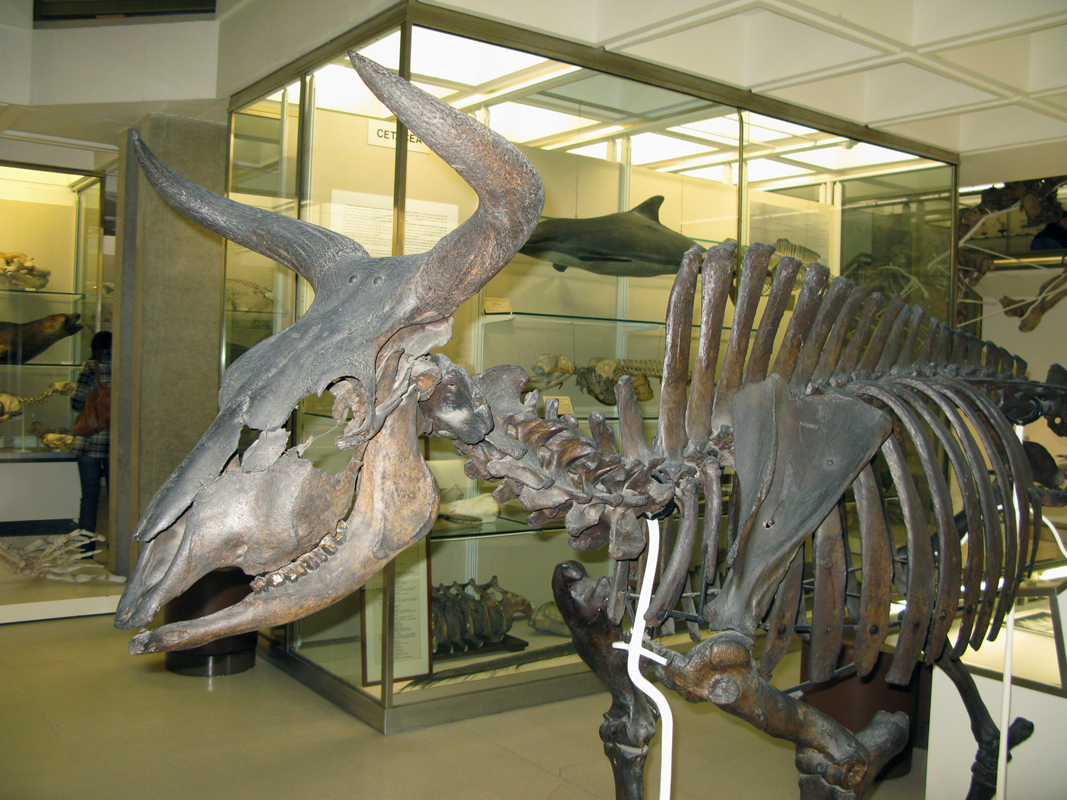
Aurochs horn variation
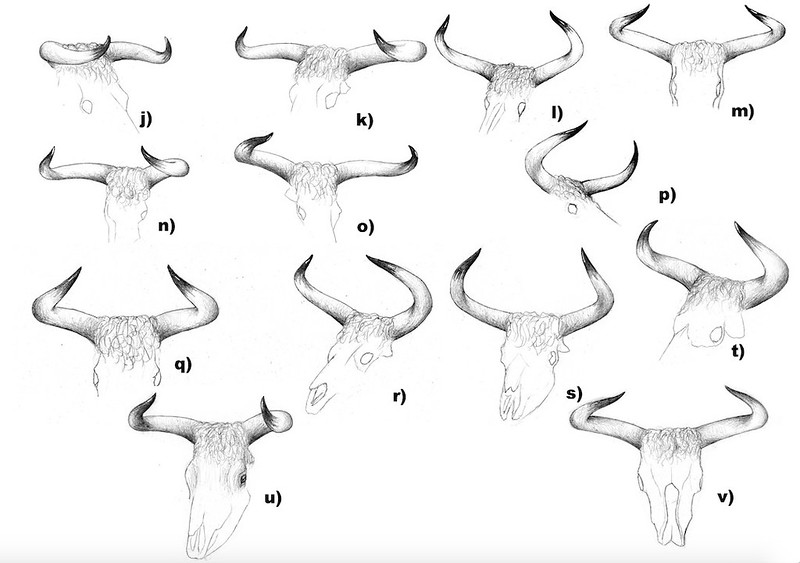
I tried to capture this variation on two drawings in 2015 where I reconstructed the horn sheaths onto 22 skulls in order to see what the horns might have looked like in life. I am going to repost them down below. We cannot be absolutely sure on the life appearance of the sheaths as there was no general rule of thumb of how much the sheath adds to length and thickness of the horn cure. There was quite some variation (van Vuure, 2005). So the reconstructions down below are an approximation.
For the identity of the skulls, go to the 2015 post.
Recently I did some more sketches, also including skulls that I already reconstructed in 2015:
From left to right top down: Berlin skull, a skull of a location unknown to me, the Cambridge cow, Gramsberger Museum skull, Himmelev specimen, Horsholm specimen, a cow skull from Italy, the Stuttgart skull and the Vig bull.
Having reconstructed about 30 specimen, I think this is a fairly representative sample for the variation of the horns of the European subspecies Bos primigenius primigenius.
Orientation relative to the skull
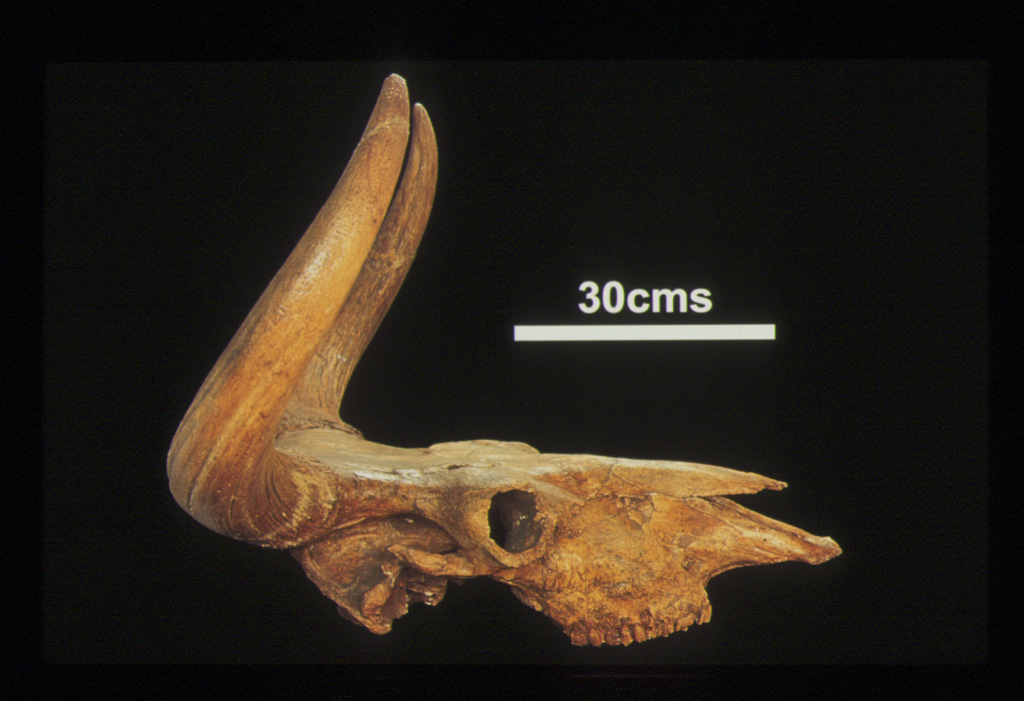
The literature states that the orientation of the horns relative to the skull varied from 50 to 70° (van Vuure, 2005). However, having had a look at so many skulls I find that the range is actually larger. The oldest aurochs skull which was discovered in 2014 had an orientation of 40°. The Vig specimen has an orientation of 90°, and the Horsholm specimen probably an even larger angle.
Geographic variation
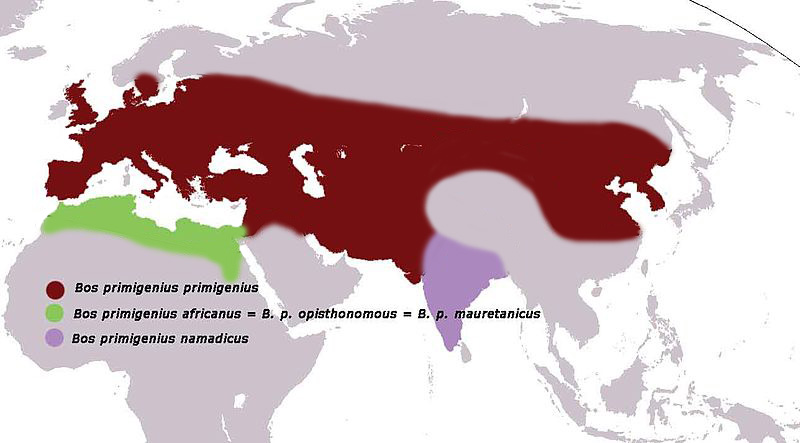
I see some sort of geographic correlation in the variation of the horn types. For example, the more Southern the skulls, the sharper is the angle between the horns and the snout. The more Northern and Eastern, the higher is the orientation of the horns. You see that very clearly in the Kiev specimen and the Eastern Asian aurochs Bos primigenius suxianensis (yes, apparently Eastern Asian aurochs were a distinct subspecies, more on that in an upcoming post). Small-horned aurochs seemingly only appeared in Northern Europe, all other locations (Southern Europe, Africa, Asia) had pretty large-horned aurochs.
Tuesday, 16 June 2020
Aurochs bull and cow portrait
The horns of the bull are based on the Berlin specimen, those of the cow are based on the cow at Gramsberger Museum, Netherlands.