Sunday, 19 December 2021

Who's better: Taurus cattle or Tauros cattle?

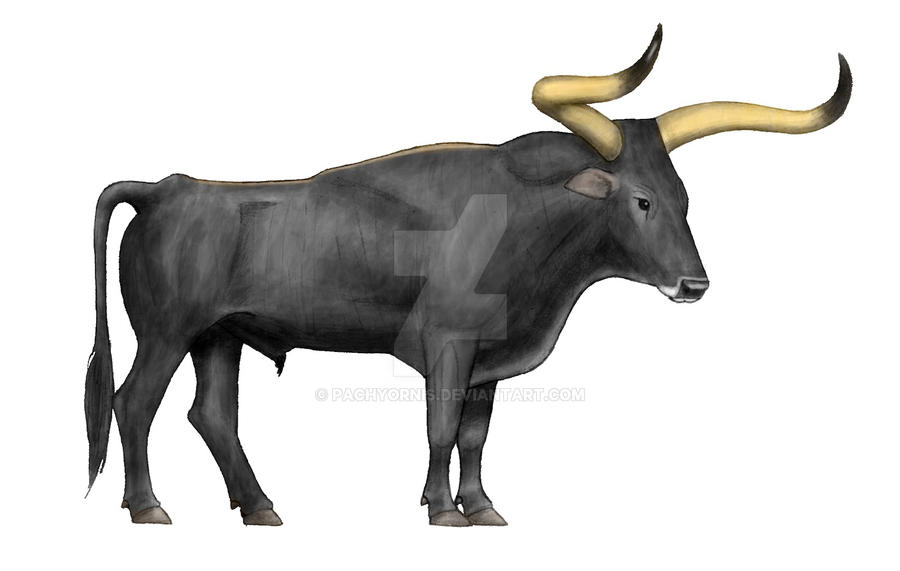
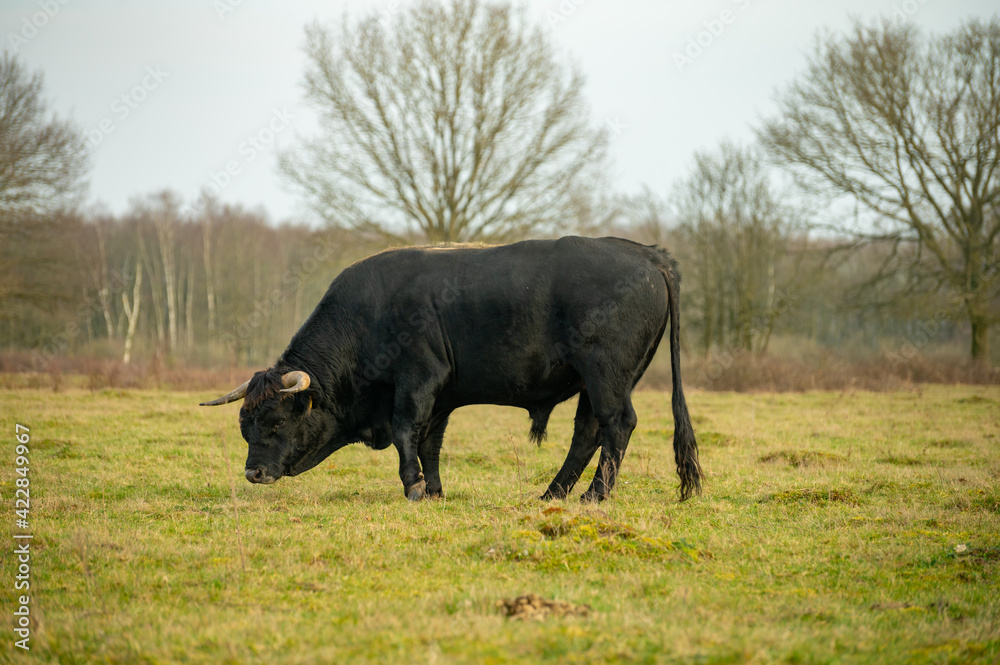
Sometimes, Taurus and Tauros cattle get confused. This is not surprising, considering that their name is almost identical. But I think it is important to differentiate between both breeds, because of their different history and also different quality as a “breeding-back” result. This post is going to examinate which breed has so far been more successful in approximating the goal of “breeding-back”.  


Some may say it is unfair to compare the two breeds because Taurus cattle were created in 1997 while the TaurOs Project started in 2009. However, I am only comparing individuals of the same crossbreed generation in order to be make it comparable. The youngest Tauros cattle may be of the fourth or fifth generation, the youngest adult ones (only adult cattle can be compared as the traits are not full expressed in juvenile and subadult individuals) may be of the second and third generation. Therefore, I will compare only animals of the first, second and third crossbreed generation of both projects. 

I compare them based on the animals that are available to me. The largest Tauros cattle herd is in Keent, Netherlands, but that herd is not very present on the web, only single individuals. The Kettingdijk herd has been documented very well by Geer vanne Smeed (go here for the flickR stream) and there are also many photos and videos of the Milovice herd in the Czech Republic. For a collection of recent photos of several Tauros cattle go here. Regarding Taurus cattle, I only use the Lippeaue and Hortobagyi herds for comparison, because they can be considered the only “true” Taurus cattle herds in the strict sense. Most of the other herds are basically Heck cattle herds that included single Taurus individuals, sometimes as sires (f.e. the Schmidtenhöhe herd, the Cuxhavener Küstenheiden herd). There is a continuum between Heck and Taurus cattle. I only use the “source” of Taurus cattle, Lippeaue and Hortobagyi, for the comparison. Taurus cattle are often labelled as “improved Heck cattle”, but considering that in the Lippeaue there was little to no backcrossing with Heck but they relied heavily on backcrossing with Sayaguesa, and that the portion of Sayaguesa makes up to 50% of the genetic composition of the animals there, the Taurus cattle in the Lippeaue are actually more “improved Sayaguesa” than “improved Heck cattle”. In Hortobagyi, the situation is more diverse as they have more herds and more breeds. 


Size 


Several Taurus cattle individuals have been measured. The Sayaguesa x Heck bull Lucio was between 160 and 165 cm tall at the withers, the Sayaguesa x (Heck x Chianina) bull “Laokoon’s brother” is about 172 cm tall at the withers. Three cows have been measured, and they ranged between 153 and 155 cm at the withers. Considering that they use Sayaguesa, which can reach up to 170 cm at the withers and Chianina, which even surpass that height, the size of Taurus cattle is what is to be expected. 

For Tauros cattle, no measurements have been published so far. But based on the photos and videos available on the web, they cannot be very large. I saw a video that is not online anymore of the Maremmana x Pajuna bull Manolo Uno and he was only insignificantly taller than the Highland crossbreeds (and Highland is a rather small breed). There is also a photo of the Maashorst bull (probably of the same breed combination) which I cannot find anymore that shows it next to a person, and it did not look large either. If Tauros cattle are not that large (not reaching 160 cm, the lower limit of European aurochs bulls), I would not be surprised considering that many of their founding breeds (Pajuna, Highland, Maronesa) are not large. For the size, the Tauros Programme relies on Maremmana, which also may reach 170 cm at least occasionally, but their Maremmana bull at Keent was not that large, it was about the size as the Pajuna bull. We simply need measurements from at least a few bulls to get an idea of Tauros cattle. 


Colour 


Taurus cattle mostly have the right colour with no domestic colour mutations, except for the recessive dilution allele(s) contributed by Chianina that cause a diluted coat colour in some individuals. Considering that most of the Taurus cattle at the Lippeaue are part Chianina, the allele(s) might be widespread in the population. Small white spots occur rarely in the Lippeaue, and in some Holstein-influenced individuals in Hortobagyi. 

Tauros cattle show a wider variation spectrum than Taurus cattle concerning colour. The populations have the recessive dilution allele contributed by Maremmana and Tudanca that removes the red pigment in the coat, and also Simmental dilution contributed by Highland. Several individuals also have the dominant brindle allele, contributed by Highland. White spots seem to be a little bit more common than in Taurus cattle. 


Sexual dichromatism 


I did a post on the sexual dichromatism found in the Lippeaue for the year 2015. It occurs that more than 80% of the individuals display the right colour for their sex. It is, of course, possible that some black bulls inherit black cows and that some cow-coloured cows inherit bulls with a saddle. But all in all, I think the sexual dichromatism in the Lippeaue is rather good. The dichromatism in Hortobagyi is slightly less good, as dark cows are more common there than in the Lippeaue. 

The sexual dichromatism in Tauros cattle is less clear. Bulls with a saddle are not a rare sight, as well as pretty dark cows. 


Morphology


The morphology of Taurus cattle is variable. Most individuals are long-legged, but also have a trunk that is longer than in the aurochs (a problem found in most taurine cattle). Most individuals have a comparably long snout, although probably not to the same extent as in the aurochs. A hump is always present. Some individuals are more massive than others, but the body morphology of single individuals such as Lamarck or Lisette is quite good. 

Tauros cattle are even more variable concerning body morphology, skull morphology and proportions. Especially the Highland influenced individuals can be rather short-legged and massive (go here). Some bulls resemble Heck cattle in build. Some individuals are comparable to Taurus cattle regarding morphology. What is nice is that some Tauros cattle bulls have rather large humps, but there are also those with a small hump. The skull length varies greatly, some individuals have the same skull shape as Taurus cattle, others can be rather short-faced. 


Horn size 


The horn size of Taurus cattle is variable. Some individuals in the Lippeaue, such as the bull Lamarck, can have horns that are within the variation range we find in the European aurochs, others have smaller horns than what is average for the European aurochs. Some individuals in the Lippeaue have horns only slightly larger than in Chianina. In Hortobagyi, the average horn volume of Taurus cattle is larger due to the influence of Watussi and Grey cattle. The horn dimensions match those of the European aurochs quite often in Hortobagyi. 

Tauros cattle are variable regarding horn size as well. Some individuals can be small-horned too, but on average the horn size in Taurus cattle is larger than in the Lippeaue Taurus cattle, but not larger than in the Hortobagyi Taurus cattle. 


Horn curvature 


The horn curvature of Taurus cattle is variable, but the horns always face forwards in an aurochs-like angle (the angle should be between 50 and 80°). Some individuals, like Lamarck, Lerida, Loxia and Lisette, have inwards-facing horn tips, sometimes to the same extent as in the aurochs. Other individuals may have outwards-facing horn tips, particularly the cows. 

The horn curvature of Tauros cattle is variable as well, more so than in Taurus cattle. The horns of many bulls do not curve inwards, and several cows have lyre-like horn shapes due to influence from Maremmana and Highland. In some bulls, probably the Maronesa-influenced ones, the horn tips face inwards. The horns of some bulls face forwards in an aurochs-like manner, others have too upright horns. Some bulls have horns very reminiscent of those of some Heck or Cachena bulls (go here, for example). 


All in all, I think that it would be most fair to conclude that Tauros cattle are somewhere between Heck cattle and Taurus cattle in quality as a “breeding-back” result. Taurus cattle are larger, the horn shape matches the aurochs more often than in Tauros cattle, their sexual dichromatism is clearer, and the Taurus cattle population does not include extremely short-legged chubby individuals that are found in the Tauros cattle population, at least not to the extent found in the Highland crossbreeds. Tauros cattle seem to be more variable on each aspect than Taurus cattle. 

So far, Tauros cattle have not reached the quality of Taurus cattle. In order to catch up, the TaurOs Project would need strict selection. Some individuals certainly have potential, that is undoubtedly the case. But based on what the herds currently look like (f.e. their inhomogeneous colours and morphologies), as much as the fact that they have several bulls per herd instead of one quality sire, I wonder if they select their animals at all. Perhaps their plan was simply to crossbreed a number of breeds and then let them breed for themselves rather than strategic selective breeding over several years or decades. 


Tuesday, 14 December 2021

Photos of Tauros cattle

Browsing for Tauros cattle photos, I found some recent photos of Tauros cattle bulls and also cows from the Netherlands. The breed combinations of the animals is top secret as usual (or perhaps unknown since there seems to be no herd book and several bulls per herd), but in some cases the looks of the animals suggests influence from certain breeds. 

Photo 1  This bull is likely Maronesa-influenced, perhaps it even is a pure Maronesa. 
Photo 2 The body shape of this bull is rather good, I love the large hump. The legs could be longer though.
Photo 3 Rather Heck cattle-like horns, perhaps Maremmana ancestry. 
Photo 4 Maybe Pajuna influence. 
Photo 5 Certainly Highland-influenced, possibly also Maremmana because of the horns. The body is very short-legged and massive, also a very paedomorphic skull shape. I would not continue to breed with this animal.
Photo 6 Very Heck cattle-like horns, very likely Maremmana-influence. 
Photo 7 The same individual as on photo 6. 
Photo 8 Perhaps a pure Limia bull. 
Photo 9 Bull from Maashorst, very likely Maremmana-influence. 
Photo 10 Heck cattle-like head and horns, but a superb hump. 
Photo 11 Resembles a Taurus bull, no idea on the breed background. 
Photo 12 Quite possibly a Maronesa x Maremmana cow. 

The photos don't tell much about the size of the animals, but some of the cattle certainly have potential. Especially the bull on photo 2, if it had the horns of the bull on photo 1 it would be a great success for the project. Maremmana seems to have had a big influence in Taurus cattle, if they would increase the influence of Maronesa now by using Maronesa-influenced breeding bulls they would probably increase the quality of the animals, at least in terms of horn shape. 


Friday, 10 December 2021

What the Near Eastern aurochs looked like

Taurine cattle in Europe descend from both the local European aurochs populations as well as the Near Eastern aurochs. Initially, the aurochs was domesticated in the Near East about 11.000 years ago. There was probably no domestication of aurochs in Europe, but there was subsequent introgression from local populations in Europe (go here). Nevertheless, the Near Eastern aurochs (which was still a member of the primigenius subspecies) is the main ancestor of the taurine cattle on this world. Therefore, it would be interesting to know what the Near Eastern aurochs looked like. 


The problem is that there are no historic descriptions describing the life appearance of the Near Eastern aurochs and also the skeletal remains have not been described in detail in the literature yet. However, we know that the African aurochs and the aurochs of Europe were morphologically more or less identical (see van Vuure, 2005), so that it is highly likely that the Near Eastern aurochs had the same morphology. The question is, in this regard, how large the aurochs in the Near East were. The giants of 200 cm withers height were probably limited to Europe (only “probably” because the very old remains of an aurochs from Tunisia of 700.000 years ago were very large as well), so it is not likely that the aurochs in the Near East reached the same size. But it is also unlikely that the bulls were smaller than 160 cm, because there are no aurochs remains of either Bos primigenius primigenius or Bos primigenius africanus that indicate bulls smaller than a withers height of 160 cm. 

Regarding the coat colour, it is questionable if there were any differences to the aurochs of Europe. So far, the evidence for colour saddles in aurochs bulls is limited to Africa, while there is only evidence for black bulls in the primigenius subspecies. 

A difference between the European primigenius aurochs and domestic cattle is the colour of the dorsal stripe. While historic evidence suggest that the dorsal stripe in bulls of at least the Central and Eastern European aurochs was whitish grey (according to Sigismund von Herberstein it was composed of white hair mixed with black hair, see van Vuure 2005), the dorsal stripe of wildtype coloured domestic bulls is grey only in breeds that have the mutation that removes the red pigment, such as Podolian cattle or Tudanca, while it is yellowish, reddish or reddish brown in all wildtype coloured bulls that have red pigment in their coat. Now the question is if the dorsal stripe of all aurochs populations, or at least of all B. p. primigenius populations, was whitish grey or if the dorsal stripe of the Near Eastern aurochs, which are the main ancestors of domestic cattle, displayed the colour palette from yellowish to reddish brown. As there is no evidence telling us anything about the colour of the Near Eastern aurochs, we will never know. However, we know that Southern European aurochs share the mitochondrial T haplotype with cattle, and it is very likely that the Near Eastern aurochs had the T haplotype as well. Central and Northern European aurochs had the P haplotype. Therefore, as Northern and Southern primigenius aurochs differed genetically, it is not impossible that there were subtle differences in coat colour characteristics such as the dorsal stripe. If the Near Eastern aurochs had a whitish grey dorsal stripe like those in Europe, the colour of the dorsal stripe is a general difference between the wildtype (B. p. primigenius) and the domestic form. 


Literature


Cis van Vuure: Retracing the aurochs – history, morphology and ecology of an extinct wild ox. 2005. 

Saturday, 4 December 2021

Wild horses: bay, wildtype bay, seal brown, brown?

I repeatedly wrote on my blog that western wild horses had, according to genetic studies, several colours: black, black dun, bay, bay dun and leopard spotted. 

The basis for the presence of bay in wild horses is that genetic tests in predomestic DNA samples have identified the presence of both the allele a and A on the Agouti locus in wild horses [1]. But it is, unfortunately, not as simple as it seems at first. 

A bay European wild horse. All rights reserved

There are two types of bay colour: “normal” bay and wildtype bay (or wild bay). The wildtype bay is similar to bay but lighter in colour, and only the toes are dark-coloured while in bays the whole legs are dark. Wildtype bay is hypothesized to be caused by the hypothetical allele A+ [2]. Personally, I do not believe that wildtype bay is actually the wildtype version of bay. The dark areas on the legs in Przewalski’s horses cover almost the entire leg and not only the toes, as in horses of a normal bay colour, what suggests that they share the allele which would then very likely be the wildtype allele. So, we have bay and a form of bay which is called wildtype but is not necessarily wildtype. 

And then there is seal brown, a colour found for example in Exmoor ponies. The genetic background of seal brown seems to be unclear. It is speculated that it is caused by the hypothetical allele At on the Agouti locus. There was a genetic test for this allele, which is now considered inadequate, and the sequence of the allele has not been published [2]. 

Druml et al have a different hypothesis on the genetic background of seal brown. They postulate that this phenotype is caused by the genotype A/a, therefore being the result of heterozygosity of the allele causing black in homozygous individuals (a) and the allele causing bay in homozygous individuals (A). What is striking is that they consider bay itself to be the result of a heterozygous genotype, namely A/A E/e [3]. The e allele is the domestic allele on the Extensionlocus that causes a chestnut colour in homozygous individuals. Therefore, bay would be a domestic colour, and the wildtype E/E A/A colour would be brown, which, according to them, is caused by that genotype. I have to say that I doubt the purported genotypes for these colours, for once because they differ from what is usually considered to be the genotype for those colours, and because 1) if seal brown was the result of A/a, there would be not only bay and seal brown Exmoor ponies but also black Exmoor ponies, which is not the case in the current population. Also, if bay was the result of the genotype E/e, there would be chestnut (e/e) Exmoor ponies, which is not the case and 2) if bay was the result of a heterozygous state, it would be impossible to breed a breed that is exclusively bay. However, there is at least one such a breed, the Cleveland Bay horse [2]. Therefore, bay cannot be the result of a heterozygous state. Brown, is, as defined by Sponenberg and Bellone (2017), sooty + bay. The genetic background of sooty is unclear [2].

One could assume that since, according to the literature, both the alleles A and a but not A+ and At have been found in European wild horses the case is clear that seal brown and wildtype bay are not wildtype colours. But the problem is that the common genetic test for the alleles A and a can only confirm the presence of a, and the presence of A is deduced by the absence of a [2]. Therefore, the test cannot discriminate between A, A+ and At (if the latter two exist at all). If the authors of the papers proposing the presence of A in wild horses used that test, the presence of the hypothetical alleles A+ and At in wild horses cannot be ruled out currently. 

To further complicate the subject, Sponenberg and Bellone (2017) state that seal brown can also be caused by the pangare allele Pa+ diluting a black phenotype [2]. This would have consequences for the phenotype of wild horses. If that is correct, it would mean that this form of seal brown is a wildtype colour and that the non-pangare allele Panpwould have to have been present in wild horses besides the pangare allele, otherwise black and other non-pangare phenotypes would be domestic colours. The pangare allele has been identified [2], therefore I hope that it will be tested for extinct wild horse samples one day. 

Another factor that plays in the game is the Dun locus. Since 2015 we know that there are three alleles on this locus: dun (a wildtype colour identified in all living wild equines and Pleistocene wild horse samples), non-dun 1 d1 which is wildtype as well, and non-dun 2 d2 which is domestic [2,4]. Wildtype non-dun and domestic non-dun look different; the former have a clearly visible dorsal stripe and the surrounding colour is lighter than in the latter, the latter are darker all over the body [4]. Wildtype non-dun bay horses, such as some Gotland ponies, almost look like bay dun horses, only slightly darker in shade. 


So, which colour did the wild horses have that were neither leopard spotted, black, black dun or any other form of dun? I think that this cannot be said with a 100% certainty with the current knowledge on horse colour genetics and the current genetic tests we have. Very likely the horses had the A allele since it is the basal allele of wild equines, but the presence of other alleles on the Agouti locus cannot be ruled out yet. The genetic background of sooty and seal brown would have to be identified and tested for wild horses. Also, it would be interesting to know if wild horses had the non-pangare allele. The colour of Exmoor ponies, however, is domestic in any case because so far this breed has been found to exclusively carry the domestic non-dun 2 allele d2. It would be interesting to know what seal brown combined with a d1/d1 phenotype would look like. 


Literature


[1] Pruvost et al.: Genotypes of predomestic horses match phenotypes painted in Paleolithic works of cave art. 2011. 

[2] Sponenberg & Bellone: Equine color genetics. 2017.  

[3] Druml et al.: Discriminant analysis of colour measurements reveal allele dosage effect of ASIP/MC1R in bay horses. 2018. 

[4] Imsland et al.: Regulatory mutations in TBX3 disrupt asymmetric hair pigmentation that underlies Dun camouflage color in horses. 2015. 

Tuesday, 30 November 2021

Lions prefer killing piebald cattle

In my dedomestication series from 2015 I speculate on the selective pressures acting upon the genetic structure of feral domestic animals that will eventually turn the feral animals into wild animals adapted to their environment. I made the prognosis that the animals will show a regression towards wildtype traits because these provide a greater evolutionary fitness since they are the product of past natural selection. Colour would be one of the examples. I speculate that predators would influence the colour of the animals, because some variants are well-camouflaged and others are not, such as piebald individuals. This would, after a sufficient amount of generations in the wild, lead to an eradication of alleles producing piebald colours which are typical of domestic animals and to a genetic fixation of non-piebald (wildtype) alleles. 

My dedomestication hypothesis has empirical problems, as there is no feral population of domestic animals in the same habitat as their wildtype under the same ecologic circumstances that has been reproductively isolated for a sufficient amount of time. But recently there was a study that might provide empirical support for some of my prognoses postulated in the dedomestication series. 
The prey behaviour of lions preying on cattle in Botswana has been analyzed in 2020 by Weise et al.. What they found was not only that lions prefer to kill cattle that are easier prey such as hornless individuals (which is not surprising, as hornless cattle have a much harder time defending themselves against predators than horned cattle), but also that piebald cattle have a higher risk of being attacked by lions. Lions seem to prefer piebald cattle over solid coloured cattle [1]. The authors speculate that a piebald colour makes identifying movement easier for the lions, and therefore they are attacked more often than solid coloured cattle [1]. I think that it is also possible that it is simply the fact that piebald patterns stand out more than solid colours, so that these individuals are attacked more often.  
The authors also found that short-horned cattle were preferred over long-horned cattle, which were mostly avoided by the lions. 

These findings are very interesting. In my view, they clearly suggest that at least some wildtype traits (solid colour, long horns) provide a selective advantage over domestic traits (piebald colour, short or no horns). The authors indirectly say the same by pointing out that cattle lost adaptions of the aurochs against predators [1] (this is a generalization that is not actually true, as there are cattle which still have large forwards-facing horns, significant body size, an athletic long-legged stature and wildtype colour et cetera). This implies that in a heterogeneous cattle population, where some individuals have these wildtype traits and others do not, this will lead to an increase in the frequency and eventually the fixation of the wildtype alleles, and therefore a regression towards wildtype traits, when exposed to selective pressure caused by large predators. 
This shows that the selection criteria of "breeding-back" are not pure cosmetics as some critics repeatedly claim, but actually contribute to the survival of the population of the animals once returned into an ecosystem with predators. 

Literature 

[1] Weise et al.: Lions Panthera leo prefer killing certain cattle Bos taurus types. 2020. 

Thursday, 25 November 2021

Transforming Lerida the Taurus cow to an aurochs cow

A while ago I did a post on the Taurus cow Lerida in the Lippeaue, Germany. She is a Sayaguesa x Heck cow, and has always been among my favourite Taurus cattle individuals. Recently I used a photo of Lerida and used the program GIMP to modify her morphology so that she fits a European aurochs cow. The result is down below. The photo was provided by Matthias Scharf from the ABU. 
original photo (bottom) © Matthias Scharf
The changes I made include: 
- horn size increased 
- horns slightly elevated viewed from frontal view 
- visible udder removed 
- trunk shortened 
- dewlap size decreased 
- hump size increased

A real aurochs cow would probably be slightly more muscular, as wild bovines usually are. But apart from that, I think the manipulated photo compared to the original shows the differences and commonalities between Lerida and an aurochs cow very well. The differences are reflected by the changes on the photo that I made, the commonalities include the colour, which is flawlessly wildtype, the skull shape, the leg length, the horn shape except for the fact that they could be more raised in frontal view producing that < >-shape, and also the body size is probably right as Taurus cows are usually around 150 to 155 cm in withers height. 

Monday, 22 November 2021

Australian scrub bulls and their aurochs-like morphology

There are feral cattle in Australia called scrub bulls. Those scrub bulls are noteworthy for their morphology. They are long-legged, slim but not too gracile. They are part zebu, and I think the zebu influence is responsible for their morphology, as primitive zebus are very short-trunked with long and slim legs. It is also possible that the fact that they live feral contributed to the morphology of the scrub bulls, but I do not know if they have been living feral for enough generations so that natural selection influenced their skeletal morphology.  
Here you have a video of some interesting scrub bulls in Australia: 
The morphology of scrub bulls, in my opinion, endorses the idea of using primitive zebus for achieving aurochs-like proportions in "breeding-back". An F2 of well-selected Taurus x (Taurus x primitive zebu) could be very interesting. 


Wednesday, 17 November 2021

Is "breeding-back" too much looks-based?

Originally, when the Heck brothers started their breeding experiments, their intent was merely to show what the aurochs looked like, i.e. they only cared about the animals’ looks. Nowadays, “breeding-back” aims to produce animals that are fit to ecologically fill the empty niche of the extinct aurochs. Cattle that work ecologically like aurochs are a valuable contribution to conservation and rewilding, as they represent a species once native in Europe. 

This is the modern purpose of “breeding-back”. But isn’t it too much looks-based for this purpose? Shouldn’t the breeding focus on the animals’ ecology, health, natural instincts and ability to defend themselves against predators if the cattle are supposed to survive without human help in nature? Wouldn’t existing feral cattle populations be a better substitute for the aurochs, because they proved to survive without human help? 


These objections against the concept of “breeding-back” occur from time to time, and I do not consider them valid. To avoid this kind of criticism, “breeding-back” projects emphasize that they do care about the cattle’s ecology. But that seems to be unheard by those who consider “breeding-back” too much looks-based. 

I think that those who criticise “breeding-back” as too superficial imagine that the desired aurochs traits are evenly distributed among the cattle world, so that aurochs-like traits desired are coincidentally found in breeds that might or might not be robust in ecological terms, and that the breed choice of “breeding-back” is based only on those optic criteria, so that the selection of breeds used might consist of breeds that have the desired optic traits but may lack the ability to survive and thrive in nature and the subsequent breeding focuses only on those optic traits, so that the robustness of the cattle would fall by the wayside while feral cattle prove to be robust and able to survive in nature. 

This, however, is a wrong assumption. In fact, optically aurochs-like cattle are always at the same time robust, hardy landraces because they are less-derived as a whole, and often live free all the year round. That means that the animals that “breeding-back” works with are hardy and robust right from the beginning. Heck cattle are a very good example for this. As mentioned above, the Heck brothers only cared about the looks of the cattle. Yet the resulting breed turned out to be healthy, hardy and robust, because the breeds it was created from were healthy, hardy and robust. Heck cattle proved to be able to survive without human help in the Oostvaardersplassen reserve. If the assumption of those considering “breeding-back” too much looks-based was correct, Heck cattle – originally only selected for looks – would not have ended up as a hardy and robust breed that is able to survive in nature. The same inevitably goes for more aurochs-like “breeding-back” cattle like Taurus cattle, because those projects also exclusively work with hardy and robust breeds. I have to admit that I do not know of a single breed that is truly aurochs-like but is susceptible to diseases, not able to cope with weather or to live free all year round and can only live on easy-digestible food provided by humans. 

It is also not true that “breeding-back” does not care about the ecologic capacity of the animals. For example, “breeding-back” cattle in Central, Northern and Eastern Europe need a thick insulating winter coat in order to cope with harsh winters. Watussi is used in some “breeding-back” projects which is a subtropical breed and not very winter-resistant, and the winter coat of Chianina is not the longest and thickest either. The breeders are aware of that and included breeds which have a thick insulating winter coat, f.e. Hungarian Grey cattle in Hungarian Taurus or Auerrind cattle. Yes, “breeding-back” focuses on a lot of optic traits, but the ecologic capacity of the animals is an additional criterion in all modern projects. 

Regarding the behaviour of the cattle, I think that many people underestimate the natural instincts of cattle. Cattle of any breed redevelop a natural shyness after a few weeks in the wild [3]. Heck cattle are known to form defensive circles around their offspring when they consider it threatened, they will defend calves and cows retreat to a shelter when giving birth, where they hide the calf during the first days of their life [1,2]. All free-roaming cattle populations show herding behaviour, this also goes for “breeding-back” cattle. No additional breeding for natural instincts is necessary, cattle still have the natural behavioural repertoire required by a life in nature. 


Furthermore, the assumption that feral cattle are more qualified as an aurochs substitute than “breeding-back” cattle is not really logical when the fact that many feral cattle populations descend from ordinary farm cattle is considered. For example, the exterminated population on the Ille Amsterdam which thrived in the wild for about 150 years, descended from the following breeds: Jersey, Tarentaise, Grey Alpine and Breton Black pied [4]. If just any cattle can build up and sustain feral populations in nature and redevelop wild traits, then so will “breeding-back” cattle. 


Another important aspect to consider is that an aurochs-like morphology also provides fitness advantages for the cattle. Small, hornless or short-horned cattle have a harder time defending themselves and their offspring from predators than large cattle with aurochs-like horns. Also, a short dewlap and a small udder mean less heat loss during winter. And as already mentioned, “breeding-back” cares about the winter coat. Wildtype colour is probably more suitable for a life in nature than a piebald colour, piebald calves are detected much easier by predators than the chestnut colour of wildtype-coloured calves. 


All in all, I do not think that “breeding-back” is too much looks-based and I am 100% confident that “breeding-back” cattle will fulfil the ecological niche of the aurochs very well if they were released into nature. 


Literature 


[1] Frisch, W.: Der Auerochs – das europäische Rind. 2010. 

[2] Poettinger, J.: Vergleichende Studie zur Haltung und zum Verhalten des Wisents und des Heckrinds. 2011. 

[3] Bunzel-Drüke et al.: Praxisleitfaden für Ganzjahresbeweidung in Naturschutz und Landschaftsentwicklung -  “Wilde Weiden”. 2008. 

[4] Rozzi & Lomolino: Rapid dwarfing of an insular mammal – the feral cattle of Amsterdam Island. 2017. 


Tuesday, 9 November 2021

Second generation Auerrind calves

Today, Claus Kropp posted new photos of second-generation Auerrind calves. They are the offspring of Alvarez, the Sayaguesa x Watussi bull. 

© Claus Kropp
This photo shows a young (Sayaguesa x Watussi) x (Sayaguesa x Chianina) bull. His colour is flawless as he is black with a dorsal stripe. I think he looks promising, he is quarter Watussi but does not have any of the obvious negative Watussi traits (zebuine hump, long dewlap etc.). If his horns get good and he grows large, he will make a prime new breeding bull. 
© Claus Kropp
This photo shows a (Sayaguesa x Watussi) x Chianina cow calf. It seems that she will be of a correct cow colour, and thus not too dark (as both Sayaguesa and Watussi do not have sexual dichromatism, this is a strong hint for the suspicion that Chianina has sexual dichromatism masked beneath the colour dilutions). Based on her breed combination, she would be the ideal cow to mate with the young bull linked above, as the result would have the potential to not only have a qualitative phenotype but also to be homozygous for some of the desirable traits inherited from the three founding breeds. 

Sunday, 7 November 2021

Wild horses: getting the taxonomy right

I used to refer to the European wild horse as Equus ferus ferus, which may be wrong. This post deals with the issue of the taxonomy of the European wild horse(s), the domestic horse and the Przewalski’s horse. 


Some consider the domestic horse and the Przewalski’s horse different species, mainly because of the different chromosome number and morphological differences. However, we find differences in the karyotype also in other species, such as the Banteng (the Cambodian banteng has a chromosome number different from the other subspecies), and morphological differences are also found between subspecies, and both horse types interbreed without fertility problems. Thus, it is not unjustified to consider the domestic horse and the Przewalski’s horse members of the same species. The western subspecies of the Eurasian wild horse, which was the predecessor of the domestic horse, was definitely part of this species too, for once as many consider wildtypes and their domestic derivates members of the same species, and because they most likely could interbreed without fertility problems too and the morphological differences were likely smaller than between domestic horses and Przewalski’s horses. How to name this species, then? Wikipedia, and I too in the past, uses Equus ferus ferus for the western wild horse subspecies, Equus ferus przewalskii for the Przewalski’s horse and Equus ferus caballus for the domestic horse. I consider this problematic. 

At first we have to consider the priority rule of the ICZN. Equus caballus was described in 1758, Equus ferus in 1784 and Equus przewalskii in 1881. Following the priority rule, Equus caballus would definitely be the senior synonym and thus the name that should be used for the species. However, in 2003 a number of names of wildtypes that are synonymous with their domestic derivates, have been conserved by the ICZN, including Equusferus (and also Bos primigenius, by the way). Thus, the name to be used would be Equus ferus. But the main problem is: what type of horse is Equus ferus based on?

The original description of Equus ferus is a short description by Boddaert from 1784, lacking a holotype, but referring to free-ranging horses of the Russian steppe. According to most recent research as well as the fact that these horse populations included many individuals that might have been feral domestic horses or hybrids, these free-ranging horses (called “tarpan” by other contemporaneous authors), were most likely hybrids between native wild horses and domestic horses. Thus, Equus ferus is not based on the predomestic western Eurasian wild horses, but on hybrids with domestic horses. Hence, it does not describe the wildtype. Therefore, the reason to preserve this nomen in the ICZN falls apart. Also, the description lacks a holotype and is based on hybrids of two subspecies, thus the legitimacy of the taxon is to be questioned. 

Considering this, I no longer use Equus ferus as the name for the species of the western Eurasian wild horse, the eastern Eurasian wild horse (Przewalski’s horse) and the domestic horse. Rather, Equus caballus should be used: Equus caballus caballus for the domestic horse, Equus caballus przewalskii for the Przewalski’s horse and the western subspecies of the Eurasian wild horse is yet not scientifically described. 

The western Eurasian or European wild horse thus needs a proper description in the scientific literature. Someone should describe this subspecies, using a type specimen that is definitely a member of the Holocene western wild horse subspecies, f.e. bone remains predating domestic horses (so that they are predomestic for sure) found in Europe. I know of no such specimen that are mounted and on display, but there are remains that have been found. 

Another important aspect is that the Iberian wild horses probably deserve a subspecies status on their own. They are a genetically independent lineage that is less closely related to the domestic horse (and their predecessors) than the Przewalski’s horse and Equus (caballus) lenensis, respectively [1], and thus should not be regarded as a part of the western subspecies that gave rise to domestic horses and was found on the rest of Europe, because that subspecies is younger than the Iberian wild horse. As the European wild horse, the Iberian wild horse subspecies needs a proper description with a reliable type specimen. 


Literature 


[1] Fages et al.: Tracking five millennia of horse managment with extensive ancient genome time series. 2019. 


Wednesday, 3 November 2021

Why is the aurochs extinct while the wisent survived?

As everybody reading my blog will know, Holocene Europe was originally home to two native bovines, the wisent and the European aurochs. But only the wisent survived, while the aurochs eventually died out in the 17thcentury, as a result of anthropogenic influence. But why did the aurochs die out while the wisent survived human activity until today? 


It was two anthropogenic factors that drove the aurochs to extinction: one was hunting, the other one habitat limitation due to the expanding civilization. Both factors also apply in the case of the wisent. The wisent was also hunted, and its habitat was also limited increasingly as the human population in Europe grew continuously. So why did the wisent survive and did not die out at the same time the aurochs did? 

One of the reasons might be that aurochs were hunted more intensively than wisent. Aurochs had larger, more impressively shaped horns and a colour that was more aesthetically appealing than that of the wisent (Sigismund von Herberstein wrote: “…the wisent is not as beautifully black as the aurochs…” in the 16th century), so that it is possible that trophy hunting focused more on the aurochs than on the wisent. Julius Caesar wrote in De bello gallico that the Germanic people liked to hunt the aurochs for its horns, while he made no mention of the wisent, although this species must undoubtedly have lived in the Hercynian forest as well. 

Another possible reason why the wisent survived human activities while the aurochs died out lies in the ecology of both species. I outlined the ecologic differences between the two bovines in my post The ecologic niche of the aurochs. The aurochs was likely in direct competition with domestic cattle (and likely also horses) for feeding grounds. The aurochs was predominantly a grass eater, as are cattle and horses, and it is historically documented that aurochs grazed on the same places as the livestock of farmers, who chased the aurochs away if they encountered one on the pastures (see Anton Schneeberger’s report in Gesner 1602). During the last millennia and centuries of its existence, the aurochs retreated to wet habitats, such as swamps and marshes as isotope analyses show [1]. But also these areas were cultivated increasingly. The last historically documented population of aurochs, which lived in the forest of Jaktorow in Poland, disappeared because the space available to them became ever smaller and smaller as farmers continuously let their cattle and horses graze in the forests, so that the aurochs had to retreat even further and could not thrive [2]. 

The same problems also applied to the wisent. It, on the other hand, had the advantage that it could retreat to more mountainous regions (while the aurochs lived in even lowlands), which was less invaded by farmers or their domestic cattle and horses. Also, the wisent is more adapted to a forested habitat than cattle (and consequently likely also the aurochs), as they consume more wooden vegetation and need less grass in their diet [3]. The ecology of the wisent is probably the main reason why the extinction of the species in the wild occurred three centuries after the extinction of the aurochs, in 1919 [4]. We should not forget that the wisent survived the extinction in the wild only due to the fact that it was bred in captivity. Without the captive population, there would be no wisents today. The Caucasus wisent, B. b. caucasicus, did not have that luck and was fully exterminated in 1927. 


Literature 


[1] Lynch et al.: Where the wild things are: aurochs and cattle in England. 2008. 

[2] van Vuure: Retracing the aurochs - history, morphology and ecology of an extinct wild ox. 2005. 

[3] Bunzel-Drüke et al.: Praxisleitfaden für Ganzjahresbeweidung in Naturschutz und Landschaftsentwicklung – “Wilde Weiden”. 2008. 

[4] Krasinska & Krasinski: Der Wisent: Bison bonasus. 2008. 


Friday, 29 October 2021

How to breed for the right sexual dichromatism?

The sexual dichromatism, the difference in colour between the sexes, is one of the most defining characters of the wild aurochs. A reduced or absent dichromatism is a typically domestic trait. Thus, “breeding-back” definitely has to try to achieve a well-marked sexual dichromatism.


Aurochs calves were born of a reddish chestnut brown colour, and grew their adult colour in their first year. The reddish brown base colour becomes superseded by black hairs that steadily increase in number. This darkening of the coat starts on the head and neck, the legs and ventral side of the trunk. I call this darkening of the coat the process of eumelanisation (eumelanin is the black pigment in mammals). When the eumelanisation is completed, the whole body is black except for a lightly coloured dorsal stripe and mouth. This was the colour of the bulls. Bulls with a colour saddle did very likely not exist in the European subspecies (go here). In cows, the eumelanisation is stopped earlier. Depending on the degree of eumelanisation, cows can display a wide range of colours which I illustrated in the drawing down below: 


I am not so sure about the top left phenotype, but the other phenotypes are proven for aurochs cows based on cave paintings and historic records. It has to be noted that bull-coloured cows are reported to have been very rare. 


In wildtype coloured cattle (cattle with a phenotype caused by the E+ allele on the Extension locus) we have the same mechanism. The difference is that in most breeds domestication has caused a chaos regarding the degree of eumelanisation: some breeds are bull-coloured in both sexes, such as Sayaguesa where the cows are bull-coloured in many cases, or the dichromatism is at least reduced by bulls having a colour saddle, such as in Alistana-Sanabresa, or both sexes have a very reduced eumelanisation, such as Cachena and Barrosa, for example. Only some breeds have retained the dichromatism we see in the aurochs, such as Maronesa (the bulls are always black, and most cows are less eumelanised than the bulls), or the old lineage of Corsican cattle, which is almost extinct due to crossbreeding with more productive breeds. In those two breeds, all the alleles involved in the production of the colour are very likely the original alleles of the aurochs otherwise we would see a different phenotype. 

The genetic background of the sexual dichromatism found in Bos primigenius is not resolved yet. The genetic program of the eumelanisation process can be located anywhere on the genome. The degree of eumelanisation is said to be dependent on the testosterone level. Bull calves that get castrated before they grow their adult colour grow the colour of cows. This explanation, that eumelanin is only dependent on testosterone level, cannot be the whole story, however, as this would mean that a Sayaguesa cow (which usually is more or less fully eumelanised) has more testosterone than a Barrosa bull (which is barely eumelanised), which is very implausible. Consequently, it must be the alleles that regulate the degree of eumelanisation that mutated in these cattle, with some alleles needing a higher level of testosterone (resulting in less eumelanised sexes) and some alleles needing a lower level of testosterone (resulting in bull-coloured cows) to become active. This is a speculation, but the only plausible one to me. 


How to breed for a well-marked sexual dichromatism as in the aurochs? Crossbreeding shows that trying to reduce the eumelanisation of bull-coloured cows by crossing in a less eumelanised breed does not increase the degree of sexual dichromatism. This has been shown in the Sayaguesa herds of Peter van Geneijgen, who incorporated individuals influenced by Alistana-Sanabresa, a less eumelanized breed. The results were less eumelanized cows (thus with “cow colour”), but also in some bulls having a colour saddle. Thus, the sexual dichromatism did not increase, even though some cows are now correctly coloured. 

This tells us that working with two breeds which have a reduced sexual dichromatism cannot result in an increased sexual dichromatism. One would have to take a breed with the right alleles having the right sensitivity for testosterone, if my assumption above is correct. Thus, the right sexual dimorphism can only be achieved if there is a breed that already has it. Luckily, this is the case as there are at least two breeds in Europe with that trait (Maronesa and Corsican cattle). 


There are “breeding-back” herds that have a satisfying degree of sexual dichromatism. For example, the Hellabrunn Heck herd has a excellent colour and dichromatism (go here). I evaluated the sexual dichromatism in the Lippeaue population using a photo archive (go here). The result was that more than 80% of the individuals have the right degree of eumelanisation for their sex. Of course some individuals that are correctly coloured might pass on individuals with no sexual dichromatism, f.e. bull-coloured bulls that pass on bull-coloured cows or cow-coloured cows that pass on bulls with a saddle. In order to increase the sexual dichromatism, it would have to be possible to discriminate between those individuals and those that pass on sexual dichromatism, which is hitherto impossible as the genetic background of this trait is not resolved. 

Heck cattle have their sexual dichromatism from Corsican cattle, and Taurus cattle has it from Heck cattle (Chianina might contribute an at least moderately developed dichromatism as well, it could be masked beneath the dilution alleles producing the white colour). 


Achieving a well-marked sexual dichromatism might become problematic for the Tauros Programme and perhaps also the Auerrind project. Many Tauros cows are rather dark and bulls often have a saddle, and most of the founding breeds have a more or less reduced sexual dimorphism (Maremmana, Highland, Sayaguesa, Podolica, Boskarin, Pajuna), they use Maronesa only on a small scale in the form of four cows and a few bulls in Dutch herds as far as I am informed. For the Auerrind project, all of the founding breeds have a reduced sexual dichromatism (Sayaguesa, Watussi, Maremmana, Hungarian Grey, Pajuna, perhaps Chianina). So far, not enough crossbred animals have been produced to judge the sexual dichromatism in the Auerrind herds. 


Saturday, 23 October 2021

The last free-ranging horses in Europe were hybrids

EDIT: The individual examined in the study is actually the Shatilov tarpan, a specimen which was also caught in the Cherson region but died in 1868. 

The nature of the horses described in contemporaneous literature from previous centuries, such as by Gmelin, Pallas, Smith and others, has long been dubious. It was unclear if those horses were genuine wild horses, feral domestic horses or hybrids. In the Russian steppe, these free-ranging horses of the 18th to the early 20th century were called "tarpans". 
The fact that a black dun colour prevailed in these historic reports may suggest that these horses were at least partly wild horses, because black dun or black was the prevalent colour of late Holocene European wild horses. However, the fact that also non-wildtype colours were mentioned in these reports suggests admixture. The mane of the last free-ranging horse of the Russian steppe was described as being semi-erect, as to be expected from a hybrid between a horse with an upright mane and a falling domestic mane. 
The Cherson Tarpan, photographed in 1884

Librado et al. 2021 examined the genome of the so-called Cherson Tarpan, the only "tarpan" to be photographed. It revealed that at least this individual has a hybrid origin of western wild horses and domestic horses. To be precise, the authors write: "The tarpan horse came about following admixture between horses native to Europe [...] and horses closely related to DOM2". A hybrid origin for the free-ranging horses described in historic references makes sense. That they were pure wild horses was unlikely due to their phenotype (domestic colour variants et cetera). That they were merely feral horses was also unlikely because black dun prevails in these reports, and it would be a big coincidence if feral domestic horses also were mainly black dun in colour. Also, I have always considered it the most likely scenario that the pure wild horse did not die out as a whole but got continuously genetically influenced by feral domestic horses. So it seems that this scenario is confirmed, at least under the assumption that not only the Cherson tarpan but all the other free-ranging horses of Europe during the 18th to 20th century were hybrids. 
The information that the horses historically called "tarpans" might help to stop the inappropriate synonymization of the word "tarpan" with the original European wild horses. 

The study's main purpose was the origin of the domestic horse. They conclude that the domestic horse most likely originated in the lower Volga-Don region, and that mutations on two genes were of particular importance for the domestication of the horse: one on the GSDMC gene, probably improving the horses' ability for bearing weight on their back, and one on the ZFPM1 gene, probably reducing the fear response and increasing the docility of the horses. 
The study, however, completely ignores the work of Taylor et al. 2021 that concluded that the Botai horses were not domestic. 

Literature: 

Librado et al. 2021: The origins and spread of domestic horses from the Western Eurasian steppes. 2021. 

Thursday, 21 October 2021

Five common myths about Heck cattle

I already did a post on myths about Heck cattle in 2013 (go here). But that post fails to address the most prevailing myths or misconceptions about Heck cattle that I want to outline with this post. 


Myth #1: Heck cattle are aggressive. This is a very annoying myth, because it simply is not true. I made a post on that a few weeks ago. It is based on one incident that is repeated over and over, yet that incident is the only documented case of some Heck cattle individuals behaving aggressively. Heck cattle are used in numerous grazing projects, are bred on private farms and zoos, and there have been no further incidents of Heck cattle attacking people without a reason. Heck cattle is generally described as a rather unproblematic breed by breeders [1,2]. I can confirm from my personal experience that Heck cattle are not an aggressive breed. 


Myth #2: Heck cattle were bred using the Spanish fighting bull. I made a post on that common misbelief years ago. Many people that are only half-educated on this breed believe it was bred using the Spanish fighting bull. That false claim is even made in otherwise very well-researched sources [2]. While it is true that Lutz Heck has used Toro de Lidia in his crossbreeding experiments, it is also true that none of his stock survived past 1945, so that modern Heck cattle exclusively go back to the stock of Heinz Heck, who did not use that breed. 


Myth #3: Heck cattle were created by the Nazis. This is another very annoying myth. The claim that it was Nazi officials that ordered the creation of Heck cattle is just plain wrong. The Heck brothers started breeding in the 1920s and their motivation was purely zoological. It is true that Hermann Göring sponsored Lutz Heck’s experiments and allowed him to spread his cattle among German game parks, but it is also true that Heinz Heck, whose stock is the basis of modern Heck cattle, was opposed to the Nazi regime. That’s the whole story. Yet a lot of people make a huge deal of it, because “Nazi cows” is simply too entertaining for some individuals. 


Myth #4: Heck cattle look like the aurochs, just smaller. This is a claim that is objectively wrong. I reviewed the quality of Heck cattle as a “breeding-back” result in this 2013 post. Heck cattle are noticeably different from aurochs on many aspects, not only the size. See down below for a drawing that illustrates the optical differences between aurochs and cattle: 


Myth #5: The Berlin lineage and the Munich lineage looked identical, proving the success of the Heck brothers’ experiments. This myth also occurs from time to time and was created by the Heck brothers themselves. They claimed their results looked the same, although they used different breeds, what, according to them, proved that they did their work right. This is far from the truth because Lutz and Heinz Heck’s cattle did not look very similar. Lutz Heck’s cattle were greatly influenced by the Spanish fighting bull, while the cattle of Heinz Heck were heavier and also the horns were different. I do not know why the Heck brothers thought their cattle looked identical, it clearly was wishful thinking. 


Literature 


[1] Frisch, W.: Der Auerochs – das europäische Rind. 2010. 

[2] Poettinger, J.: Vergleichende Studie zur Haltung und zum Verhalten des Wisents und des Heckrinds. 2011. 


Sunday, 17 October 2021

The wild zebu, B. p. namadicus

I did a couple of posts on the Indian aurochs, B. p. namadicus, the ancestor of the zebu, previously. Go here or here. 
Recently I did another artwork for the Indian aurochs or wild zebu. I think this new artwork is the most accurate for this subspecies I have done so far. 
The head and horns are based on the cranial material you can see in the second post I linked above. The horns are proportionally large, and more wide-ranging than in the European subspecies. The skull is narrower with less prominent eye sockets. 
As to the body, I was unable to find any information on the postcranial anatomy of B. p. namadicus. But it is very likely that it had a standard wild cattle anatomy, such as a short trunk, long legs and a hump formed by tall processus spinosi. I speculate that the dewlap of the wild zebu was longer than in the European aurochs B. p. primigenius, because of thermoregulation and its possible display function. The ear shape is based on zebus. And it is not unlikely that it lacked the curly hair between the horns that the European aurochs had, since tropical bovids usually do not have hairy ornaments and no zebu has curly hair on the forehead. The colour is speculation, for this artwork I assumed that it had the same colour as the European aurochs. 
It is not totally impossible that the Indian aurochs or wild zebu had a zebuine hump made of muscles and fat just like zebus. There are no osteological correlates between the zebuine hump and the skeleton, so that we cannot deduce its presence or absence based on the bones. Furthermore, there are no artistic depictions of B. p. namadicus that could provide a clue. For this artwork, I assumed that it did not have a fleshy zebuine hump. 

Tuesday, 12 October 2021

How much introgression from wild aurochs was there in Europe?

Taurine cattle were domesticated in the Fertile Crescent in the Near East. As “breeding-back” focuses on the European aurochs, it is an important question how much introgression from local aurochs populations into the domestic gene pool there was in Europe. Especially as some claim “breeding-back” is doomed to fail because it focuses on the European type while domestic cattle descend from the Near Eastern aurochs. 


To assess the question if there was local influence from European aurochs into the modern taurine cattle population, the genetic evidence has to be taken into account. The mitochondrial DNA tells us about the possible matrilineal introgression from local aurochs. There were two separate mitochondrial groups of European aurochs, Bos primigenius primigenius. Southern European and Near Eastern aurochs share the mitochondrial haplotype T, which is also found in most domestic cattle, while Central, Northern and Eastern European aurochs have the haplotype P [1]. The P haplotype was discovered in Holstein cattle and the Korean Hanwoo [1,2], what suggests introgression from wild cows of the northern type. Some Italian breeds also have the haplotypes R and Q, which are unique among domestic cattle [3,4]. This suggests local introgression or even domestication of wild aurochs in Italy [4]. 

Regarding the patrilineal evidence, it has been suggested in 2005 that introgression from aurochs bulls into domestic cattle was common in Europe [5], which was refuted later [6]. 

It has to be kept in mind that mitochondrial and Y-chromosomal haplotypes only tell half of the story. The mitochondrial genome is passed on by the mother exclusively, and the Y chromosome only by the father. Thus, looking only at mitochondrial or Y-chromosomal haplotypes can be misleading. If aurochs bulls mated with domestic cows, which is not unlikely as cattle were kept free all year round in earlier times (and still are today in some regions of Europe), which is also historically documented to have happened (Anton Schneeberger mentioned that occasionally wild aurochs bulls covered domestic cows in the 16th century), and if only the female offspring was kept for further breeding (which is also not unlikely because the behaviour of the hybrid bulls was certainly more problematic than that of the cows), the wild influence would be undetectable by mitochondrial and Y-chromosomal haplotypes. The aurochs would not pass on aurochs mtDNA, and the Y-chromosome would be selected out in the first generation. Thus it is possible or even likely that introgression from local wild aurochs was more common in Europe than suggested by mitochondrial and Y-chromosomal haplotypes. Therefore, not only these parts of the genome should be considered to look for local aurochs introgression, but also the autosomal genome. 

Not surprisingly, when the first nuclear aurochs genome was fully sequenced [7], it was found that British aurochs significantly influenced British and Irish landraces [7,8]. 


Therefore, hybridization between local aurochs and domestic cattle not only happened occasionally, but the offspring was actively included into the breeding by ancient farmers. It is possible that the influence of local aurochs contributed alleles useful for the breeding, f.e. adaptions to local climate and diseases that were beneficial for the cattle from the Near East. Consequently, modern European taurine cattle are not only the descendants of the Near Eastern aurochs, but also of the European aurochs. The European aurochs left living descendants. 


Literature 


[1] Mona et al.: Population dynamic of the extinct European aurochs: genetic evidence from a north-south differentiation pattern and no evidence of post-glacial expansion. 2010. 

[2] Zhang et al.: Evolution and domestication oft he Bovini species. 2020.

[3] Park et al.: Genome sequencing of the extinct Eurasian wild aurochs, Bos primigenius, illuminates the phylogeography and evolution of cattle. 2015.

[4] Bonfiglio et al.: The enigmatic origin of bovine mtDNA haplogroup R: Sporadic interbreeding or an independent event of Bos primigenius domestication in Italy? 2010. 

[5] Götherström et al.: Cattle domestication in the Near East was followed by hybridiziation with aurochs bulls in Europe. 2005. 

[6] Edwards et al.: Mitochondrial DNA analysis shows a Near Eastern Neolithic origin for domestic cattle and no indication of domestication of European aurochs. 2007. 

[7] Orlando, L.: The first aurochs genome reveals the breeding history of British and European cattle. 2015. 

[8] Park et al.: Genome sequencing of the extinct Eurasian wild aurochs, Bos primigenius, illuminates the phylogeography and evolution of cattle. 2015. 


Friday, 8 October 2021

Is Oostvaardersplassen a "new wilderness"?

I covered Oostvaardersplassen multiple times on this blog, but never the ecologic dimension of the reserve as a whole. Oostvaardersplassen is often praised as a new wilderness, f.e. in the documentary “De nieuwe wildnernis” from 2013. Others have claimed it is a failed case of rewilding. 


Oostvaardersplassen, located in the province of Flevoland in the Netherlands, is a fenced area of 56 square kilometres. In 1983, 35 Heck cattle were introduced, followed by 27 Konik ponies in 1984 and 54 red deer in 1992. The number of the animals was not regulated and there also was no supplementary feeding. In the early 2000s, the number of cattle reached its peak of about 1000 animals, and after that, started to decrease again while the number of horses and red deer started to increase further. As of October 2017, there were 230 Heck cattle, 1040-1060 Koniks and incredible 3910-3990 red deer in the reserve (go here). It has to be noted that the largest carnivore in the reserve is the fox, while there are no lynxes, bears, wolves and of course no lions which would be the natural enemies of grown bovines and equines. 

What is very interesting is the drop in the number of cattle. It is very likely that the cattle are outcompeted by geese [1] and possibly also horses, because both can graze a few centimetres deeper than cattle [1,2]. I would not rule out that the cattle may one day disappear from the reserve because of that. If that is the case, how did aurochs coexist with these animals? One possible explanation would be so-called predation-mediated coexistence. Adult aurochs were possibly less easy to kill for wolves and even lions than horses or deer. Thus, these predators would reduce the population of these animals more than that of the aurochs, and therefore enabling coexistence between these species. 

Roe deer already disappeared from the reserve, perhaps outcompeted [3] (that’s what the literature says; however, I recently saw a video from OVP that shows a roe deer in the reserve). 


The original natural population density of large herbivores in Europe without human influence is unknown. But the fact that the avifauna in the OVP has declined by 36% since 1997 [3], as well as the drastic reduction of cover from woody vegetation from 30% to less than 1% from 1996 to 2011 [4] may suggest overgrazing in OVP. 


The OVP should be regarded as an artificial system rather than a nature area, in which some of the native large herbivores are present (red deer, cattle, horses) and others are not (roe deer, wild boar, elk, wisent) [4] and, more importantly, no predators for adult deer, cattle and horses. Because the area is fenced, the large herbivores are unable to migrate and the area is basically an island – an island devoid of predators. The reduction in avifauna diversity and decrease of habitat diversity in the reserve as a consequence of the intense grazing pressure caused by the very high density of the herbivores as a consequence of the lack of predators, as well as the disappearance of roe deer from the reserve suggest that the OVP anything but a “natural” ecosystem. It is as if one would fence an area in the Serengeti, kill off all the predators, watch some herbivore species reaching very high densities while others disappear, and a loss of habitat types and an accompanying loss of species diversity in that area. 

In the Yellowstone reserve, the reintroduction of wolves has shown to have an impact on herbivore activity and population density, which in turn influences the vegetation [5]. A reintroduction of predators in the OVP is unfortunately out of question, as the surrounding area is densely populated and farmers would have to fear for their livestock. 


Some consider the OVP because of all that a “failed case of rewilding”. Regardless of if this is true, it is still very valuable as a dedomestication experiment. There are hints that the Heck cattle population in the OVP, which has been exposed to selective pressure for 40 years now, is evolving (go here or here). 


Literature 


[1] Cornelissen et al.: Rewilding Europe: Early dynamics of a multispecies grazing ecosystem.

[2] Bunzel-Drüke et al.: Praxisleitfaden für Ganzjahresbeweidung in Naturschutz und Landschaftsentwicklung – “Wilde Weiden”. 2008.  

[3] van Vuure: On the origin of the Polish Konik and its relation to Dutch nature management. 2014. 

[4] Cornelissen et al.: Effects of large herbivores on wood pasture dynamics in a European wetland system. 2014.

[5] van Vuure: Retracing the aurochs – history, morphology and ecology of an extinct wild ox. 2005.